Tea Polyphenol Microcapsule
Tea polyphenol microcapsule is a green tea catechin preparation enclosed in a food grade wall material, most often octenyl succinic anhydride modified starch, gum acacia, maltodextrin, a whey or pea protein, or a lipid matrix, and dried to a free flowing powder. The core is the standard tea polyphenol fraction of Camellia sinensis, dominated by epigallocatechin gallate together with epicatechin gallate, epigallocatechin and epicatechin.
Encapsulation exists to solve the three problems that limit unprotected tea polyphenols. Catechins are strongly astringent and bitter, they oxidise and brown rapidly in the presence of oxygen, light, alkaline pH and metal ions, and they react with milk and other proteins to form hazes and precipitates. A wall material separates the catechins from those triggers until the product is consumed.
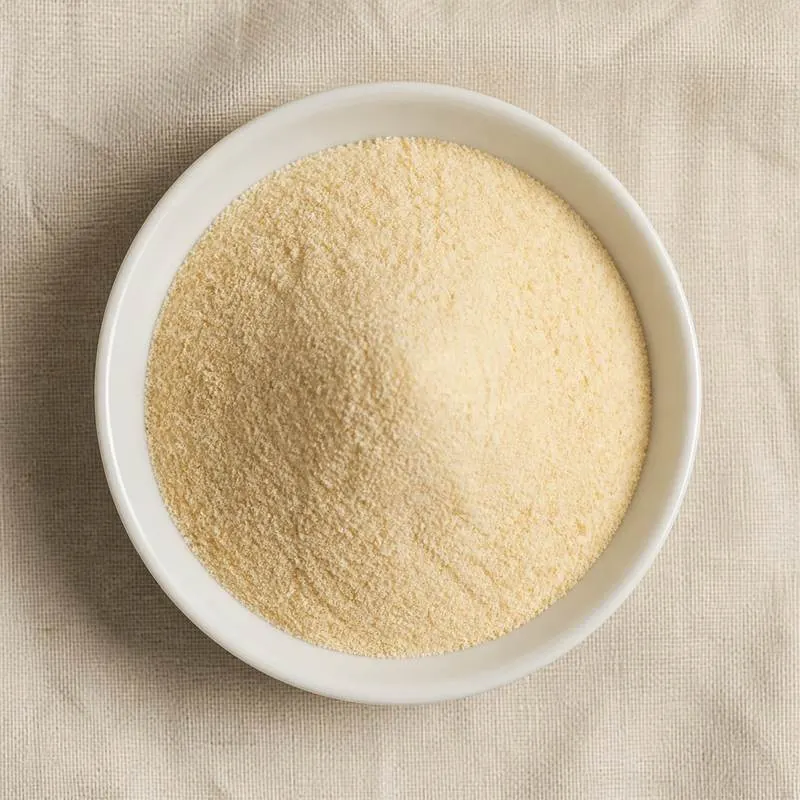
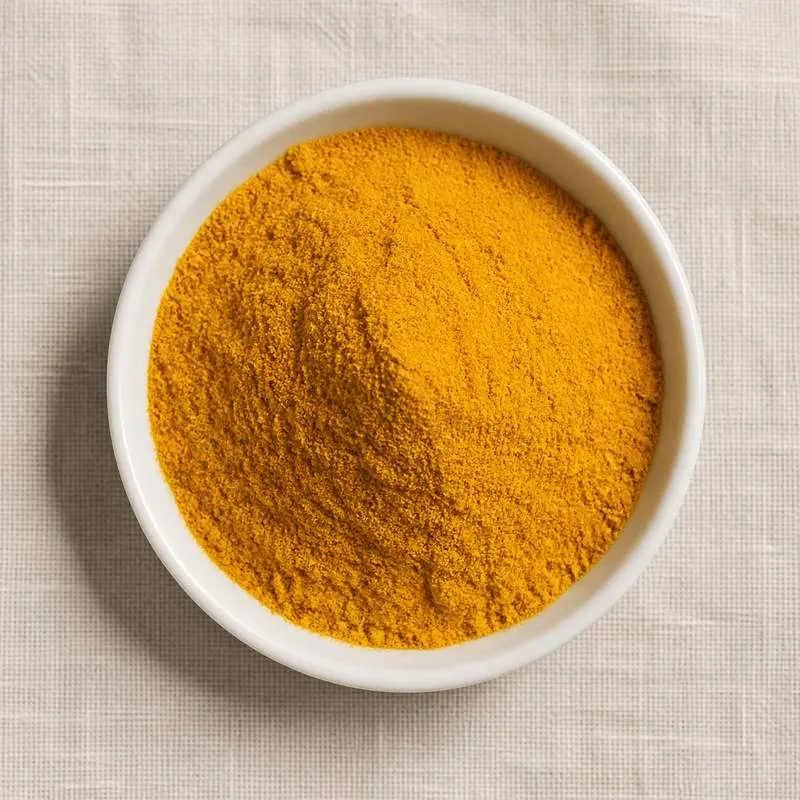
The commercial powder is off white to light beige, noticeably paler than neat tea polyphenol extract because the wall dilutes both colour and taste, and it is free flowing with a defined particle size. It disperses in water to a slightly turbid suspension rather than dissolving as a clear solution. Wall integrity decides handling: high shear, heat above the softening point of the carrier and high humidity all rupture the capsule and release the core.
We source bulk Tea Polyphenol Microcapsule from top China manufacturers for our partners. The manufacturer is in Hubei. A smaller requirement can ship in a combined container with other ingredients.
Please send the grade you need, the volume and your destination port, and we will come back with a solution and a price.
or call +86-21-6858 0751
- Function
- Plant extract
Specifications
| Item | Specification |
|---|---|
| Appearance | Off white to light beige free flowing powder |
| Odour and Taste | Faint tea character, low astringency, no off note |
| Total Tea Polyphenols (HPLC) | 30.0% ± 1.5% |
| Epigallocatechin Gallate | ≥ 15.0% |
| Encapsulation Efficiency | ≥ 90.0% |
| Surface Polyphenol | ≤ 3.0% |
| Caffeine | ≤ 2.0% |
| Loss on Drying | ≤ 5.0% |
| Residue on Ignition | ≤ 2.0% |
| Particle Size D50 | 30 to 80 µm |
| Bulk Density | 0.35 to 0.55 g/ml |
| Dispersibility in water at 25°C | Disperses within 60 seconds, no visible sediment |
| Lead | ≤ 1.0 mg/kg |
| Arsenic | ≤ 1.0 mg/kg |
| Total Plate Count | ≤ 1,000 cfu/g |
| Yeast and Mould | ≤ 100 cfu/g |
| E. coli | Negative |
| Salmonella | Absent in 25 g |
Common Markets Grades
Grades are defined by catechin load and by wall system. Loads of 20, 30 and 50 percent total tea polyphenols are standard, with epigallocatechin gallate content stated separately, and the specification gives both the total assay and the encapsulation efficiency, meaning the fraction of catechin actually enclosed rather than sitting on the particle surface. Spray dried grades on modified starch or gum acacia are the bulk of the trade, while spray chilled lipid grades using hydrogenated vegetable fat are made for chewable, tablet and bar applications where an aqueous capsule would not survive.
Beyond the standard powders, phospholipid complexed and cyclodextrin inclusion grades are traded as enhanced stability and absorption forms, and enteric coated versions with a pH responsive polymer are made where release is to be delayed past the stomach. Particle size is specified because it decides mouthfeel, with the bulk of the distribution typically between 20 and 150 micrometres. Decaffeinated core material is offered where caffeine content must be kept low, and the caffeine figure is stated on every grade.
Applications
- Ready to drink teas and functional beverages, where unprotected catechins would brown and form haze during shelf life
- Dairy and plant based drinks, where encapsulation prevents the catechin and protein interaction that causes sediment
- Instant drink powders and stick packs, dispersed cold without the astringent bite of the neat extract
- Gummies and chewable supplements, where the wall masks bitterness and astringency
- Tablets and capsules, where the free flowing powder improves blending and compression behaviour
- Nutrition bars and baked functional snacks, using a lipid coated grade that survives the process
- Sports nutrition powders blended dry with protein and electrolytes
- Natural antioxidant applications in fats, oils and meat products, where controlled release limits off flavour
- Weight management and metabolic support formulations built on epigallocatechin gallate content
- Pet supplements and functional treats, where palatability depends on masking the taste
China Manufacturers of Tea Polyphenol Microcapsule
Top Tea Polyphenol Microcapsule manufacturers in China.

Company names and logos are the property of the manufacturers themselves. They are listed here because our own directory records them as producing this ingredient. A listing is not an endorsement by them, and we do not represent them or speak on their behalf.
Regulatory Status
Encapsulation does not change the status of the active, so the product is assessed on both the catechin core and the wall material. In the United States green tea extract is used as a dietary ingredient under the Dietary Supplement Health and Education Act, and green tea catechin preparations have been the subject of GRAS notices to the Food and Drug Administration for defined beverage uses, to which the agency responded without objection. The carriers are separately permitted: modified food starch, gum acacia and maltodextrin each have established food additive or GRAS status. The finished capsule is declared by listing the extract and the wall components individually.
In the European Union tea polyphenols carry no E number and are not authorised additives, and green tea catechins in food supplements are subject to Regulation 2022/2340, which restricts the level of epigallocatechin gallate that may be supplied by a daily portion and imposes specific labelling, following the European Food Safety Authority assessment of liver effects at high catechin intakes. The encapsulating agents are regulated in their own right, modified starches carrying E numbers in the E 1400 series and gum acacia being E 414, with purity criteria in Regulation 231/2012. Where a nanoscale delivery system is used the engineered nanomaterial provisions apply. Codex has evaluated the common wall materials as additives through the Joint FAO WHO Expert Committee.
Manufacturing Process
Green tea polyphenol extract, made by extracting green leaf with hot water or aqueous ethanol and purifying the catechin fraction on adsorption resin, is the starting core. Where a fine core particle is needed the dry extract is jet milled, since core size sets the achievable capsule size. The active is then dissolved or dispersed into a solution of the wall material in water, together with an emulsifier and often a small quantity of vegetable oil, and the whole is homogenised at high pressure to a narrow droplet distribution, which is what determines encapsulation efficiency.
The homogenised feed is spray dried in a tower with the inlet temperature set high enough to form the wall quickly but low enough to avoid epimerising epigallocatechin gallate to its non-epi form, a change that occurs readily under prolonged heat and shifts the catechin profile. Powder is collected in a cyclone, and a fluid bed agglomeration stage follows where an instantised grade is required, or a further coating stage where an enteric grade is specified. Lipid encapsulated grades replace the aqueous train with spray chilling, in which the catechin is dispersed into molten fat and atomised into a cold chamber where the droplets solidify. Finished powder is sieved, assayed for total catechins, epigallocatechin gallate, surface polyphenol and caffeine, and packed under nitrogen with a moisture barrier.