Ca-AKG
Ca-AKG is the trade abbreviation for calcium alpha-ketoglutarate, the calcium salt of 2-oxoglutaric acid, a five carbon dicarboxylic keto acid that sits at the centre of the tricarboxylic acid cycle and at the junction between carbohydrate catabolism and amino acid nitrogen handling.
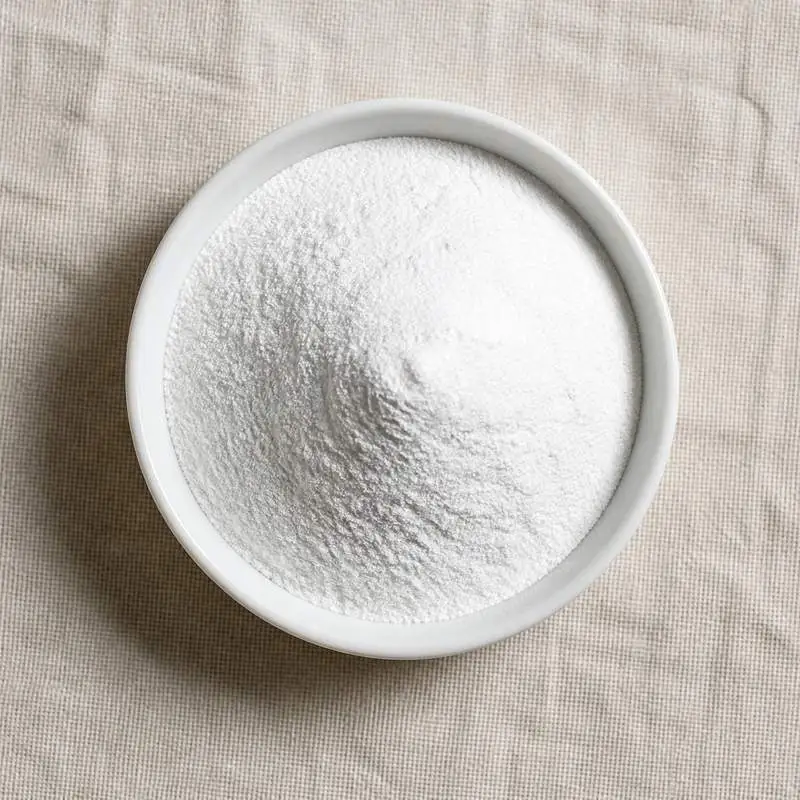
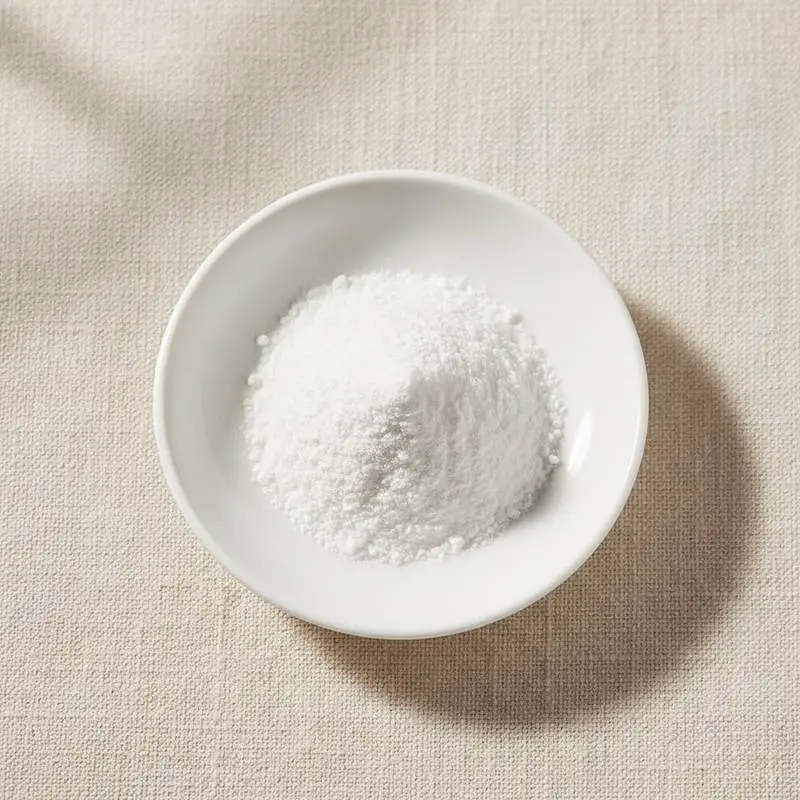
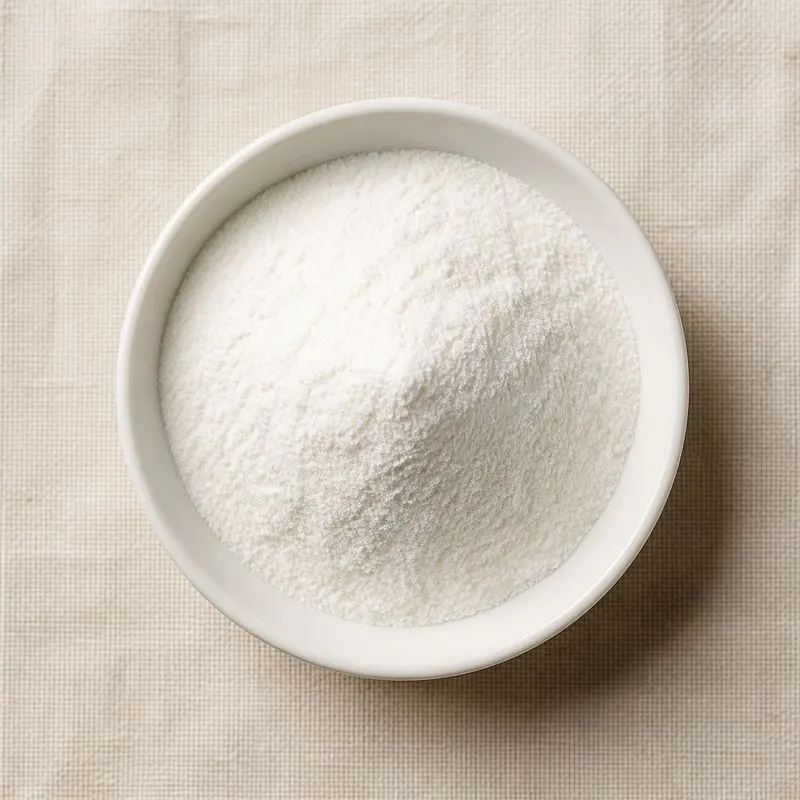
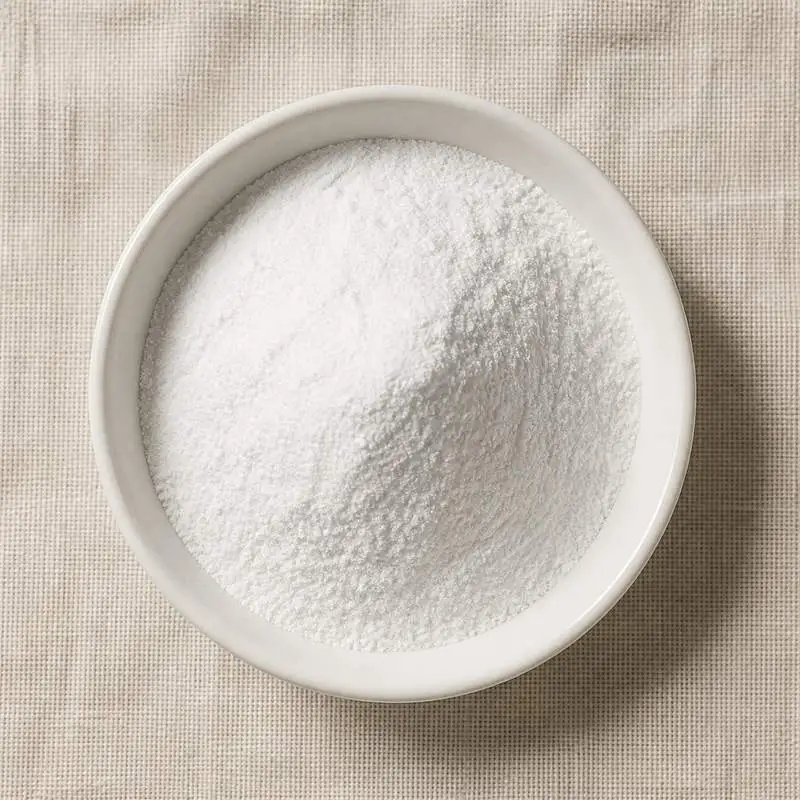
The salt is a white to off-white crystalline powder, usually the monohydrate, with a faintly acidic taste. Salt formation solves the handling problem of free alpha-ketoglutaric acid, which is hygroscopic and prone to decarboxylation. The calcium form is markedly more stable in air, is only sparingly soluble in cold water and dissolves more readily as the pH falls, which is why it is formulated into capsules and tablets rather than clear beverages.
Functionally it is used as a nutrient source of both alpha-ketoglutarate and calcium. In supplement formulation it is valued for flow and compressibility, and its low solubility means it disperses rather than dissolves when stirred into water, so drink mixes built on it are presented as suspensions.
We source bulk Ca-AKG from top China manufacturers for our partners. The manufacturer is in Guangdong. A smaller requirement can ship in a combined container with other ingredients.
Please send the grade you need, the volume and your destination port, and we will come back with a solution and a price.
or call +86-21-6858 0751
- Function
- Nutraceutical
Specifications
| Item | Specification |
|---|---|
| Appearance | White to off-white crystalline powder |
| Identification | Infrared spectrum conforms to reference |
| Assay, dried basis | Not less than 98.0% |
| Calcium Content | 19.0% to 21.5% |
| Loss on Drying | Not more than 8.5% |
| pH, 1% suspension | 6.0 to 8.0 |
| Chloride | Not more than 0.1% |
| Sulphate | Not more than 0.1% |
| Heavy Metals as Pb | Not more than 10 mg/kg |
| Lead | Not more than 1.0 mg/kg |
| Arsenic | Not more than 1.0 mg/kg |
| Mercury | Not more than 0.1 mg/kg |
| Total Plate Count | Not more than 1,000 CFU/g |
| Yeast and Mould | Not more than 100 CFU/g |
Common Markets Grades
Supplement grade is the dominant specification, assaying 98 percent or higher on a dried basis, with the calcium content controlled in parallel because the hydration state shifts it. Both monohydrate and anhydrous forms are traded, and the certificate should state which, since the assay basis and the declared calcium contribution differ between them.
Particle size is the main variable beyond assay. A fine milled powder is used for capsule filling and stick packs, while a granulated or agglomerated grade with improved flow and lower dust is preferred for direct compression tablets. A pharmaceutical grade with tighter heavy metal and residual solvent limits exists for registered preparations, and coated or microencapsulated versions are made where the acidity of the salt would otherwise interfere with other actives in a blend.
Applications
- Longevity and healthy ageing capsules, where alpha-ketoglutarate is positioned around cellular energy metabolism
- Sports nutrition pre-workout and recovery blends, combined with arginine or ornithine salts of the same acid
- Bone and joint formulations, where the salt contributes elemental calcium alongside the keto acid
- Amino acid support blends aimed at nitrogen handling and ammonia clearance
- Tablet and hard capsule supplements where the granular grade improves compression and flow
- Powder stick packs and scoop products presented as a suspension rather than a clear solution
- Clinical and medical nutrition products for patients with elevated protein turnover
- Companion animal supplements aimed at senior pets, formulated alongside collagen and mineral carriers
Brands Using Ca-AKG
Widely-distributed consumer products that list Ca-AKG on the ingredient label.
- DoNotAgeCa-AKG Capsules ↗Each capsule contains 400 mg of calcium alpha-ketoglutarate, with a two-capsule daily serving of 800 mg.Label verified 2026-08-31
- CodeageLiposomal Calcium AKG ↗Calcium alpha-ketoglutarate is the active ingredient in this one-capsule-daily supplement, delivered in a sunflower-oil liposomal matrix.Label verified 2026-08-31
Brand names, product names and logos are the property of their owners. They appear here as published evidence that the ingredient is used, taken from the brand's own label or website. Their appearance is not an endorsement, and it does not mean the brand buys from us or from any manufacturer listed on this site.
China Manufacturers of Ca-AKG
Top Ca-AKG manufacturers in China.

Company names and logos are the property of the manufacturers themselves. They are listed here because our own directory records them as producing this ingredient. A listing is not an endorsement by them, and we do not represent them or speak on their behalf.
Regulatory Status
In the United States, calcium alpha-ketoglutarate is marketed as a dietary ingredient under the Dietary Supplement Health and Education Act rather than as an approved food additive, and finished products are therefore positioned as supplements rather than conventional foods. Calcium salts of organic acids are long established as nutrient sources in supplement form, and the calcium contribution is declared on the supplement facts panel.
In the European Union, alpha-ketoglutarate salts are not authorised as food additives and carry no E number. Their use in food supplements depends on the national rules of the member state and on novel food status, since a substance without a significant history of consumption in the Union before May 1997 requires authorisation under the novel food regulation before it can be placed on the market. Calcium itself is an authorised nutrient for supplement use, but the permitted source list governs which salts may supply it. There is no JECFA additive specification for the calcium salt, so buyers rely on the manufacturer's monograph and analytical dossier.
Manufacturing Process
The route begins with alpha-ketoglutaric acid, which is made either by fermentation or by chemical synthesis. The fermentation route uses yeasts such as Yarrowia lipolytica grown on glucose or glycerol under thiamine limited conditions, which causes the organism to accumulate and excrete the keto acid into the broth. Cells are removed by centrifugation and filtration, and the clarified broth is decolourised on activated carbon and polished by ion exchange. The chemical route condenses diethyl oxalate with a succinate ester, then hydrolyses and decarboxylates the intermediate to the same acid, followed by extraction and crystallisation.
Purified alpha-ketoglutaric acid solution is then neutralised with calcium hydroxide or calcium carbonate under temperature control, since the keto acid decarboxylates if held hot at high pH. The calcium salt precipitates as it forms and is recovered by centrifugation, washed with chilled water and demineralised solvent, and dried under vacuum at low temperature to preserve the hydrate. The dried cake is milled and sieved, or granulated where a compressible grade is required, then blended to a uniform lot and packed under low humidity.