Disodium Phosphate
Disodium phosphate is the sodium salt of orthophosphoric acid in which two of the three acidic hydrogens have been replaced by sodium, Na2HPO4, used in food as an alkaline buffer, a sequestrant of calcium and magnesium, and an emulsifying salt.
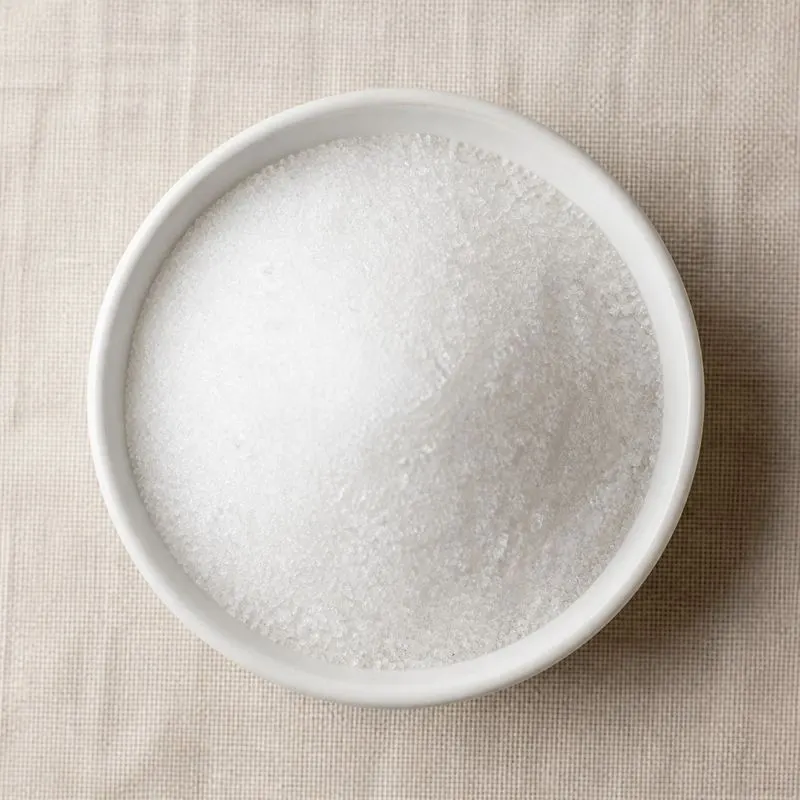
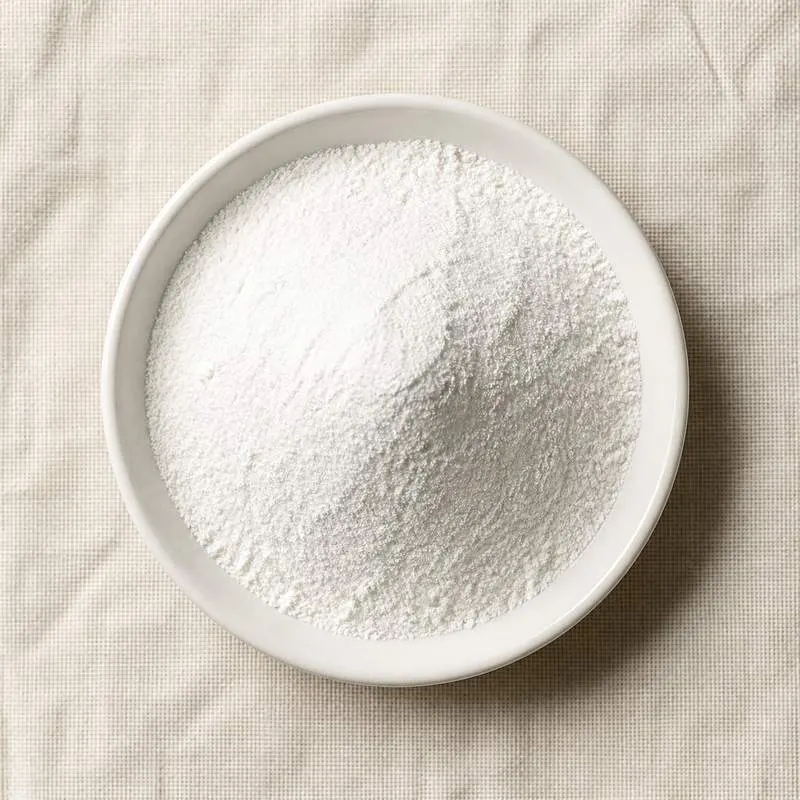
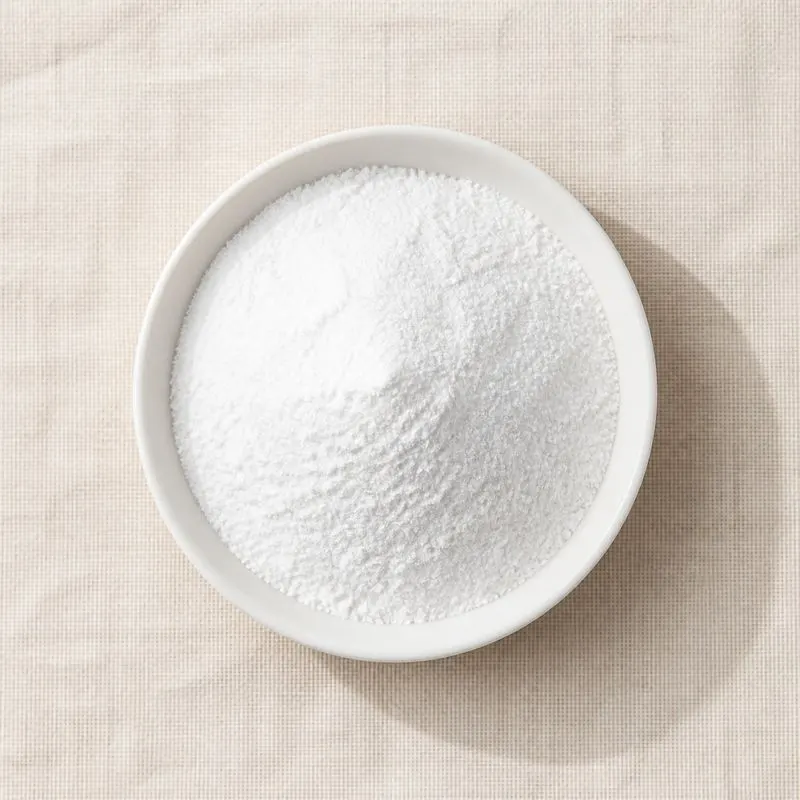
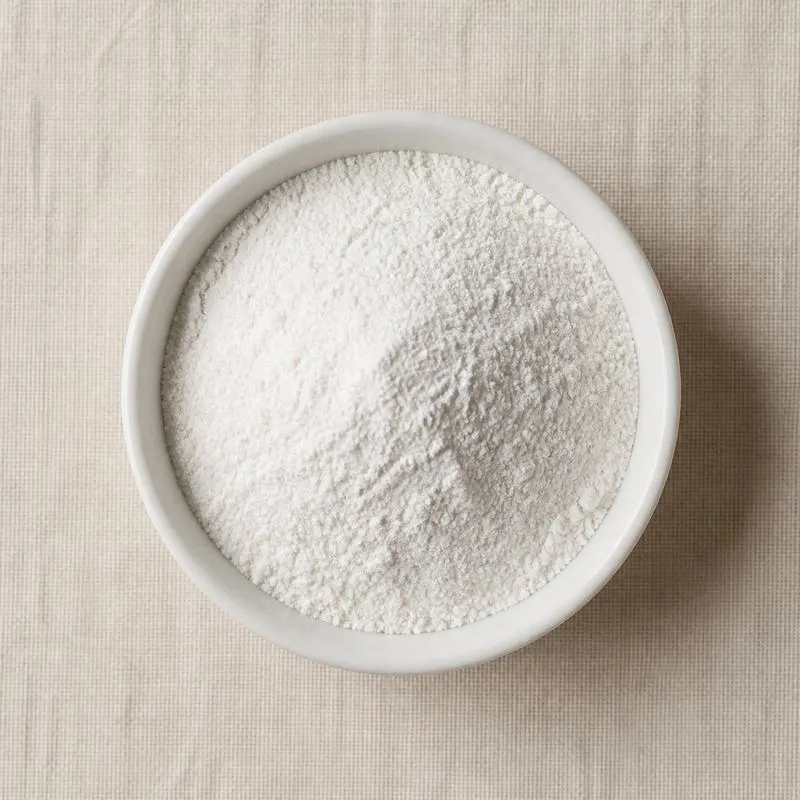
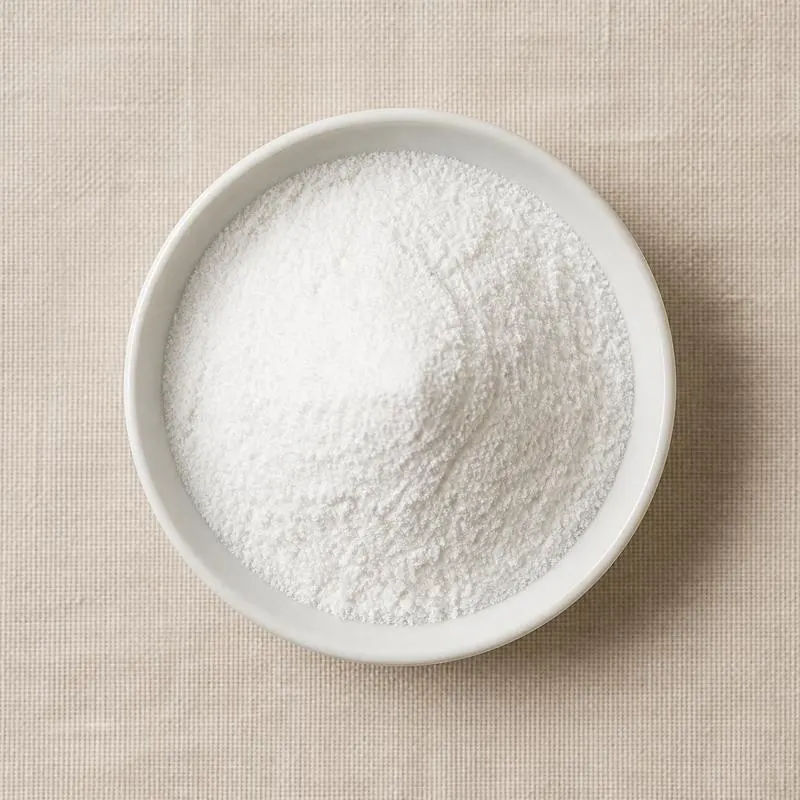
It is a white crystalline powder or granule, odourless, freely soluble in water and practically insoluble in ethanol. A one percent solution is mildly alkaline at around pH nine, and paired with monosodium phosphate it forms the classic phosphate buffer system that holds a food or a pharmaceutical solution close to neutral against the acid or alkali generated during processing. Its sequestering action removes the free calcium that would otherwise cross link protein, which is what stops evaporated milk gelling and lets processed cheese melt smoothly.
The salt is traded in three hydration states, anhydrous, dihydrate and dodecahydrate, and they behave differently in use. The dodecahydrate carries more than half its weight as water of crystallisation and effloresces in dry air, the dihydrate is the most stable in normal storage, and the anhydrous salt is hygroscopic and cakes if a bag is left open. All three convert to the same anion in solution, so dosages are calculated on the anhydrous basis.
We source bulk Disodium Phosphate from top China manufacturers for our partners, working with several of them. The manufacturers are in Jiangsu, Sichuan and Hubei. A smaller requirement can ship in a combined container with other ingredients.
Please send the grade you need, the volume and your destination port, and we will come back with a solution and a price.
or call +86-21-6858 0751
- Function
- Mineral salt
Specifications
| Item | Specification |
|---|---|
| Appearance | White crystalline powder or granule, odourless |
| Identification | Positive for sodium and for orthophosphate |
| Assay as Na2HPO4 | Not less than 98.0% on the anhydrous basis |
| pH of 1% aqueous solution | 8.7 to 9.4 |
| Loss on drying at 105 degrees Celsius | Not more than 5.0% for the anhydrous grade |
| Water insoluble matter | Not more than 0.2% |
| Chloride | Not more than 0.05% |
| Sulphate | Not more than 0.1% |
| Fluoride | Not more than 10 mg/kg |
| Heavy metals as lead | Not more than 10 mg/kg |
| Lead | Not more than 1.0 mg/kg |
| Arsenic | Not more than 1.0 mg/kg |
| Cadmium | Not more than 1.0 mg/kg |
| Particle size | Not less than 95% through 40 mesh, or granular as specified |
Common Markets Grades
Food grade material is made to a food chemicals codex or equivalent monograph and is sold as anhydrous, dihydrate or dodecahydrate, each with its own assay range and loss on drying specification because of the differing water of crystallisation. Pharmaceutical grade meets a pharmacopoeial monograph with tighter limits on chloride, sulphate and heavy metals and is used in buffers, effervescent preparations and dialysis concentrates. Technical grade goes to water treatment, textile processing and detergents.
Physical form is the other distinction that matters commercially. Fine powder is used where rapid dissolution or homogeneous dry blending is needed, standard crystalline grades are the general purpose form, and granular and agglomerated grades are chosen for dust free handling and for direct addition to a mixing vessel. Coated and encapsulated versions exist for dry mixes where premature reaction with an acid component has to be prevented, and low chloride grades are specified for dairy use where taste and corrosion are concerns.
Applications
- Evaporated and ultra high temperature milk, where it holds the salt balance so the protein does not gel during sterilisation or storage
- Processed cheese, as an emulsifying salt that sequesters calcium and lets casein disperse into a smooth melt
- Instant pudding and dessert mixes, reacting with milk calcium to set the gel without heating
- Cured meat brines, buffering pH and working alongside the condensed phosphates to hold water
- Breakfast cereals and pasta, as a buffer and processing aid that also carries added minerals
- Isotonic and electrolyte drinks, supplying phosphate and holding pH in a narrow range
- Starter culture media and fermentation nutrients, as a buffer and phosphorus source
- Effervescent tablets and oral rehydration formulations in pharmaceutical use
- Pet food and animal feed premixes, as a source of available phosphorus
Brands Using Disodium Phosphate
Widely-distributed consumer products that list Disodium Phosphate on the ingredient label.
- Jell-OStrawberry Gelatin Dessert Mix ↗Powdered gelatin dessert whose ingredient list names disodium phosphate among the sub-2 percent ingredients, where it buffers the acidity of the mix.Label verified 2026-08-31
- Jell-OOreo Cookies 'n Creme Instant Pudding & Pie Filling Mix ↗Instant pudding mix that lists disodium phosphate alongside tetrasodium pyrophosphate as the salts that set the pudding in cold milk.Label verified 2026-08-31
Brand names, product names and logos are the property of their owners. They appear here as published evidence that the ingredient is used, taken from the brand's own label or website. Their appearance is not an endorsement, and it does not mean the brand buys from us or from any manufacturer listed on this site.
China Manufacturers of Disodium Phosphate
Top Disodium Phosphate manufacturers in China.
- Jiangsu Debang Duoling Health Technology Co., Ltd.10 ingredients in the directory
 Lianyungang Hengsheng Fine Chemical Co., Ltd.10 ingredients in the directory
 Lianyungang Zexin Food Ingredients Co., Ltd.8 ingredients in the directory
 Sichuan Kindia May Science And Tech.Co., Ltd.14 ingredients in the directory
 Sichuan Ronghong Technology Development Co., Ltd.11 ingredients in the directory
 Wuhan Waking Lion Chemicals Co., Ltd.13 ingredients in the directory
Company names and logos are the property of the manufacturers themselves. They are listed here because our own directory records them as producing this ingredient. A listing is not an endorsement by them, and we do not represent them or speak on their behalf.
Regulatory Status
In the United States disodium phosphate is affirmed as generally recognised as safe for use as a buffer, sequestrant, emulsifier and nutrient, and appears among the multiple purpose generally recognised as safe substances listed in 21 CFR Part 182. Specific uses are also written into standards of identity, notably those for evaporated milk and for pasteurised process cheese in 21 CFR Part 133, which name the permitted emulsifying salts and cap their total. Use in meat and poultry products is controlled by the Food Safety and Inspection Service under 9 CFR 424.21, which limits total added phosphate in the standardised products it lists.
In the European Union disodium phosphate is an authorised food additive within the sodium phosphates group under the E number E339, listed in Regulation (EC) No 1333/2008 with maximum use levels set by food category and expressed as phosphorus pentoxide, and with purity specifications laid down in Regulation (EU) No 231/2012. Since the European Food Safety Authority reassessed phosphate additives as a single group, the permitted level applies to all added phosphate in a product taken together. Codex includes the sodium phosphates in its general standard for food additives under the same numbering, and the Joint FAO WHO Expert Committee on Food Additives has published specifications for the salt and evaluated the phosphates as a group.
Manufacturing Process
Manufacture begins with purified phosphoric acid, either thermal acid or wet process acid that has been solvent extracted and defluorinated to food quality. The acid is neutralised with sodium carbonate or sodium hydroxide in a stirred reactor to a sodium to phosphorus ratio of two to one, the end point held by continuous pH control since a small error produces the mono or trisodium salt instead. Carbon dioxide released from the carbonate is vented and the batch is held to complete the reaction.
The liquor is then clarified, the residual fluoride, iron, aluminium and arsenic being precipitated and removed by filtration, sometimes with a carbon treatment to remove colour and organic residues. The purified liquor is concentrated by evaporation and the product is recovered in one of two ways. Crystallisation in a vacuum cooling crystalliser followed by centrifugation gives the dihydrate or dodecahydrate, the hydrate obtained depending on the temperature at which crystallisation is run. Spray drying or drum drying the concentrated liquor instead gives the anhydrous salt directly. The recovered solid is dried in a fluid bed or rotary dryer, milled and screened to the target size, or granulated where a dust free grade is required, and is then tested for assay, pH, loss on drying and insoluble matter before packing into lined paper sacks or bulk bags.