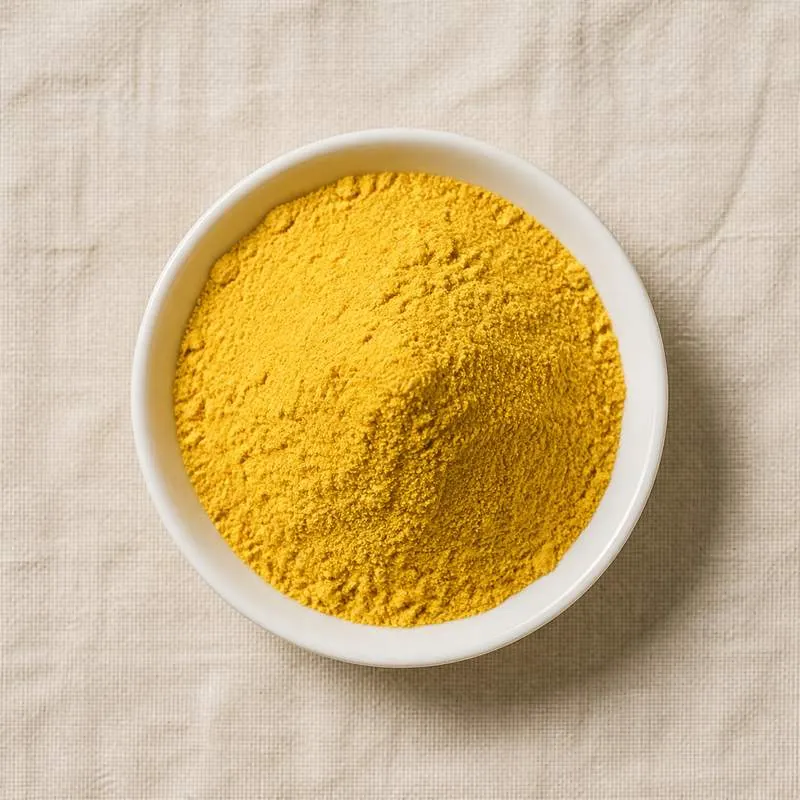
Gardenia Blue
Gardenia Blue is a water-soluble natural colourant produced by enzymatic conversion of geniposide, an iridoid glycoside extracted from the fruit of Gardenia jasminoides, in the presence of a primary amine source such as a hydrolysed protein or a free amino acid.
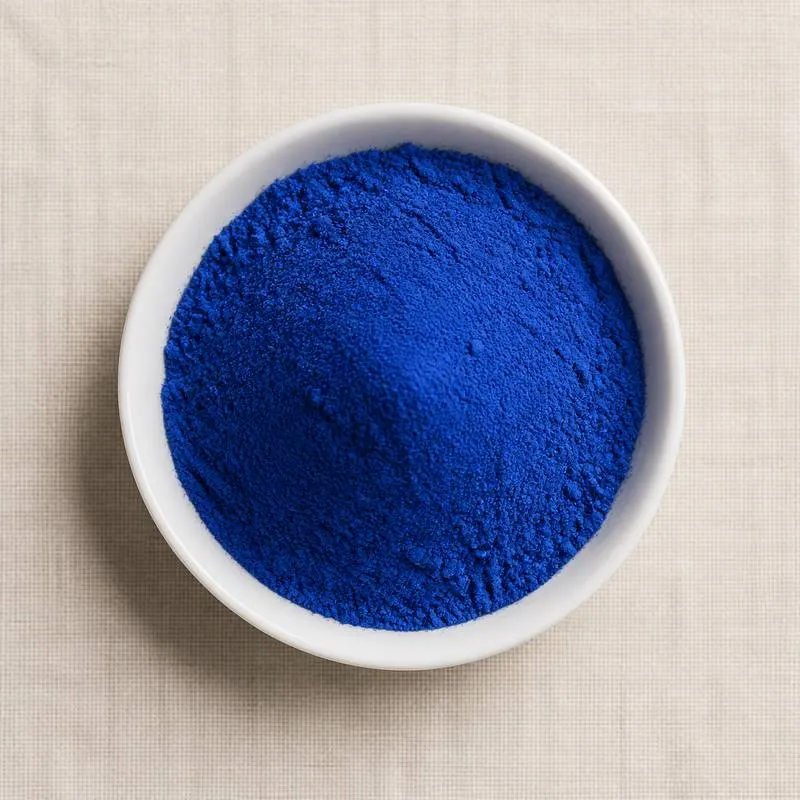
The resulting pigment is a class of polymeric iridoid-amine condensation products with absorption maxima near 590 to 600 nm. The shade ranges from a clean royal blue at low dose to a deep navy at higher load, and the colourant blends cleanly with gardenia yellow to give a wide green palette.
It is currently the most widely used natural blue colourant in Asian food manufacturing. It is not assigned an E number in the European Union and is awaiting a formal regulatory pathway in the United States as of mid-2026.
We source bulk Gardenia Blue from top China manufacturers for our partners, working with several of them. The manufacturers are mostly in Yunnan, Beijing and Jiangxi. A smaller requirement can ship in a combined container with other ingredients.
Please send the grade you need, the volume and your destination port, and we will come back with a solution and a price.
or call +86-21-6858 0751
- Packaging
- 250 kg plastic drum or 1,000 kg IBC tote
- ISO 9001
- HACCP
- Halal
- Kosher
Specifications
Grades / Types Available: Food Grade, Feed Grade
| Item | Specification |
|---|---|
| Appearance | Dark blue powder or liquid |
| Colour Value (E10%) | ≥ 50-200 (grade-dependent) |
| Moisture | ≤ 5.0% (powder) |
| pH Stability | pH 4.0-8.0 |
| Heavy Metals (as Pb) | ≤ 2 mg/kg |
| Total Plate Count | ≤ 1,000 cfu/g |
| Purity/Assay (Food Grade) | ≥ 95% |
| Viscosity | 1000-2000 mPa.s |
| Moisture/Loss on Drying | ≤ 5% |
| pH | 4.0 - 6.0 |
| Particle Size/Mesh | 80 mesh |
| Ash | ≤ 5% |
| Lead | ≤ 1 ppm |
| Arsenic | ≤ 0.5 ppm |
| Yeast & Mold | ≤ 100 cfu/g |
Common Markets Grades
Gardenia Blue is graded by colour value (E1%, 1 cm at 595 nm) and by shade variant.
The standard royal blue powder is graded at colour values of 100 to 300, spray-dried with a maltodextrin or dextrin carrier. It is the standard grade for confectionery, frozen desserts, and bakery decoration.
Liquid concentrate grades at colour values of 100 to 200 are produced for beverage syrups, ice pop bases, and dairy-drink production lines that prefer a free-flowing dose form.
Higher-purity grades at colour values up to 500 are used in low-dose applications where minimum carrier load matters, such as coloured sugar dragees and pearl coatings.
Green-shade blends are formulated by combining gardenia blue with gardenia yellow in fixed ratios. These pre-blended greens are popular because the two colourants share a substrate and respond similarly to processing conditions.
Applications
- Confectionery including hard candies, gummies, jellies, and fruit chews
- Decorative bakery applications such as fondant, icing, and sprinkles
- Ice cream, sorbet, and frozen-dessert ribbons for blue and green shades
- Plant-based beverages, sports drinks, and ready-to-drink teas
- Liqueurs and Asian rice-wine variants in the spirits category
- Wagashi and traditional Asian sweets requiring a clean blue or green
- Snack coatings, panned chocolate, and colour-matched extruded snacks
- Dairy products such as flavoured yogurt and milk drinks
- Sauces and noodle garnishes that call for a green or teal tone
- Cosmetics including blue and green decorative makeup
- Pet treats and pet food in natural-colour positioning
Brands Using Gardenia Blue
Widely-distributed consumer products that list Gardenia Blue on the ingredient label.
- Lotteベーシック バリューシトラスブルー4L (Value Citrus Blue 4L ice cream) ↗原材料:...着色料(スピルリナ青、クチナシ), クチナシ used with spirulina blue to deliver the blue/teal hue, a characteristic application of クチナシ青色素Label verified 2026-05-24
- Lotte小さなアイス屋さん チョコミント (Little Ice Cream Shop Chocomint) ↗原材料:...着色料(スピルリナ青、紅花黄、クチナシ、紅麹), gardenia paired with spirulina blue and safflower yellow for the mint-green colourLabel verified 2026-05-24
Brand names, product names and logos are the property of their owners. They appear here as published evidence that the ingredient is used, taken from the brand's own label or website. Their appearance is not an endorsement, and it does not mean the brand buys from us or from any manufacturer listed on this site.
China Manufacturers of Gardenia Blue
Top Gardenia Blue manufacturers in China.
 Bionature Co., Ltd.8 ingredients in the directory
 CNJ Nature Co., Ltd.9 ingredients in the directory
- Hubei Well-being Biotechnology Co., Ltd.7 ingredients in the directory
- Nanyang Tairui Biotechnology Co., Ltd.9 ingredients in the directory
- Yunnan Borui Bio-tech. Co., Ltd.11 ingredients in the directory
- Yunnan Tonghai Yang Natural Products Co., Ltd.8 ingredients in the directory
Company names and logos are the property of the manufacturers themselves. They are listed here because our own directory records them as producing this ingredient. A listing is not an endorsement by them, and we do not represent them or speak on their behalf.
How We Help Source Gardenia Blue
Direct Factory Sourcing
We run the whole process: selecting the manufacturer from the top Chinese food ingredient producers, negotiating the price, verifying quality, and coordinating the logistics. You deal with us instead of with several factories at once.
Original Packaging and Documents from the Manufacturer
The manufacturer sends your Gardenia Blue out of its own factory in the original packing, through to your destination port. The COA, COO, MSDS, TDS and any certifications reach you from the manufacturer as well.
Free Samples and Lead Time
We send 100 to 500 g free for your own laboratory to test and you cover only the courier, usually within 2 to 3 working days. ETD is usually within 7 to 15 days once the order is confirmed, and we check that date against the factory's own manufacturing schedule before we give it to you.
Combined Shipment
We can load Gardenia Blue together with other ingredients such as Beta Carotene, Caramel Colour and Lycopene into one 20' FCL. If your quantity is small, we can also ship LCL.
Regulatory Status
Gardenia Blue is permitted as a natural food colourant in Japan, Korea, and many other markets across East and Southeast Asia. It is listed in the Japanese List of Existing Food Additives.
It is not approved as a food additive in the European Union and has not been assigned an E number. The European Food Safety Authority has reviewed iridoid-amine pigments and not yet issued a positive opinion for general food use.
The U.S. Food and Drug Administration is reviewing colour additive petitions for gardenia blue prepared from geniposide. As of mid-2026 a final colour additive listing has not been published, although interest has accelerated following the broader regulatory shift away from synthetic FD&C dyes in the U.S. market.
Halal and Kosher certifications are routinely available, although they depend on the choice of amine source. Manufacturers offering Halal or Kosher-certified grades typically use plant-derived amino acids rather than animal-derived protein hydrolysates.
Manufacturing Process
Gardenia Blue is produced by directed enzymatic conversion of geniposide, an iridoid glycoside present at high levels in the dried fruit of Gardenia jasminoides.
The dried fruit is extracted with water, and the geniposide-rich fraction is separated from gardenia yellow pigments and other water-soluble constituents by adsorbent chromatography. The polished geniposide is then treated with beta-glucosidase, which hydrolyses the glucose substituent and exposes the reactive aglycone genipin.
Genipin is highly reactive toward primary amines. In the presence of a hydrolysed protein source (commonly soy or whey protein hydrolysate) or free amino acids such as glycine and lysine, genipin condenses with the amino group and, through a series of dehydration and oligomerization steps, generates the blue chromophore.
The reaction is run under controlled pH, temperature, and oxygen exposure to direct the product toward the desired shade. The blue solution is clarified, concentrated under vacuum, and spray-dried with a maltodextrin carrier to the target colour value.