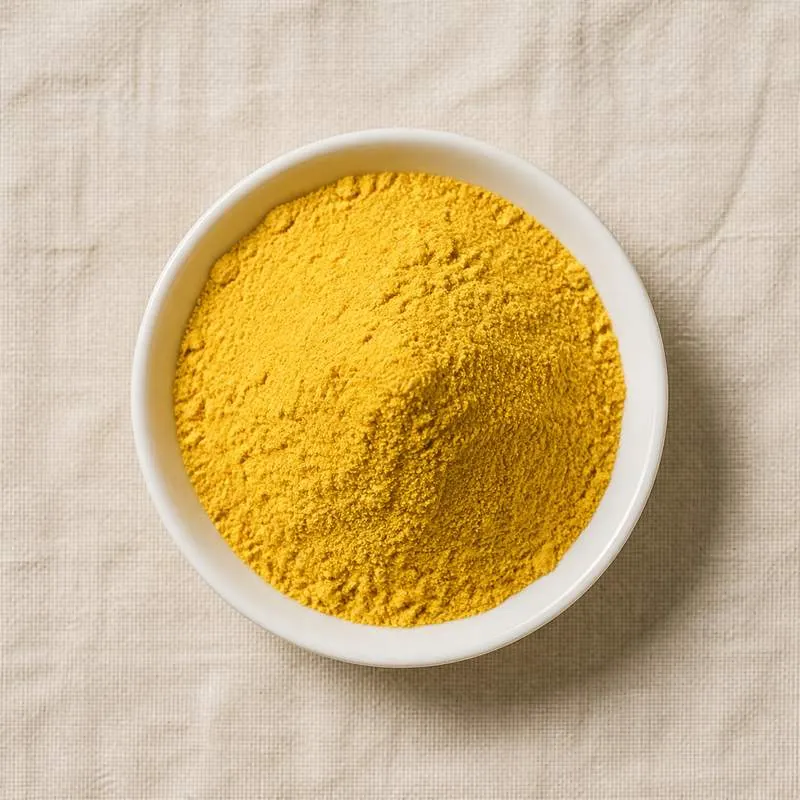
Gardenia Combined-pigment
Gardenia combined pigment is a blended colourant built from two or more pigment fractions obtained from the fruit of Gardenia jasminoides, mixed to a target shade that no single gardenia fraction produces on its own.
Three fractions are involved. Gardenia yellow is crocin and its related crocetin glycosides, the same water soluble carotenoid family found in saffron. Gardenia blue is not present in the fruit but is made from it, by hydrolysing the iridoid glycoside geniposide to genipin and reacting the genipin with amino acids or protein hydrolysate to form a blue polymer. A red fraction is produced by the same reaction under altered conditions. Blending the yellow with the blue gives the green shades that account for most of the trade, and blending blue with red gives violet and brown tones.
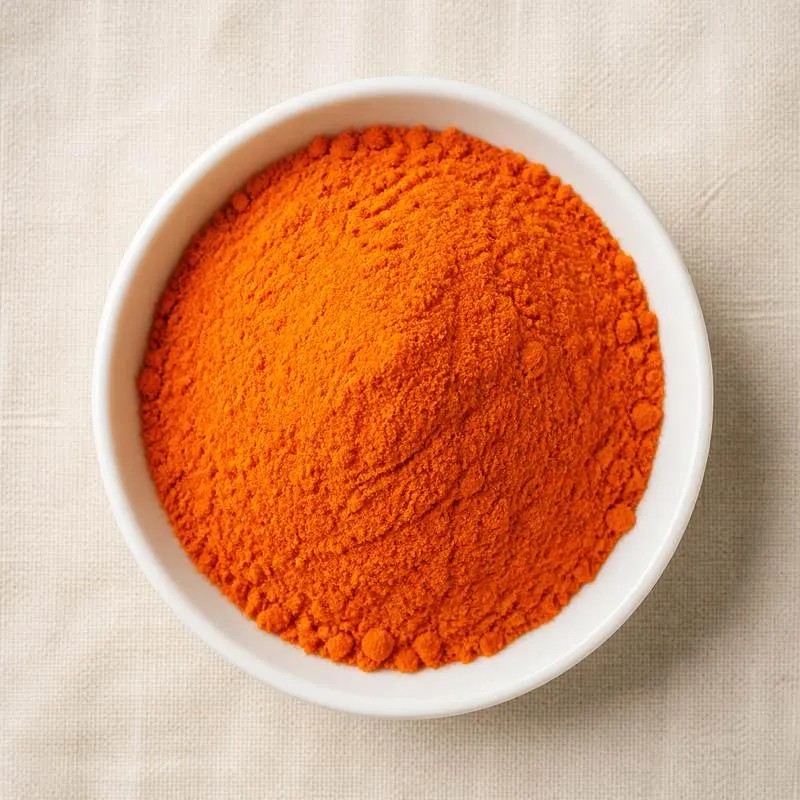
All fractions are water soluble, and they come as spray dried powders standardised on colour value or as concentrated liquids. Shade is fairly stable between pH 4 and pH 8 but the blue fraction fades under strong acid, and the crocin fraction is sensitive to light and to prolonged high temperature, so blended shades drift toward blue or toward yellow depending on which fraction is stressed first.
We source bulk Gardenia Combined-pigment from top China manufacturers for our partners. The manufacturer is in Henan. A smaller requirement can ship in a combined container with other ingredients.
Please send the grade you need, the volume and your destination port, and we will come back with a solution and a price.
or call +86-21-6858 0751
- Function
- Colorant
Specifications
| Item | Specification |
|---|---|
| Appearance | Dark green to blue green free flowing powder |
| Colour Value E 1%/1cm | 100 ± 10 at the specified wavelength |
| Identification | Absorption maxima correspond to the reference blend |
| Solubility | Clear solution in water at 1% with no visible sediment |
| pH of 1% Solution | 4.5 to 7.0 |
| Loss on Drying | ≤ 8.0% |
| Total Ash | ≤ 6.0% |
| Residual Ethanol | ≤ 1,000 mg/kg |
| Lead | ≤ 2.0 mg/kg |
| Arsenic | ≤ 1.0 mg/kg |
| Total Plate Count | ≤ 1,000 cfu/g |
| Yeast and Mould | ≤ 100 cfu/g |
| E. coli | Absent in 1 g |
| Salmonella | Absent in 25 g |
Common Markets Grades
Grades are defined by the target shade and by colour value, measured as the absorbance of a one percent solution in a one centimetre cell at the wavelength of maximum absorption for the dominant fraction. Green shades are the main series and are offered across a range from a yellow leaning lime to a deep blue green, with colour values commonly between 50 and 200 for diluted powders and considerably higher for the concentrates from which they are cut.
Each shade is available as a spray dried powder standardised with maltodextrin or dextrin, and as a liquid concentrate carried in water with glycerol or propylene glycol and preserved where the application requires it. Acid tolerant blends adjust the ratio of fractions to compensate for the acid fade of the blue component, and light protected grades are packed in opaque containers under nitrogen.
Applications
- Wet and dried noodles, where the green shades give a vegetable or matcha appearance without adding vegetable solids
- Jellies, gummies and starch jelly confectionery, where the water soluble powder disperses into the hot sugar syrup
- Ice cream and frozen desserts, where the pH is near neutral and the blue fraction holds its shade
- Surimi and fish paste products, where blue and green tones are used to imitate the darker skin side of the block
- Pickled and seasoned vegetable products, where the colour reinforces the appearance lost during brining
- Wasabi and mustard pastes, where a controlled green is required at a low addition level
- Bakery fillings and creams held above pH 5, where the blend resists the heat of a short bake
- Sugar coated tablets and panned confectionery, applied in the coating syrup rather than in the core
- Beverages in the neutral to lightly acid range, including dairy drinks and flavoured waters
China Manufacturers of Gardenia Combined-pigment
Top Gardenia Combined-pigment manufacturers in China.
Company names and logos are the property of the manufacturers themselves. They are listed here because our own directory records them as producing this ingredient. A listing is not an endorsement by them, and we do not represent them or speak on their behalf.
Regulatory Status
Gardenia colours are not authorised as food colours in the European Union and do not carry an E number. In the United States gardenia blue derived from genipin received colour additive approval in 2025 for a defined list of beverage applications, but gardenia yellow and the combined green and violet blends remain outside the listed colour additives, so a blend containing them cannot be used in food there. Use of the combined pigments is concentrated in East and Southeast Asian markets whose national colour lists include them.
Where the pigment is used, the amino acid or protein hydrolysate that reacts with genipin becomes part of the finished colour, so allergen declaration follows the source of that reactant and soy or milk derived hydrolysates are declared accordingly. Codex has not adopted a general specification for gardenia colours.
Manufacturing Process
Dried gardenia fruit is milled and extracted with hot water or dilute ethanol. The extract is clarified and passed over macroporous adsorption resin, which separates the crocin bearing fraction from the geniposide fraction. The crocin fraction is eluted, concentrated under vacuum and held as the yellow component.
The geniposide fraction is treated with beta glucosidase to release genipin, which is then reacted with an amino acid or a protein hydrolysate under controlled pH, temperature and oxygen supply. The reaction builds the blue polymer, and the endpoint sets the hue between blue and red. The reaction mass is ultrafiltered to remove unreacted amino acid and low molecular weight material, then concentrated. The yellow and blue concentrates are blended to the target shade against a colour standard, standardised with maltodextrin, and spray dried, or diluted and filled as a liquid.