Glabridin
Glabridin is a prenylated isoflavan isolated from the root of liquorice, specifically Glycyrrhiza glabra rather than the Glycyrrhiza uralensis species used in most Chinese liquorice trade. Its molecular formula is C20H20O4 and its molar mass is around 324. It belongs to the hydrophobic flavonoid fraction of the root and is chemically unrelated to glycyrrhizin, the sweet saponin that liquorice is better known for; the two are recovered from different fractions of the same raw material and do not substitute for one another.
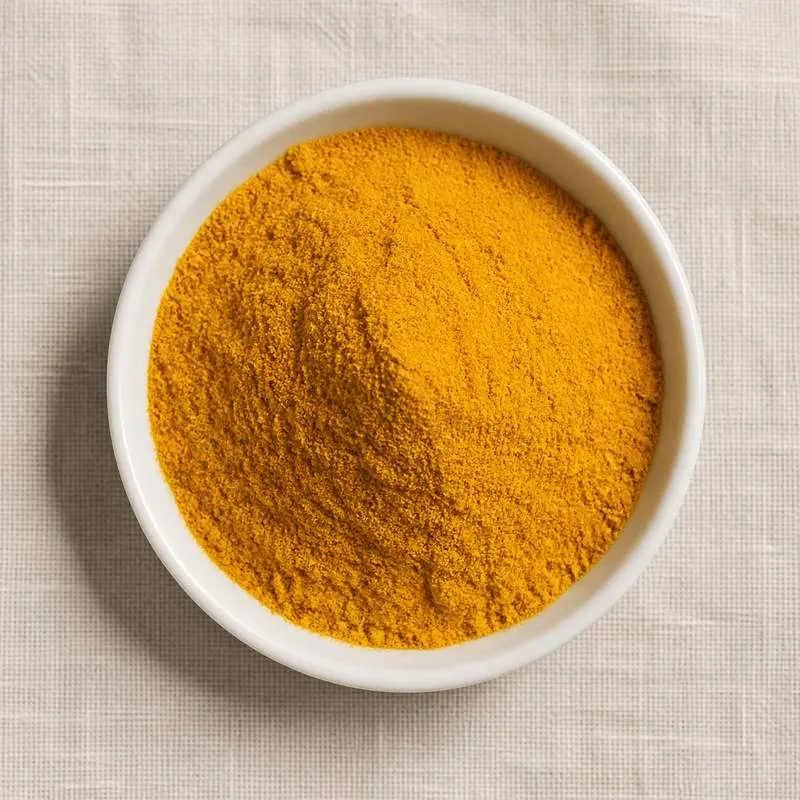
Purified glabridin is an off-white to pale yellow or light brown powder, faintly bitter, with a characteristic liquorice-adjacent odour at high assay. It is practically insoluble in water and dissolves readily in ethanol, propylene glycol, esters and vegetable oils, which is why it is almost always formulated in an oil or a solubilised system. It is sensitive to light, oxygen and alkaline conditions, darkening on exposure, so it is stored cold in opaque packaging and is usually stabilised with an antioxidant in finished formulations.
Commercially it is best known as the active of skin brightening preparations, where it inhibits tyrosinase, and it also travels as the marker compound of liquorice flavonoid oil used in body composition supplements.
We source bulk Glabridin from top China manufacturers for our partners. The manufacturer is in Jiangsu. A smaller requirement can ship in a combined container with other ingredients.
Please send the grade you need, the volume and your destination port, and we will come back with a solution and a price.
or call +86-21-6858 0751
- Function
- Plant extract
Specifications
| Item | Specification |
|---|---|
| Appearance | Off-white to pale yellow-brown powder |
| Odour and Taste | Faint characteristic odour, slightly bitter |
| Identification | Conforms by HPLC and UV against glabridin reference standard |
| Assay | Not less than 40.0% by HPLC, or as declared on the grade |
| Botanical Source | Glycyrrhiza glabra root, confirmed by marker profile |
| Loss on Drying | Not more than 5.0% |
| Residue on Ignition | Not more than 2.0% |
| Residual Ethanol | Not more than 0.5% |
| Residual Ethyl Acetate | Not more than 0.5% |
| Particle Size | 100% through 80 mesh |
| Heavy Metals | Not more than 10 mg/kg |
| Lead | Not more than 2.0 mg/kg |
| Arsenic | Not more than 1.0 mg/kg |
| Total Plate Count | Not more than 1,000 cfu/g |
| Yeast and Mould | Not more than 100 cfu/g |
| Salmonella | Absent in 25 g |
Common Markets Grades
Grades are defined by HPLC assay and by whether the material is a powder or an oil dispersion. Enriched extract grades at 10, 20 and 40 percent glabridin are the volume products, carrying other liquorice flavonoids such as glabrene and glabrol alongside the marker. High purity grades at 90 and 98 percent are made by further chromatography and crystallisation and are used where a low inclusion rate and a pale colour are required. Colour tracks purity closely, so a darker lot at a stated assay usually indicates a heavier co-extractive load.
Liquorice flavonoid oil is a distinct commercial line rather than a grade of the powder. It is a medium chain triglyceride solution of the hydrophobic root fraction with glabridin declared at a few percent, and it is the format used in ingestible applications. Powder grades are also offered dispersed on maltodextrin or on a silica carrier for dry blending, and encapsulated versions exist for oxidative stability. Buyers should confirm the botanical species on the certificate, since Glycyrrhiza uralensis root does not contain glabridin in commercially useful amounts.
Applications
- Skin brightening serums, creams and lotions, where glabridin acts as a tyrosinase inhibitor to reduce melanin formation
- After-sun and post-inflammatory pigmentation products, formulated alongside niacinamide and vitamin C derivatives
- Anti-ageing and soothing cosmetic bases, using the wider liquorice flavonoid fraction for its antioxidant behaviour
- Oral care formulations including toothpaste and mouthwash, where liquorice flavonoids are used against plaque organisms
- Body composition and metabolic supplements, dosed as liquorice flavonoid oil in soft gel capsules
- Sun care products, included as a secondary active supporting the declared filter system
- Hair and scalp treatments marketed for irritation and sensitivity
- Analytical reference standard for the identity and assay of Glycyrrhiza glabra raw material and finished extracts
- Colour-stabilising antioxidant in oil phases, where the flavonoid fraction slows lipid oxidation
Brands Using Glabridin
Widely-distributed consumer products that list Glabridin on the ingredient label.
- TypologyMark-Fading Serum L64, 14% PHA + Centella Asiatica ↗A post-acne mark serum whose licorice root extract is described on the page as rich in glabridin, the molecule that reduces melanin production.Label verified 2026-08-31
- Cipher SkincareNight Shift Resilience-Building Brightening Treatment Serum ↗Glabridin at 98 percent purity from Glycyrrhiza glabra appears in both the key actives panel and the INCI list of this overnight brightening serum.Label verified 2026-08-31
Brand names, product names and logos are the property of their owners. They appear here as published evidence that the ingredient is used, taken from the brand's own label or website. Their appearance is not an endorsement, and it does not mean the brand buys from us or from any manufacturer listed on this site.
China Manufacturers of Glabridin
Top Glabridin manufacturers in China.

Company names and logos are the property of the manufacturers themselves. They are listed here because our own directory records them as producing this ingredient. A listing is not an endorsement by them, and we do not represent them or speak on their behalf.
Regulatory Status
In the United States glabridin is used mainly in cosmetics, where it is a permitted ingredient with no pre-market approval requirement and is declared by its INCI name in the ingredient list. Liquorice root extracts are separately affirmed as generally recognised as safe for flavour use in food, and liquorice flavonoid oil has been the subject of a GRAS notification for use in specified food categories, which is the basis on which the ingestible form is sold in that market. Cosmetic skin lightening claims are permitted only as appearance claims, since a product claiming to alter skin pigmentation as a physiological effect would be treated as a drug.
In the European Union glabridin is not a food additive and has no E number. Liquorice flavonoid oil has been assessed as a novel food and authorised for specified uses at defined conditions, so ingestible use in the EU is limited to what that authorisation covers rather than being open. In cosmetics it is used under the Cosmetic Products Regulation, listed by INCI name, subject to the general safety assessment obligation and to the restriction that it must not be one of the prohibited or restricted substances. Codex has no standard for glabridin. Where the material is sold as an analytical standard it falls outside food and cosmetic law and trades as a laboratory chemical.
Manufacturing Process
Dried Glycyrrhiza glabra root is cleaned, milled and, in most plants, first extracted with water to recover the glycyrrhizin fraction, which is a separate commercial product. The spent or partially spent root, which retains the hydrophobic flavonoids, is then extracted with ethanol or with a non-polar solvent such as ethyl acetate, or with supercritical carbon dioxide where a solvent-free route is wanted. That second extraction is the step that defines the product, since glabridin is not recovered in useful quantity by water alone.
The organic extract is filtered and the solvent stripped under vacuum, leaving a dark resinous flavonoid concentrate. For enriched powder grades the concentrate is taken up in warm alcohol, washed to remove waxes and pigments, and passed over macroporous resin or silica, with a graded elution separating the glabridin fraction from the other isoflavans. High purity grades go on through preparative chromatography and one or two recrystallisations from an alcohol or alcohol-water system, followed by vacuum drying and milling. For liquorice flavonoid oil the concentrate is instead dissolved in medium chain triglyceride oil, polished by filtration and standardised to the declared glabridin percentage. Assay is confirmed by HPLC and residual solvent is tested on every lot.