Instant Jasmine Tea
Instant jasmine tea is a soluble tea powder made from jasmine scented tea, a green or lightly oxidised tea that has been layered with fresh jasmine blossom so that the leaf absorbs the floral volatiles. Everything that distinguishes it from ordinary instant green tea is in that volatile fraction, which means the whole manufacturing problem is aroma retention rather than solids yield.
The jasmine character comes from a small number of compounds released by Jasminum sambac flowers as they open: benzyl acetate, linalool, methyl anthranilate, indole, cis-jasmone and methyl jasmonate. These are present at parts per million in the finished tea and they are volatile, which is precisely why they are lost in a conventional hot extraction and spray drying train unless they are stripped off, held and returned. The underlying tea solids are those of the base tea, so catechins, caffeine, amino acids and soluble carbohydrate make up the bulk of the powder.
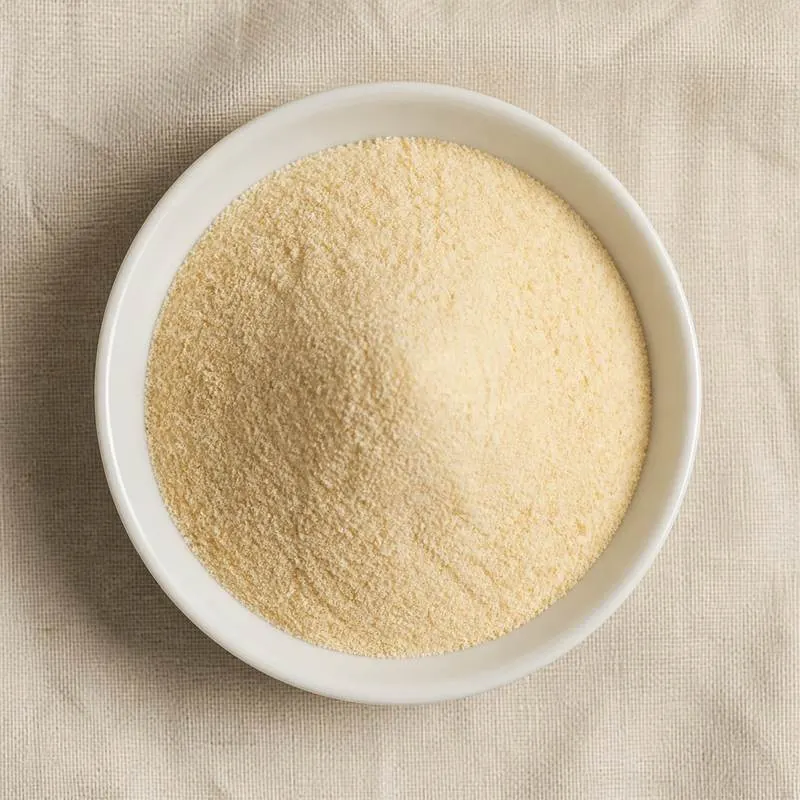
The material is a pale yellowish to light brown fine powder or porous freeze dried granules, and it dissolves readily in hot water and, in the cold-soluble grades, in chilled water. The floral aroma fades on storage faster than the tea taste does, so barrier packing and cold storage matter more for this product than for plain instant tea, and the same catechin browning and tea cream haze problems that affect instant green tea apply here as well.
We source bulk Instant Jasmine Tea from top China manufacturers for our partners. The manufacturer is in Shaanxi. A smaller requirement can ship in a combined container with other ingredients.
Please send the grade you need, the volume and your destination port, and we will come back with a solution and a price.
or call +86-21-6858 0751
- Function
- Plant extract
Specifications
| Item | Specification |
|---|---|
| Source | Jasmine scented green tea, Camellia sinensis with Jasminum sambac |
| Appearance | Pale yellowish to light brown fine powder or granules |
| Solubility | Complete in water at 25°C within 60 seconds |
| Total Polyphenols | ≥ 25.0% |
| Caffeine | 4.0 to 8.0% |
| Moisture | ≤ 6.0% |
| Added Carrier | None, or declared maltodextrin content |
| Lead | ≤ 2.0 mg/kg |
| Arsenic | ≤ 1.0 mg/kg |
| Pesticide Residues | Complies with destination market limits |
| Total Plate Count | ≤ 1,000 cfu/g |
| Yeast and Mould | ≤ 50 cfu/g |
| E. coli | Negative in 1 g |
| Salmonella | Negative in 25 g |
Common Markets Grades
Grades are defined by the base tea and by the scenting intensity as much as by the analytical figures. Scenting intensity is described by the number of scenting rounds the base tea received, from a single pass for economy grades up to seven or more for premium material, and this is what the buyer is really paying for. Alongside it the usual instant tea specifications apply: total polyphenols, caffeine, colour and solubility.
A commercially important distinction is between powders whose aroma comes entirely from the scented base tea and those where jasmine flavour has been added back after drying, either as a natural jasmine extract or as a compounded flavour. Both are traded, they are labelled differently, and the price difference is substantial, so the specification should state which route was used. Freeze dried grades sit above spray dried grades in this product more than in any other instant tea, because sublimation drying preserves far more of the volatile fraction. Cold water soluble and hot-soluble grades are specified separately, and carrier content, usually maltodextrin, has to be declared since it dilutes the tea solids.
Applications
- Ready to drink bottled jasmine tea, the largest outlet in East Asian beverage markets
- Milk tea and bubble tea bases, where jasmine green tea is one of the standard flavour platforms
- Instant tea sachets and stick packs for consumer reconstitution
- Vending and food service beverage powders
- Iced tea and fruit tea blends, where the floral note lifts the fruit character
- Bakery and confectionery flavouring for cakes, mousses, chocolate and ice cream
- Dairy applications including jasmine flavoured yoghurt and milk drinks
- Cocktail and mixer bases requiring a soluble floral tea component
- Cosmetic and personal care formulations using the scented tea extract for fragrance and polyphenol content
China Manufacturers of Instant Jasmine Tea
Top Instant Jasmine Tea manufacturers in China.

Company names and logos are the property of the manufacturers themselves. They are listed here because our own directory records them as producing this ingredient. A listing is not an endorsement by them, and we do not represent them or speak on their behalf.
Regulatory Status
Instant jasmine tea is a conventional food. In the United States tea and tea extracts have an established food history and instant tea is regulated as a food, with imported tea subject to inspection and with pesticide residues controlled through tolerances set by the Environmental Protection Agency. Jasmine flower and jasmine absolute appear among the natural flavouring substances and natural substances used in conjunction with flavours listed as generally recognised as safe in 21 CFR 182.20, which covers the scenting material and any natural jasmine flavour added back. Where a compounded flavour is used instead, it is subject to the general flavour labelling rules and affects whether the product may be described as naturally flavoured.
In the European Union tea and scented tea are conventional foods and are not novel foods. Jasmine flower preparations are recognised as a source of natural flavouring under Regulation (EC) No 1334/2008, and any flavouring added after drying must comply with that Regulation and be labelled accordingly, with the distinction between a tea whose aroma comes from the leaf and one that has been flavoured being a labelling obligation rather than a matter of choice. Pesticide maximum residue levels are set for tea as a dried commodity under Regulation (EC) No 396/2005, and jasmine blossom used in scenting is itself an agricultural input that carries residues into the tea. Contaminant limits apply under the contaminants Regulation, and Codex maintains general contaminant standards and a code of hygienic practice applicable to the product.
Manufacturing Process
The base material is made before extraction begins. Finished green tea is dried to a low moisture content so that it will act as an absorbent, then layered with jasmine blossoms picked in the afternoon and held until they begin to open in the evening, at which point they release their volatiles. Tea and flowers are piled together overnight, turned to control the heat generated by the respiring flowers, then separated and the tea is dried again. Higher grades repeat this cycle several times with fresh flowers each round, and the spent blossoms are removed rather than left in the finished tea.
Extraction of the scented tea follows the instant tea route but with the volatile fraction treated as the primary product. The leaf is extracted with water at 70 to 80 degrees Celsius in countercurrent columns, and the first extract is passed through a vacuum aroma stripping column or a spinning cone unit that removes the volatiles at low temperature and condenses them as an aroma concentrate, which is held cold and separately. The stripped liquor is centrifuged, filtered, chilled to precipitate tea cream, and clarified or tannase-treated according to grade, then concentrated in a falling film evaporator under vacuum. The aroma concentrate is blended back into the liquid concentrate immediately before drying. Drying is by freeze drying for premium grades or by spray drying at the lowest workable inlet temperature, and in some plants the aroma is instead plated onto the dried powder afterwards to avoid the dryer altogether. The powder is screened, metal detected and packed immediately into foil laminate with desiccant.