Lutein Power
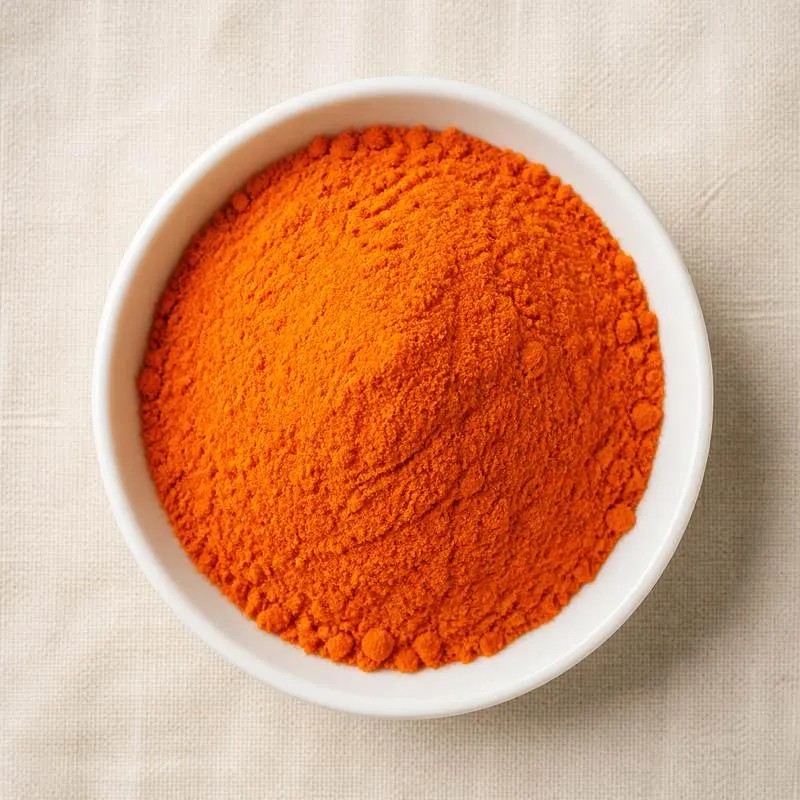
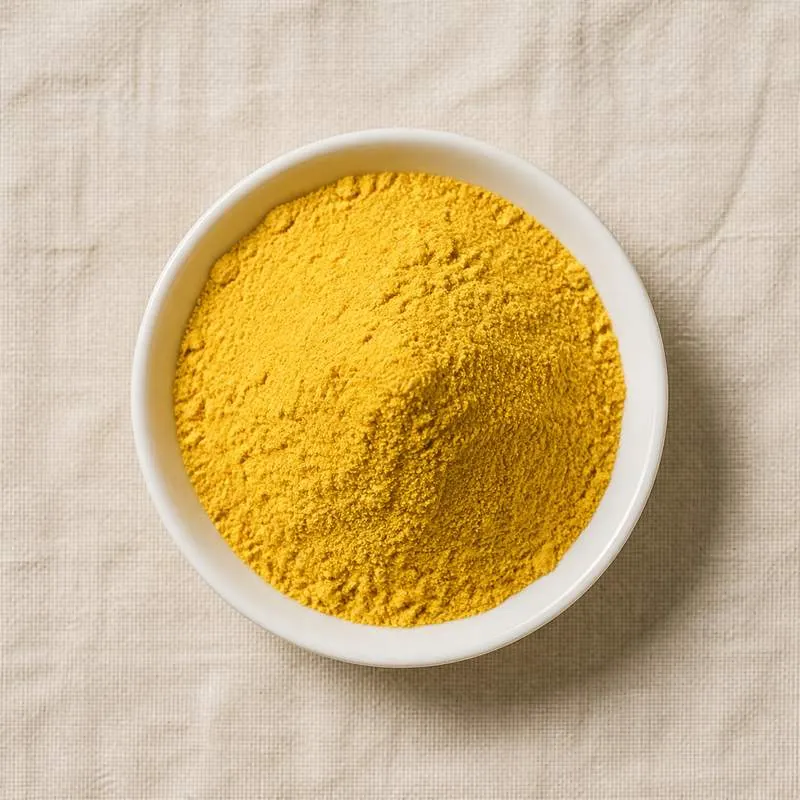
Lutein powder is a dry, dispersible preparation of lutein, the yellow to orange xanthophyll carotenoid obtained from the flower of the Aztec marigold, Tagetes erecta.
Lutein is a forty carbon tetraterpene with a hydroxyl group on each terminal ring, formula C40H56O2. In the flower it occurs almost entirely as fatty acid diesters, mainly dipalmitate, and most trade material is saponified so that the free alcohol form is delivered. The molecule is fat soluble and effectively insoluble in water, and its extended conjugated double bond system is what gives both the colour and the sensitivity to oxygen, light and heat.
Because the crystal will not disperse in an aqueous food on its own, the powder is built as a formulated matrix. Lutein crystals or oleoresin are emulsified into a solution of modified starch, gum acacia or gelatin with an antioxidant system, and the emulsion is spray dried to a beadlet in which the pigment sits in a protected oil phase. The finished powder is cold water dispersible, gives a clear yellow shade in beverages at low addition, and is far more stable in storage than the oil suspension it was made from.
We source bulk Lutein Power from top China manufacturers for our partners. The manufacturer is in Shandong. A smaller requirement can ship in a combined container with other ingredients.
Please send the grade you need, the volume and your destination port, and we will come back with a solution and a price.
or call +86-21-6858 0751
- Function
- Colorant
Specifications
| Item | Specification |
|---|---|
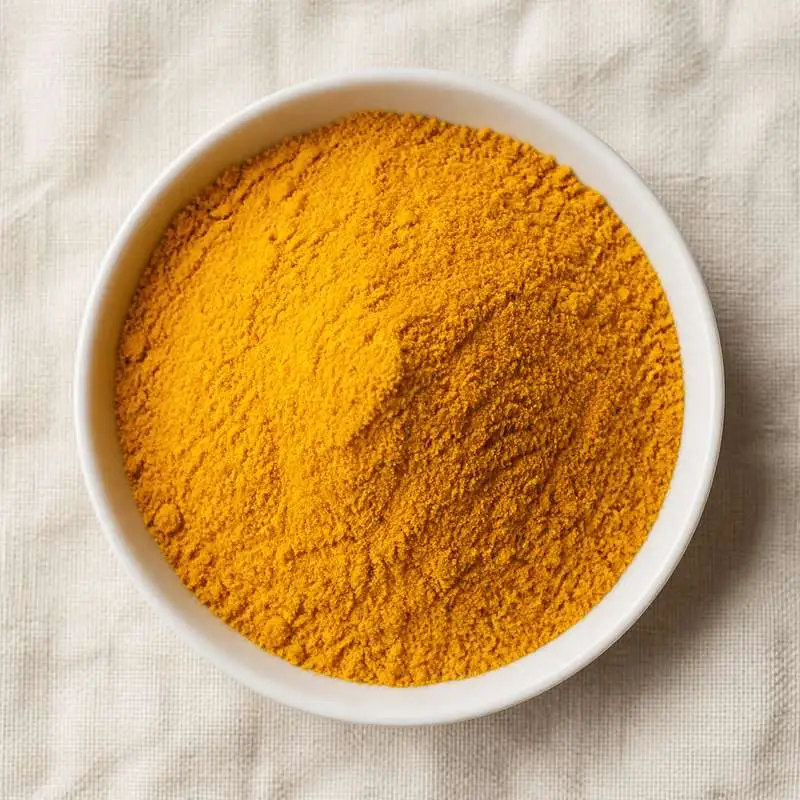
| Appearance | Orange yellow free flowing powder or beadlet |
| Lutein Assay | 10.0% minimum by HPLC |
| Zeaxanthin | 0.3 to 1.0% |
| Identification | HPLC retention time and UV spectrum match the reference standard |
| Loss on Drying | ≤ 6.0% |
| Total Ash | ≤ 5.0% |
| Dispersibility | Forms a clear yellow dispersion in water at 25°C |
| Particle Size | ≥ 95% through 40 mesh |
| Residual Hexane | ≤ 25 mg/kg |
| Lead | ≤ 1.0 mg/kg |
| Arsenic | ≤ 1.0 mg/kg |
| Total Plate Count | ≤ 1,000 cfu/g |
| Yeast and Mould | ≤ 100 cfu/g |
| Salmonella | Absent in 25 g |
Common Markets Grades
The main division is between crystalline concentrate and formulated powder. Crystalline lutein at 70 to 90 percent total carotenoid is an intermediate, used for further formulation rather than added directly. Formulated cold water dispersible powders carry 5, 10 or 20 percent lutein on a starch or acacia matrix and are what most food and supplement users buy. A 1 to 2 percent grade on a low cost carrier is produced for feed use.
Grades are also split by chemical form and by isomer content. Saponified free lutein is the standard for beverage and supplement use, while lutein ester grades keep the natural diester form and are chosen where the ester is preferred in the dose form. Zeaxanthin content is declared separately, since the marigold flower supplies a small proportion of it alongside the lutein, and high zeaxanthin grades are made by isomerising part of the lutein. Cross linked or double coated beadlets are offered where the powder has to survive a low pH beverage or a long shelf life.
Applications
- Still and carbonated beverages, where the cold water dispersible beadlet gives a clear yellow without an oil ring
- Tablet and capsule supplements, where lutein is declared as a nutrient rather than as a colour
- Gummy and chewable supplements, dosed into the hot gelatin or pectin mass
- Dairy products including yoghurt, flavoured milk and processed cheese analogues
- Bakery creams, fillings and icings that need a butter or egg yellow appearance
- Infant and follow on formula in markets where lutein is a permitted nutritional addition
- Confectionery, including hard boiled sweets and panned coatings
- Instant drink powders and nutritional powder blends, where a dry dispersible form is required
- Poultry feed premixes, where the pigment deposits in egg yolk and skin
- Pet food coatings and premixes for visual and nutritional purposes
Brands Using Lutein Power
Widely-distributed consumer products that list Lutein Power on the ingredient label.
- Carlson LabsLutein ↗A softgel formulated with Lutemax 2020 that supplies lutein together with zeaxanthin and meso-zeaxanthin for eye health.Label verified 2026-08-31
- Country LifeLutein 20 mg ↗A capsule providing 20 mg of lutein with zeaxanthin, the two carotenoids concentrated in the human retina.Label verified 2026-08-31
- Nature's WayLutein ↗A single-carotenoid softgel supplying lutein for retina and macular support.Label verified 2026-08-31
- Oregon's Wild HarvestEyes Love Lutein Capsules ↗A vegan capsule whose ingredient list gives 10 mg of lutein from marigolds alongside organic bilberry fruit.Label verified 2026-08-31
- BulkSupplementsLutein with Zeaxanthin Softgels ↗Softgels supplying lutein with zeaxanthin as the two named active carotenoids.Label verified 2026-08-31
Brand names, product names and logos are the property of their owners. They appear here as published evidence that the ingredient is used, taken from the brand's own label or website. Their appearance is not an endorsement, and it does not mean the brand buys from us or from any manufacturer listed on this site.
China Manufacturers of Lutein Power
Top Lutein Power manufacturers in China.

Company names and logos are the property of the manufacturers themselves. They are listed here because our own directory records them as producing this ingredient. A listing is not an endorsement by them, and we do not represent them or speak on their behalf.
Regulatory Status
In the European Union lutein is authorised as the food colour E161b, with its identity and purity criteria laid down in the specification Regulation for food additives, and it is separately permitted as a nutrient source in food supplements. The colour is defined as being obtained from Tagetes erecta and its use is limited to the food categories listed in the additive Regulation.
In the United States lutein does not have a general colour additive listing for food. 21 CFR 73.295 lists Tagetes meal and extract only for use in chicken feed. Free lutein and lutein esters from Tagetes erecta are instead used in food and beverage on the basis of generally recognised as safe determinations that have been notified to the Food and Drug Administration, and in supplements as a dietary ingredient, so the material is declared as a nutrient rather than as a colour. JECFA has evaluated lutein from Tagetes erecta and published specifications for it.
Manufacturing Process
Marigold flowers are harvested, ensiled or dried, and pelletised, then extracted with hexane to recover the oleoresin, which is a dark orange paste of lutein diesters in flower lipids. The oleoresin is concentrated by solvent stripping under vacuum and then saponified with potassium hydroxide in alcohol, which cleaves the fatty acid esters and releases free lutein. The saponified mass is cooled so the lutein crystallises, and the crystals are separated by filtration or centrifugation and washed with water and alcohol to remove soap, alkali and residual lipid.
The washed crystals are dried to give the concentrate. To make the dispersible powder, the concentrate is dissolved or finely milled into a carrier oil with tocopherol and ascorbyl palmitate as antioxidants, and this oil phase is emulsified at high pressure into an aqueous solution of modified starch, gum acacia or gelatin with a sugar or maltodextrin filler. The emulsion is spray dried, and the resulting beadlets are sieved, blended to the declared assay and packed under nitrogen in light proof containers.