Magnesium Orotate
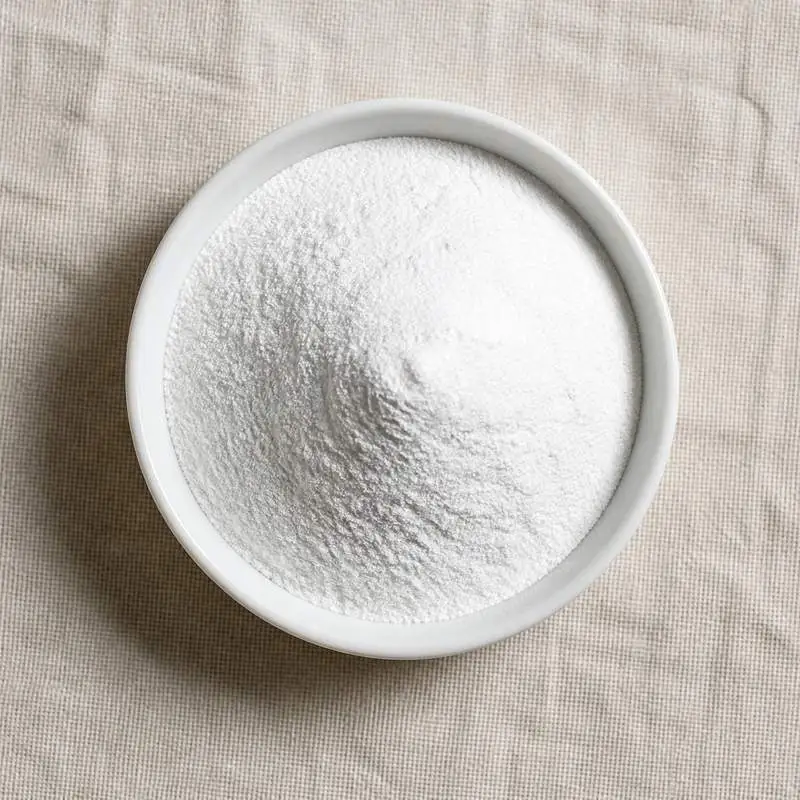
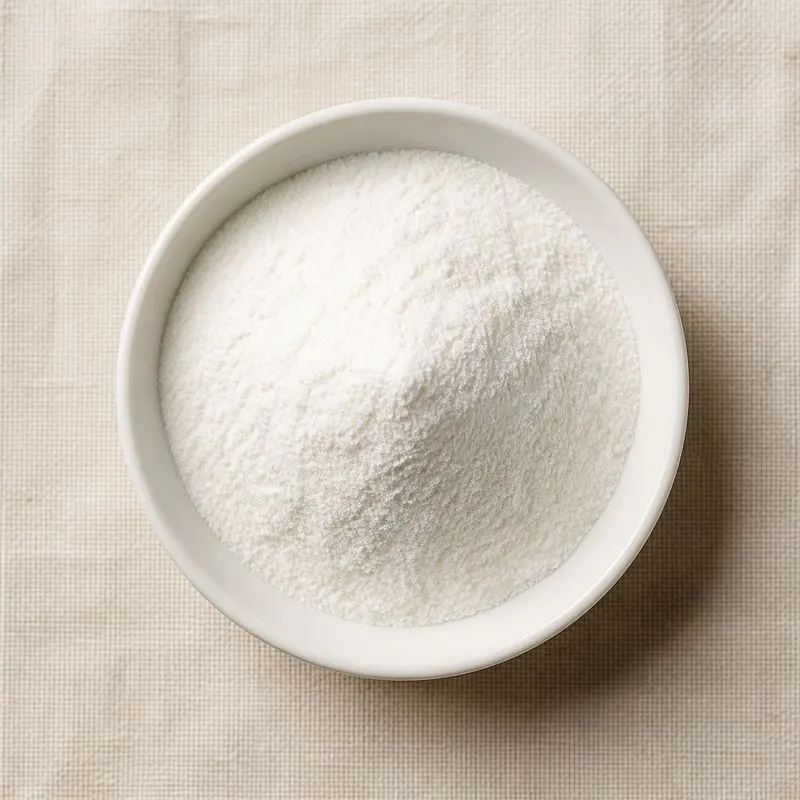
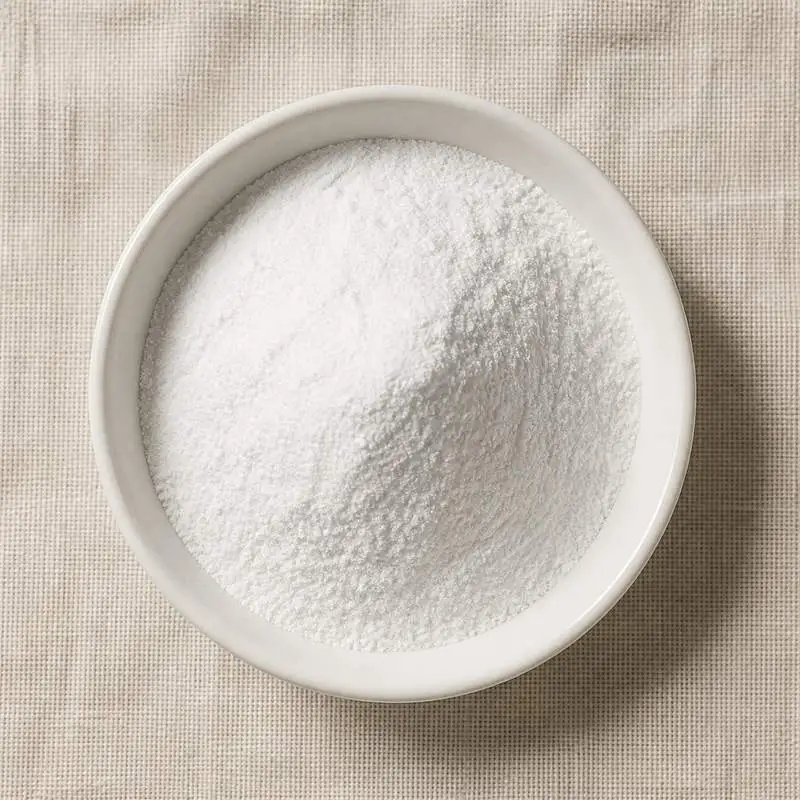
Magnesium orotate is the magnesium salt of orotic acid, formally magnesium bis(orotate), usually sold as the dihydrate with the empirical formula C10H6MgN4O8 and a magnesium content of about 7 percent by weight. It is a white to off-white crystalline powder, odourless and almost tasteless, and it belongs to the group of organic magnesium salts used as magnesium sources in supplements rather than to the inorganic salts such as the oxide and the sulphate.
Orotic acid is a pyrimidine intermediate in the biosynthesis of uridine and cytidine nucleotides, and the interest in this particular salt rests on the combination of the mineral with that anion rather than on the magnesium alone. Because the magnesium content is low compared with magnesium oxide, which carries about 60 percent magnesium, a dose delivering a meaningful amount of the mineral requires a large tablet or several capsules, and this is the main formulation constraint on the material.
The salt is only sparingly soluble in water, considerably less soluble than magnesium citrate or lactate, and it is practically insoluble in ethanol. It dissolves in dilute acid, which is the basis of its dissolution in the stomach, and it is stable as a dry powder at ambient temperature, non-hygroscopic in normal storage, and stable to light. Its poor solubility means it is formulated in solid dose forms rather than in beverages.
We source bulk Magnesium Orotate from top China manufacturers for our partners. The manufacturer is in Anhui. A smaller requirement can ship in a combined container with other ingredients.
Please send the grade you need, the volume and your destination port, and we will come back with a solution and a price.
or call +86-21-6858 0751
- Function
- Nutraceutical
Specifications
| Item | Specification |
|---|---|
| Appearance | White to off-white crystalline powder |
| Odour | Odourless |
| Assay as magnesium orotate, anhydrous basis | Not less than 98.0 percent |
| Magnesium content | 6.5 to 7.5 percent |
| Identification | Infrared spectrum matches reference; positive magnesium test |
| Free orotic acid | Not more than 1.0 percent |
| Loss on drying at 105 degrees Celsius | 8.0 to 12.0 percent, corresponding to the dihydrate |
| Sulphated ash | Not more than 0.5 percent above theoretical |
| pH, 5 percent aqueous suspension | 6.0 to 8.0 |
| Chloride | Not more than 0.1 percent |
| Heavy metals | Not more than 10 mg/kg |
| Lead | Not more than 2.0 mg/kg |
| Arsenic | Not more than 1.0 mg/kg |
| Particle size | Passes 100 mesh, not less than 95 percent |
Common Markets Grades
The material is traded essentially as one specification. Food and supplement grade magnesium orotate dihydrate is offered at 98 percent minimum assay on the anhydrous basis, with the magnesium content stated separately, usually between 6.5 and 7.5 percent, and with free orotic acid and residual solvent controlled. A pharmaceutical grade meeting the same assay but with tighter related substance, residual solvent and microbiological limits is available where the destination is a licensed medicinal product, which is the form the material takes in several European markets.
Physical variation is limited to particle size and bulk density. A standard crystalline powder is used for capsule filling, a milled fine grade where blend uniformity in a low-dose premix matters, and a granulated direct compression grade for tabletting, since the untreated crystal has poor flow and compresses poorly at the high inclusion rates the low magnesium content forces. Coated grades exist to mask the slight acidity in chewable formats.
Applications
- Magnesium supplement tablets and capsules, formulated where an organic salt is preferred to magnesium oxide
- Cardiovascular support formulations, the traditional positioning of this particular salt in European markets
- Sports and endurance supplements, combined with potassium and B vitamins in electrolyte tablets
- Combination mineral tablets supplying magnesium alongside zinc and calcium
- Sleep and relaxation formulations, formulated with glycine and vitamin B6
- Cramp and muscle recovery products sold in tablet and effervescent-free solid formats
- Nucleotide-containing supplement blends, where the orotate anion is itself part of the reason for the formulation
- Veterinary and equine supplements, magnesium orotate being used in performance horse preparations
- Licensed medicinal magnesium products in markets where the salt holds a medicine authorisation
Brands Using Magnesium Orotate
Widely-distributed consumer products that list Magnesium Orotate on the ingredient label.
Brand names, product names and logos are the property of their owners. They appear here as published evidence that the ingredient is used, taken from the brand's own label or website. Their appearance is not an endorsement, and it does not mean the brand buys from us or from any manufacturer listed on this site.
China Manufacturers of Magnesium Orotate
Top Magnesium Orotate manufacturers in China.

Company names and logos are the property of the manufacturers themselves. They are listed here because our own directory records them as producing this ingredient. A listing is not an endorsement by them, and we do not represent them or speak on their behalf.
Regulatory Status
In the United States magnesium orotate is used as a dietary ingredient in supplements under the Dietary Supplement Health and Education Act, and magnesium is a nutrient with an established Daily Value for nutrition labelling, so the salt contributes to that declaration through its elemental magnesium content. It is not the subject of a food additive regulation permitting general use in conventional foods, and the magnesium salts affirmed as generally recognised as safe for food use are the inorganic and simple organic salts rather than the orotate. A manufacturer taking the salt into conventional food would need an independent basis for that use.
In the European Union magnesium orotate is not among the magnesium compounds listed in Annex II to Directive 2002/46/EC for use in food supplements, and it does not appear in Annex II to Regulation (EC) No 1925/2006 for the addition of minerals to foods, so it may not be used as a magnesium source in food supplements or fortified foods in the Union unless and until it is added to those lists. In several member states, Germany and Austria among them, magnesium orotate is instead placed on the market as a registered or authorised medicinal product, which is a separate legal route from the food route. The substance is not a food additive and carries no E number. Codex Alimentarius includes magnesium compounds in its advisory lists of nutrient compounds for use in foods for special dietary uses, and the orotate is not among the listed magnesium sources.
Manufacturing Process
Manufacture is a straightforward neutralisation carried out in water. Orotic acid, itself produced either by fermentation with selected microorganisms or by chemical synthesis from aspartic acid derivatives, is suspended in purified water and reacted with a magnesium base, most commonly magnesium carbonate, magnesium hydroxide or magnesium oxide, in a stoichiometric ratio of two acid equivalents to one magnesium. The reaction is run warm with agitation, carbon dioxide being evolved where the carbonate is used, and is tracked by pH and by the disappearance of undissolved solids until the endpoint in the mildly acidic to neutral range is reached.
The reaction mass is polish filtered hot to remove unreacted base and insoluble impurities, then cooled under controlled conditions so that the sparingly soluble salt crystallises as the dihydrate. Crystals are separated on a centrifuge or filter, washed with purified water and then with a small volume of ethanol to displace water and assist drying, and dried in a vacuum or fluid bed dryer at a temperature that retains the water of crystallisation. The dried solid is milled to the target particle size, sieved, blended to homogeneity and packed in polyethylene lined drums or fibre kegs. Where a direct compression grade is required, the dried crystals are granulated with a binder in a fluid bed before milling.