Magnesium Taurate
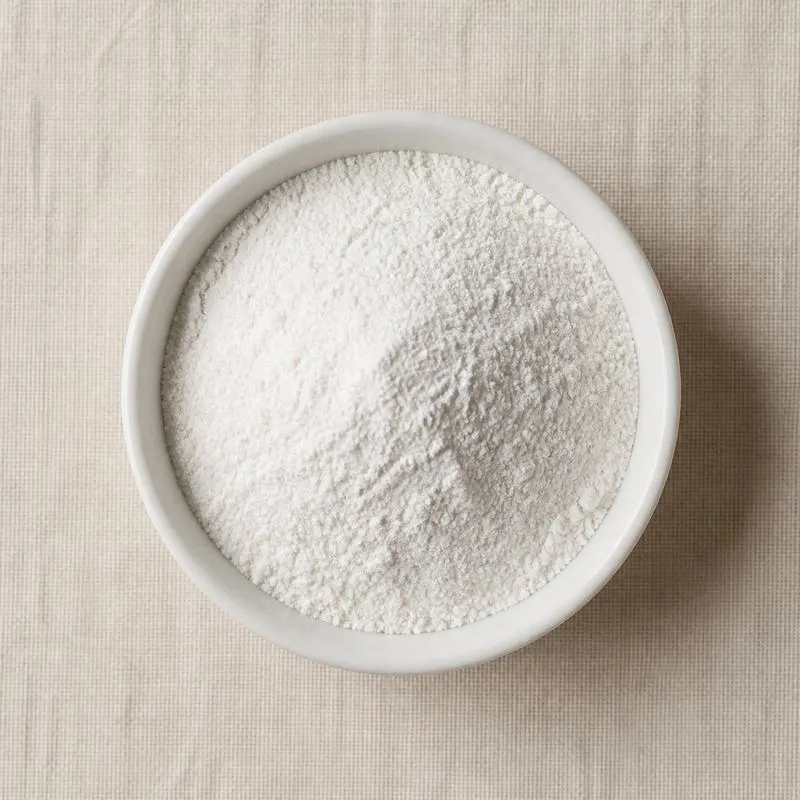
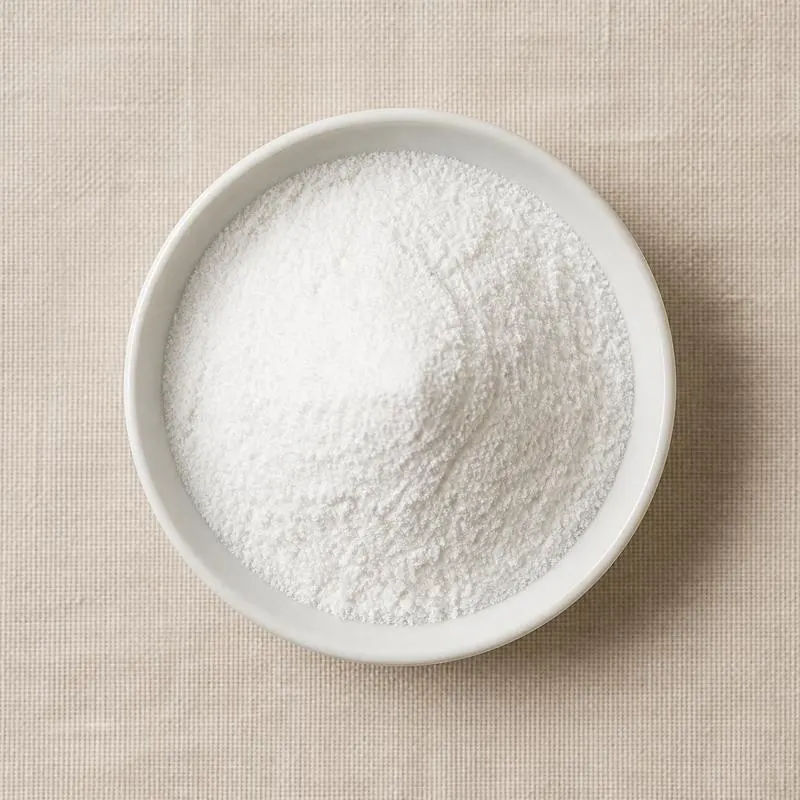
Magnesium taurate is the magnesium salt of taurine, a sulphonic amino acid, sold as a white to off-white crystalline powder for nutritional supplement and functional food use.
Each unit pairs one magnesium ion with two taurine anions, giving a nominal elemental magnesium content close to nine percent by weight, with the organic ligand making up the balance. Because the magnesium is bound to an amino acid rather than to an inorganic anion, dispersions are close to neutral in pH and the material lacks the saline bitterness of magnesium chloride and the osmotic behaviour associated with magnesium oxide or sulphate.
Solubility in water is moderate and improves with mild warming and slight acidification, so the powder is normally formulated into solid dose forms rather than clear beverages. It is stable under ambient storage but hygroscopic enough to need sealed packaging, and it withstands the compression forces and drying temperatures used in tabletting and fluid bed granulation without decomposition.
We source bulk Magnesium Taurate from top China manufacturers for our partners. The manufacturers are in Hebei and Anhui. A smaller requirement can ship in a combined container with other ingredients.
Please send the grade you need, the volume and your destination port, and we will come back with a solution and a price.
or call +86-21-6858 0751
- Function
- Mineral salt
Specifications
| Item | Specification |
|---|---|
| Appearance | White to off-white crystalline powder |
| Identification | Conforms by infrared spectrum and magnesium ion test |
| Magnesium (elemental) | 8.0 to 9.5% |
| Taurine content | Not less than 88.0% |
| Loss on drying | Not more than 2.0% |
| pH (1% aqueous suspension) | 7.0 to 9.0 |
| Particle size | 100% through 80 mesh |
| Heavy metals (as Pb) | Not more than 10 mg/kg |
| Lead | Not more than 2.0 mg/kg |
| Arsenic | Not more than 1.0 mg/kg |
| Cadmium | Not more than 1.0 mg/kg |
| Mercury | Not more than 0.1 mg/kg |
| Total plate count | Not more than 1,000 cfu/g |
| Yeast and mould | Not more than 100 cfu/g |
Common Markets Grades
Magnesium taurate is traded essentially as one specification, a food and supplement grade declared on elemental magnesium content rather than on an assay of the whole molecule. Declarations generally fall between eight and nine and a half percent magnesium, with taurine accounting for most of the remaining mass, and the certificate of analysis usually reports both figures.
Particle size is the practical point of difference between offers. A fine powder passing 80 mesh suits capsule filling and stick packs, while a granulated or agglomerated version with improved flow and lower dusting is selected for direct compression tabletting. Pharmaceutical grade documentation, including residual solvent and elemental impurity data, is available from producers that also serve the excipient market.
Applications
- Magnesium tablets and capsules, where the amino acid ligand keeps the powder near neutral in taste and avoids the chalky mouthfeel of oxide forms
- Sleep and relaxation formulas, usually combined with glycine, L-theanine or melatonin
- Cardiovascular and circulatory supplements, where taurine is itself part of the label claim
- Sports recovery powders and cramp formulas replacing magnesium lost in sweat
- Prenatal and women's health multivitamins as the magnesium carrier
- Stick packs and sachets for direct oral dosing, blended with flavour and a sweetener to mask the sulphur note
- Medical and clinical nutrition powders where a low osmotic load magnesium source is preferred
- Companion animal supplements formulated around taurine, particularly feline products
Brands Using Magnesium Taurate
Widely-distributed consumer products that list Magnesium Taurate on the ingredient label.
- NutricostMagnesium Taurate Capsules ↗Each serving supplies 1,500 mg of magnesium taurate, with 240 capsules and 80 servings per bottle.Label verified 2026-08-31
- Double Wood SupplementsMagnesium Taurate Supplement ↗The capsule uses magnesium taurate, a chelate of magnesium bonded to taurine, as its single magnesium source.Label verified 2026-08-31
Brand names, product names and logos are the property of their owners. They appear here as published evidence that the ingredient is used, taken from the brand's own label or website. Their appearance is not an endorsement, and it does not mean the brand buys from us or from any manufacturer listed on this site.
China Manufacturers of Magnesium Taurate
Top Magnesium Taurate manufacturers in China.
 Hebei LiWellso Biotech Co.,Limited11 ingredients in the directory
 Zymogreen (Huaibei) Food Technology Co.4 ingredients in the directory
Company names and logos are the property of the manufacturers themselves. They are listed here because our own directory records them as producing this ingredient. A listing is not an endorsement by them, and we do not represent them or speak on their behalf.
Regulatory Status
In the United States magnesium taurate is sold as a dietary ingredient under the Dietary Supplement Health and Education Act, and finished products are made under the dietary supplement current good manufacturing practice rules of 21 CFR Part 111. Taurine itself is the subject of GRAS notifications covering use in beverages and infant formula, but magnesium taurate is not among the magnesium salts affirmed for general food fortification, so its use stays concentrated in supplements rather than conventional foods.
In the European Union the mineral forms that may be used in food supplements are fixed by the annex to Directive 2002/46/EC, and magnesium taurate does not appear on that list, so European supplement manufacturers use listed magnesium salts instead. Taurine is authorised separately as a food supplement ingredient and as an additive to certain energy drinks under the applicable labelling rules. Codex and JECFA have not published a specification monograph for the salt, so buyers rely on producer specifications and pharmacopoeial methods for taurine and magnesium.
Manufacturing Process
Production starts from taurine, itself made industrially by reacting ethanolamine with sulphuric acid to the ester and then aminating and sulphonating it, or by the ethylene oxide route through sodium isethionate. The purified taurine is dissolved in hot demineralised water and neutralised with magnesium hydroxide or basic magnesium carbonate at a controlled stoichiometry of two moles of taurine to one of magnesium, with the reaction run until the slurry clears and the pH stabilises.
The hot liquor is polish filtered to remove unreacted magnesium base and insoluble matter, then concentrated under vacuum. The salt is recovered either by cooling crystallisation followed by centrifugation and vacuum drying, or by spray drying the concentrate directly when an amorphous free flowing powder is wanted. The dried solid is milled, sieved to the contracted mesh and passed through magnetic separation and metal detection before packing.