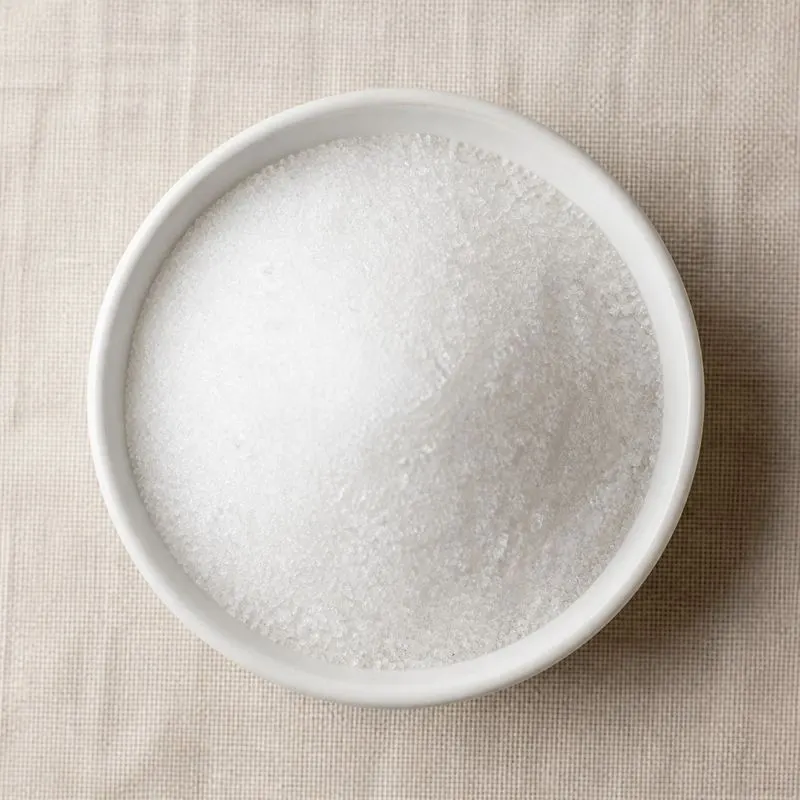
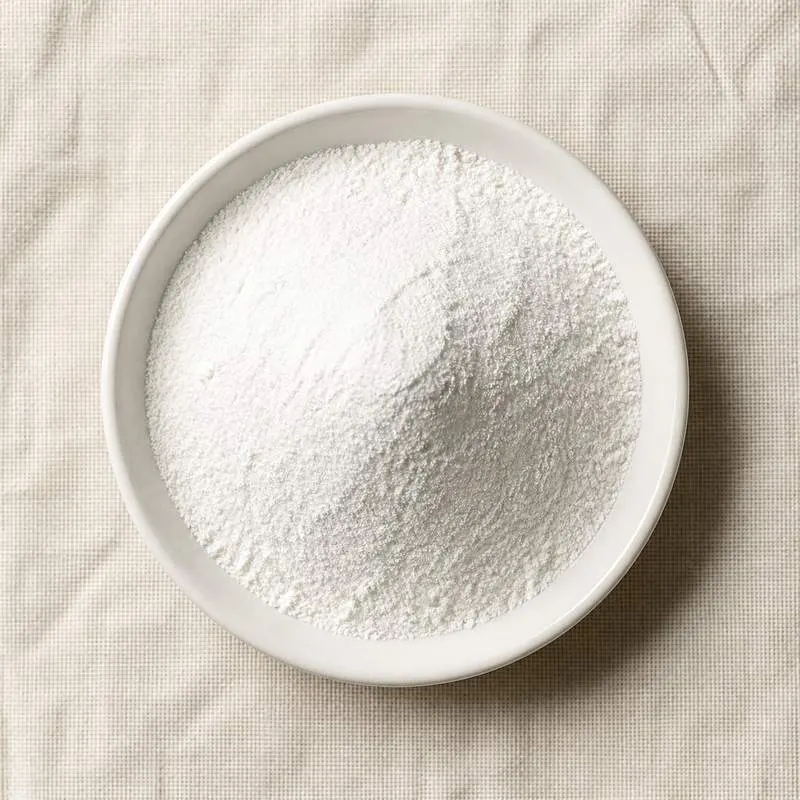
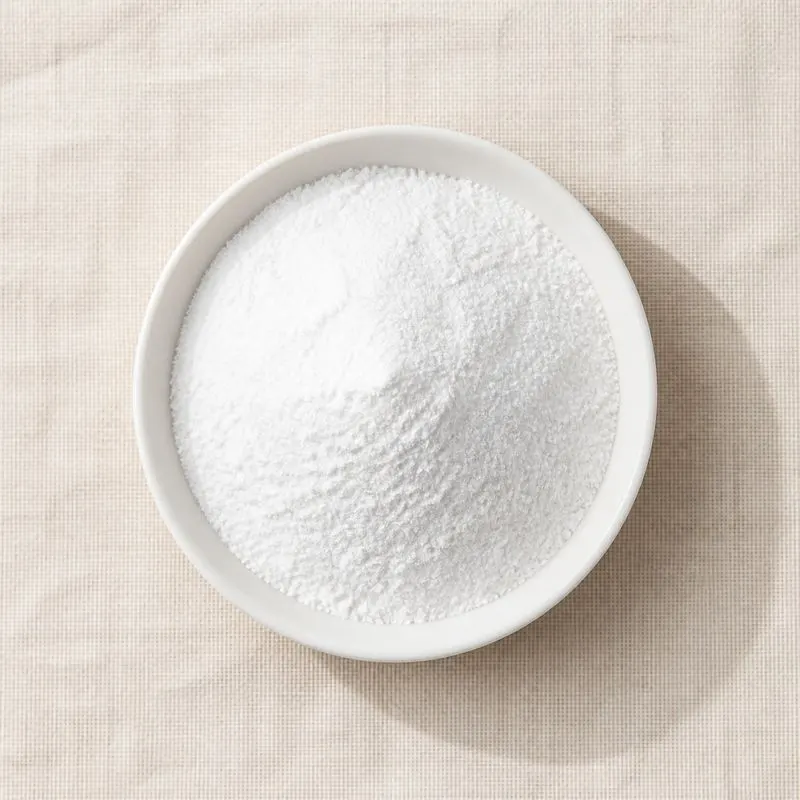
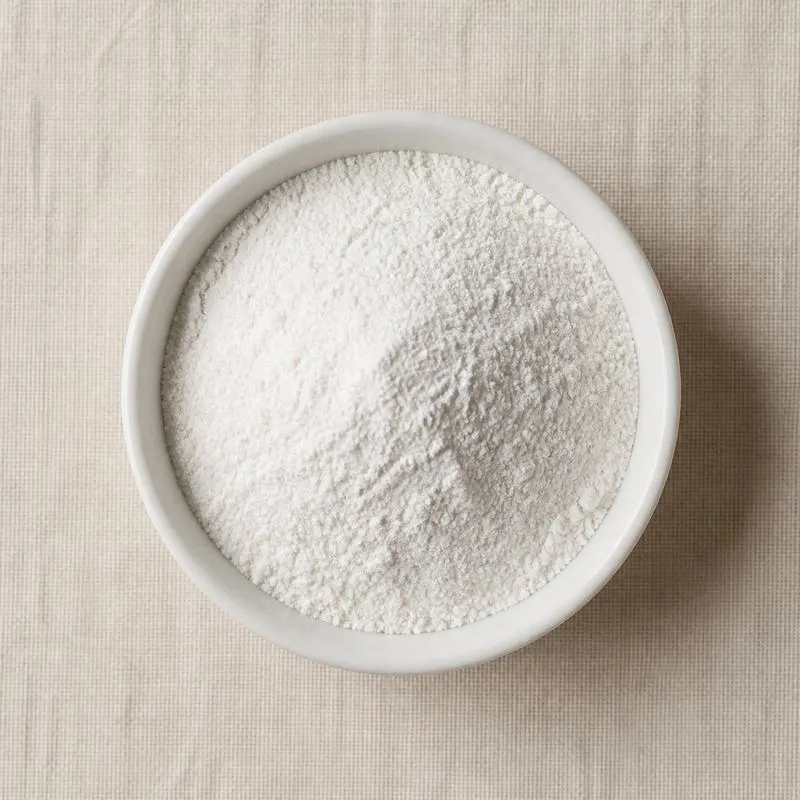
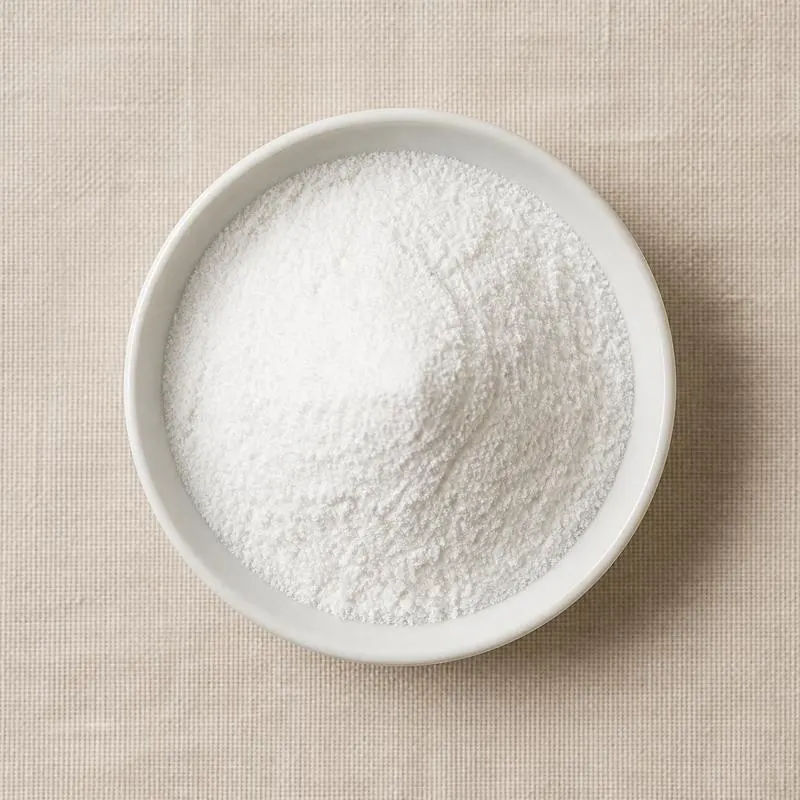
Monopotassium Phosphate
Monopotassium Phosphate is the monobasic salt of orthophosphoric acid and potassium, with the formula KH₂PO₄ and the shorthand designation MKP.
It functions as a mildly acidic buffer, a yeast nutrient, a leavening acid in baking, and a fully water-soluble source of phosphorus and potassium in fluid fertilizer programs.
We source bulk Monopotassium Phosphate from top China manufacturers for our partners, working with several of them. The manufacturers are in Jiangsu, Sichuan and Shandong. For this ingredient the minimum order is 500 kg, and a smaller requirement can ship in a combined container with other ingredients.
Please send the grade you need, the volume and your destination port, and we will come back with a solution and a price.
or call +86-21-6858 0751
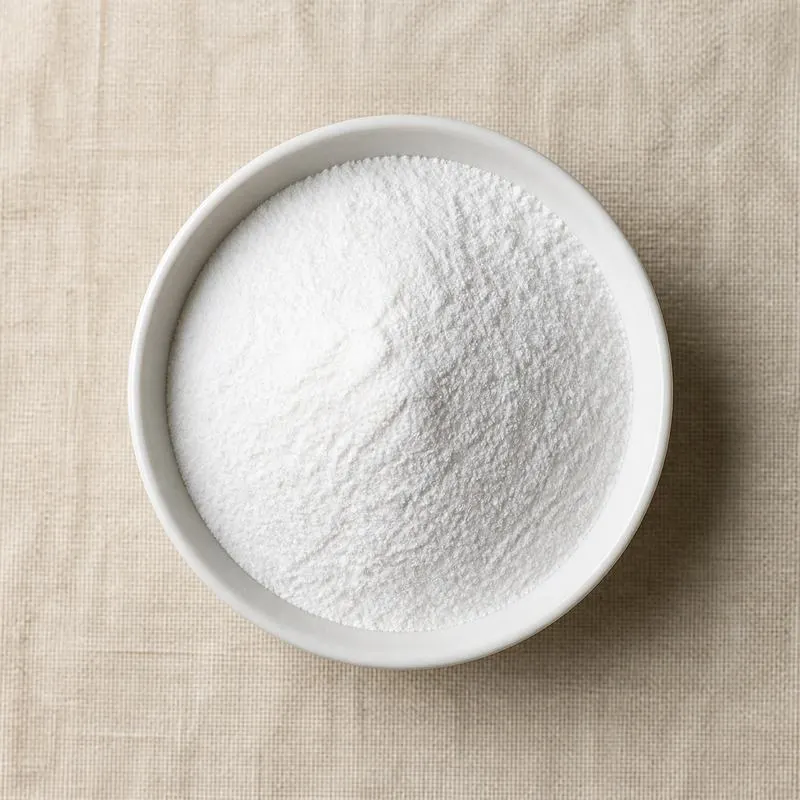
- Minimum order
- 500 kg
- Packaging
- 25 kg kraft paper bag with PE inner liner
- Function
- Mineral salt
- ISO 9001
- HACCP
- Halal
- Kosher
Specifications
| Item | Specification |
|---|---|
| Assay | 99.0 (Agriculture), 99.2 (Industry) |
| Phosphorus pentoxide | 52 (Agriculture), 52.0 (Industry) |
| Potassium oxide (K2O) | 34 (Agriculture), 34 (Industry) |
| pH value (30g/L solution) | 4.3-4.7 (All Grades) |
| Moisture | 0.2 (Agriculture), 0.1 (Industry) |
| Heavy metal, as Pb | 0.005 Max (Agriculture), 0.003 (Industry) |
| Arsenic, as As | 0.005 Max (Agriculture), 0.003 (Industry) |
| Water insoluble | 0.1 Max (Agriculture), 0.008 (Industry) |
| Fe | 0.003 Max (Agriculture), 0.001 (Industry) |
| Cl | 0.05 Max (Agriculture), 0.001 (Industry) |
Common Markets Grades
Three commercial purity tiers cover most of the market.
Fertilizer-grade MKP runs 98 percent minimum assay with a guaranteed nutrient analysis of 0-52-34 (P₂O₅-K₂O). It is the standard input for fertigation, foliar sprays, and water-soluble NPK blends.
Food-grade material meets the FCC monograph at 98 percent minimum and is screened for arsenic, lead, and fluoride. Particle size is typically a fine crystalline powder for fast dissolution in brines and dough systems.
Technical and pharmaceutical grades reach 99.5 percent and above, with low heavy-metal limits suited for buffer solutions, electrophoresis reagents, parenteral nutrition concentrates, and tissue-culture media.
Applications
- Water-soluble fertilizers and fertigation concentrates supplying P and K without nitrogen
- Foliar feeds during flowering and fruit-set stages where chloride and sulphate are unwanted
- Hydroponic nutrient solutions as a primary phosphorus source
- Yeast nutrient and pH control in brewing, winemaking, and baker's yeast propagation
- Acidulant and buffering salt in non-dairy creamers and instant beverage powders
- Leavening systems in self-rising flours and dry cake mixes
- Sports drinks and electrolyte powders as a potassium and phosphate carrier
- Buffer component in microbiology media, PCR mixes, and chromatography mobile phases
- Ingredient in oral electrolyte replacement and parenteral nutrition admixtures
- Flame-retardant treatments for cellulose insulation and forest-fire suppressants
Brands Using Monopotassium Phosphate
Widely-distributed consumer products that list Monopotassium Phosphate on the ingredient label.
- GatoradeGatorade Thirst Quencher Lemon-Lime ↗Gatorade adds potassium electrolytes via monopotassium phosphate (KH2PO4); listed in the ingredients of Lemon-Lime and other flavours.Label verified 2026-05-24
- GatoradeGatorlyte Rapid Rehydration Powder ↗Powdered Gatorlyte electrolyte formulation lists monopotassium phosphate as a potassium electrolyte source.Label verified 2026-05-24
- PoweradePowerade Lemon-Lime Sports Drink ↗Coca-Cola's Powerade Lemon-Lime lists mono-potassium phosphate as one of its electrolyte ingredients.Label verified 2026-05-24
- Premier ProteinPremier Protein Shake Chocolate ↗Ingredient list includes potassium phosphate forms used as buffering/mineral electrolytes in the ready-to-drink shake.Label verified 2026-05-24
Brand names, product names and logos are the property of their owners. They appear here as published evidence that the ingredient is used, taken from the brand's own label or website. Their appearance is not an endorsement, and it does not mean the brand buys from us or from any manufacturer listed on this site.
China Manufacturers of Monopotassium Phosphate
Top Monopotassium Phosphate manufacturers in China.
 Jiangsu Kolod Food Ingredients Co., Ltd.9 ingredients in the directory
 Jiangsu Zidong Food Co., Ltd.10 ingredients in the directory
- Lianyungang Dikang Food Additive Factory5 ingredients in the directory
 Lianyungang Hengsheng Fine Chemical Co., Ltd.10 ingredients in the directory
 Nature Food Technology Co.;Ltd.12 ingredients in the directory
 Sichuan Kindia May Science And Tech.Co., Ltd.14 ingredients in the directory
 Sichuan Ronghong Technology Development Co., Ltd.11 ingredients in the directory
- Sichuan Shifang Dingli Phosphorus Chemical Co., Ltd.4 ingredients in the directory
Company names and logos are the property of the manufacturers themselves. They are listed here because our own directory records them as producing this ingredient. A listing is not an endorsement by them, and we do not represent them or speak on their behalf.
How We Help Source Monopotassium Phosphate
Direct Factory Sourcing
We run the whole process: selecting the manufacturer from the top Chinese food ingredient producers, negotiating the price, verifying quality, and coordinating the logistics. You deal with us instead of with several factories at once.
Original Packaging and Documents from the Manufacturer
The manufacturer sends your Monopotassium Phosphate out of its own factory in the original packing, through to your destination port. The COA, COO, MSDS, TDS and any certifications reach you from the manufacturer as well.
Free Samples and Lead Time
We send 100 to 500 g free for your own laboratory to test and you cover only the courier, usually within 2 to 3 working days. ETD is usually within 7 to 15 days once the order is confirmed, and we check that date against the factory's own manufacturing schedule before we give it to you.
Combined Shipment
We can load Monopotassium Phosphate together with other ingredients such as Sodium Acetate, Calcium Citrate and Sodium Lactate into one 20' FCL. If your quantity is small, we can also ship LCL.
Regulatory Status
MKP is approved as a food additive under the joint number E340(i), which covers all three potassium orthophosphates as a class.
In the United States 21 CFR 182.1613 lists it as Generally Recognized as Safe for direct addition to food. It also appears in the United States Pharmacopeia as a buffering agent and source of phosphate ion in injectable formulations.
The European Food Safety Authority re-evaluated the phosphate group in 2019 and grouped potassium phosphates with the broader food-phosphate additives covered by Regulation (EC) No 1333/2008.
Fertilizer-grade material is regulated in the European Union under Regulation (EU) 2019/1009 on fertilizing products, and in the United States under state-level fertilizer labelling laws administered by AAPFCO.
Halal and Kosher certifications are routinely available, since the manufacturing route uses no animal-derived inputs.
Manufacturing Process
Industrial MKP is made by neutralising food- or technical-grade phosphoric acid with potassium hydroxide or potassium carbonate in a strict 1:1 molar ratio.
The reaction mixture is held near 70 °C, then cooled and crystallised in vacuum evaporators. Mother liquor is recycled and the crystal cake is centrifuged, dried, and screened.
An alternative route reacts potassium chloride with phosphoric acid, driving off hydrogen chloride. The HCl is recovered as a co-product, which improves overall economics but tightens chloride specification on the finished salt.
The largest producers are clustered in China, with additional capacity in Israel (ICL), Belgium (Prayon), and the United States. Global capacity is dominated by fertilizer-grade output, with food- and pharma-grade material representing a small premium fraction.