Oyster Sauce
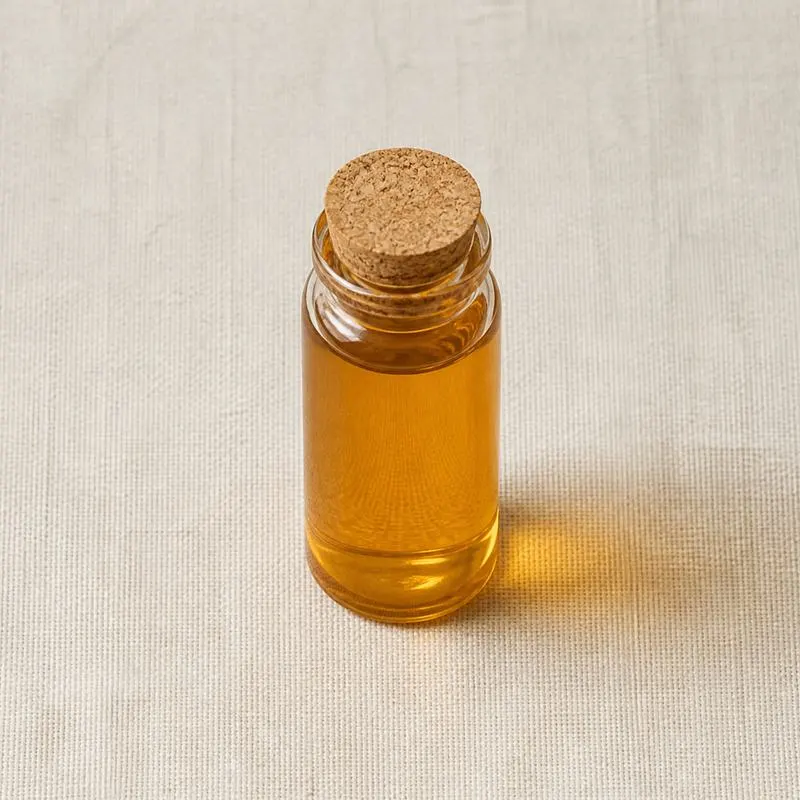
Oyster sauce is a thick brown savoury condiment made from concentrated oyster extractives blended with sugar, salt and a starch thickener. It originated in southern China and is now a standard seasoning across East and Southeast Asian cooking, used both during cooking and as a finishing sauce.
Its savoury effect comes from several sources at once. The oyster extract supplies free glutamate together with nucleotides, and those two act synergistically to give an umami intensity greater than either produces alone, while glycine, alanine and taurine from the shellfish contribute the sweet and marine notes that identify the sauce. Sugar and caramel colour round the taste and set the dark glossy appearance, and the starch fraction gives the viscosity that lets the sauce cling to food in a stir fry.
The product is a smooth, viscous, dark brown liquid with a mild shellfish aroma. It is water miscible and disperses readily into hot dishes, and its high salt and sugar content give it a low water activity, which is the main reason a commercial sauce is shelf stable at ambient temperature. Viscosity falls as the sauce is heated and recovers on cooling, and prolonged boiling breaks down the starch and thins the product permanently.
We source bulk Oyster Sauce from top China manufacturers for our partners. The manufacturer is in Fujian. A smaller requirement can ship in a combined container with other ingredients.
Please send the grade you need, the volume and your destination port, and we will come back with a solution and a price.
or call +86-21-6858 0751
- Function
- Flavours and Aromas
Specifications
| Item | Specification |
|---|---|
| Appearance | Smooth viscous liquid, free from lumps and foreign matter |
| Colour | Dark brown, glossy |
| Odour and flavour | Characteristic oyster and savoury, true to reference sample |
| Total solids | 40.0 percent minimum |
| Amino acid nitrogen | 0.30 g per 100 g minimum |
| Sodium chloride | 8.0 to 14.0 percent |
| Total sugars | Declared per formula, tolerance plus or minus 2 percent |
| Viscosity at 25 degrees Celsius | 3,000 to 8,000 mPa s |
| pH | 4.5 to 5.5 |
| Benzoic acid, where used | Within the permitted limit for the food category |
| Lead | 1.0 mg/kg maximum |
| Arsenic, inorganic | 0.5 mg/kg maximum |
| Total plate count | 1,000 cfu/g maximum |
| Yeast and mould | 50 cfu/g maximum |
| Salmonella | Absent in 25 g |
Common Markets Grades
The main quality axis is the proportion of genuine oyster extract, which is reflected in the declared amino acid nitrogen content and, in many specifications, in a stated oyster extract percentage. The highest grades carry a high extract level and a correspondingly full flavour, standard grades use less extract with more sugar and starch, and economy grades lean further on flavour enhancers and hydrolysed protein to reach a similar taste at lower cost.
Other distinctions are formulation based. Vegetarian oyster sauce is a related but separate product built on mushroom extract instead of shellfish, and is sold as its own item rather than as a grade of oyster sauce. Reduced sodium, gluten free, and preservative free positions each require reformulation, since salt, wheat derived starch and benzoate all serve technical functions. Package format also drives specification, with retail bottles, foodservice pails and aseptic industrial containers differing in viscosity and in thermal process.
Applications
- Stir fried vegetables, particularly leafy greens, where it is used as the main seasoning
- Meat and seafood stir fries, added toward the end of cooking to glaze and season
- Marinades for beef, pork and chicken, where its sugar content aids surface browning
- Noodle and rice dishes as part of the seasoning sauce
- Dim sum fillings and dipping sauces
- Braises and clay pot dishes, contributing colour and savoury depth
- Industrial sauce and ready meal manufacture as a savoury base component
- Retail table condiment sold in bottles for household cooking
- Foodservice bulk seasoning in restaurant and canteen kitchens
Brands Using Oyster Sauce
Widely-distributed consumer products that list Oyster Sauce on the ingredient label.
- Lee Kum KeePremium Oyster Sauce ↗A bottled oyster sauce whose ingredient list begins with oyster extract made from oyster, water and salt.Label verified 2026-08-31
- Lee Kum KeePanda Brand Oyster Sauce ↗The Panda Brand oyster sauce lists water, sugar and oyster extractives of oyster, water and salt as its first ingredients.Label verified 2026-08-31
Brand names, product names and logos are the property of their owners. They appear here as published evidence that the ingredient is used, taken from the brand's own label or website. Their appearance is not an endorsement, and it does not mean the brand buys from us or from any manufacturer listed on this site.
China Manufacturers of Oyster Sauce
Top Oyster Sauce manufacturers in China.

Company names and logos are the property of the manufacturers themselves. They are listed here because our own directory records them as producing this ingredient. A listing is not an endorsement by them, and we do not represent them or speak on their behalf.
Regulatory Status
In the United States oyster sauce is a food rather than a regulated additive, and it is manufactured under the seafood and general food safety requirements, including hazard analysis for the shellfish raw material. Molluscan shellfish is one of the major food allergens that must be declared, so the label must identify oyster as its source. Additives used in the formula, such as caramel colour, monosodium glutamate, modified starch and any permitted preservative, are each declared by name on the ingredient list under the general labelling rules.
In the European Union the sauce is a composite food, and its additives are individually authorised with E numbers, including caramel colours in the E150 series, monosodium glutamate as E621, modified starches in the E1400 series and benzoates as E211 where preservation requires them, each used within the limits set by the additives regulation for the relevant food category. Molluscs are a listed allergen under the food information regulation and must be emphasised in the ingredient list. Import of the shellfish derived material is subject to the animal products hygiene and controls framework. Codex has adopted a regional standard for oyster sauce that sets out composition, quality factors and labelling, and it is the reference most export specifications follow.
Manufacturing Process
Production begins with the oyster extract. Shucked oysters or oyster meat are cooked in water, and the resulting liquor, which carries the soluble protein, peptides, nucleotides and minerals, is separated from the solids by decanting and filtration. That liquor is concentrated under vacuum in a falling film evaporator to a heavy extract, and many plants add an enzymatic hydrolysis step before concentration to break the remaining protein into peptides and free amino acids, which raises the savoury intensity and the amino acid nitrogen figure the market is bought on.
The concentrated extract is then blended in a jacketed cooking vessel with sugar, salt, water, modified starch, caramel colour and any flavour enhancer or preservative in the formula. The batch is heated with agitation so that the starch gelatinises fully and the sugar dissolves, and it is held at temperature long enough to pasteurise the sauce. The hot sauce is homogenised or passed through a colloid mill to give a smooth, uniform body, then hot filled into bottles or containers and inverted or tunnel cooled so that the closure is sterilised by the hot product. Filled packs are cooled rapidly, since prolonged heat darkens the colour and thins the viscosity.