Refined Kappa Carrageenan
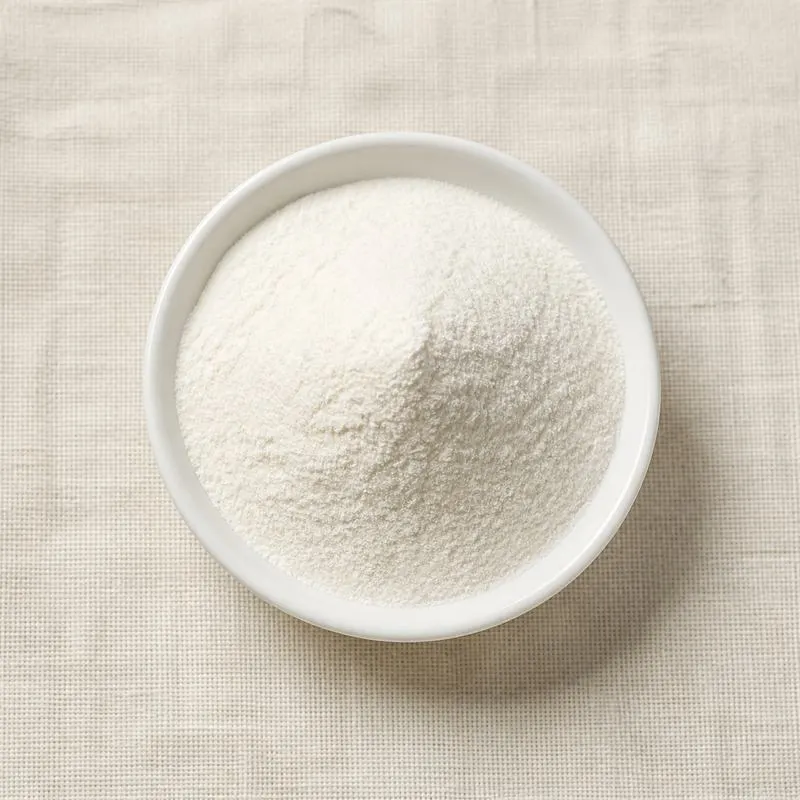
Refined kappa carrageenan is the single-sulphated fraction of the carrageenan family, extracted from red seaweed and purified by dissolving the polysaccharide and separating it from the insoluble cell wall residue. Its repeating unit is 3,6-anhydro-D-galactose alternating with D-galactose 4-sulphate, giving roughly one sulphate group per disaccharide, the lowest of the three commercial types.
That low charge density is what makes it gel strongly. With few sulphate groups to repel one another, the chains adopt an ordered double helix on cooling, and potassium ions sit in the sulphate pockets and screen the remaining charge so that helices aggregate into a continuous network. The resulting gel is firm, brittle and short, breaking cleanly rather than stretching, and it shows noticeable syneresis as the network continues to tighten. Potassium is specific here; sodium gives little gelation and calcium far less than potassium.
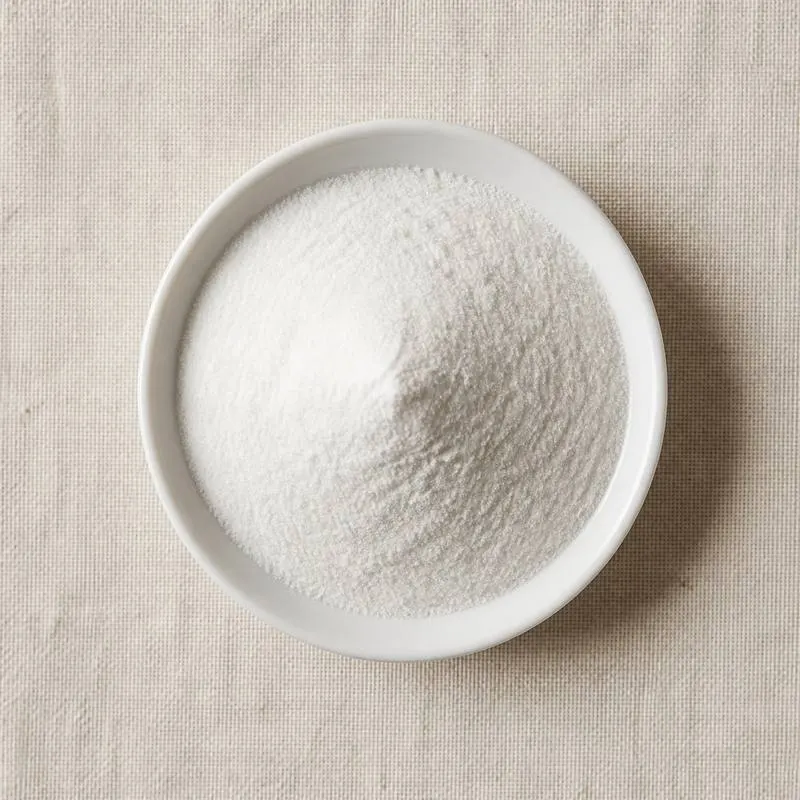
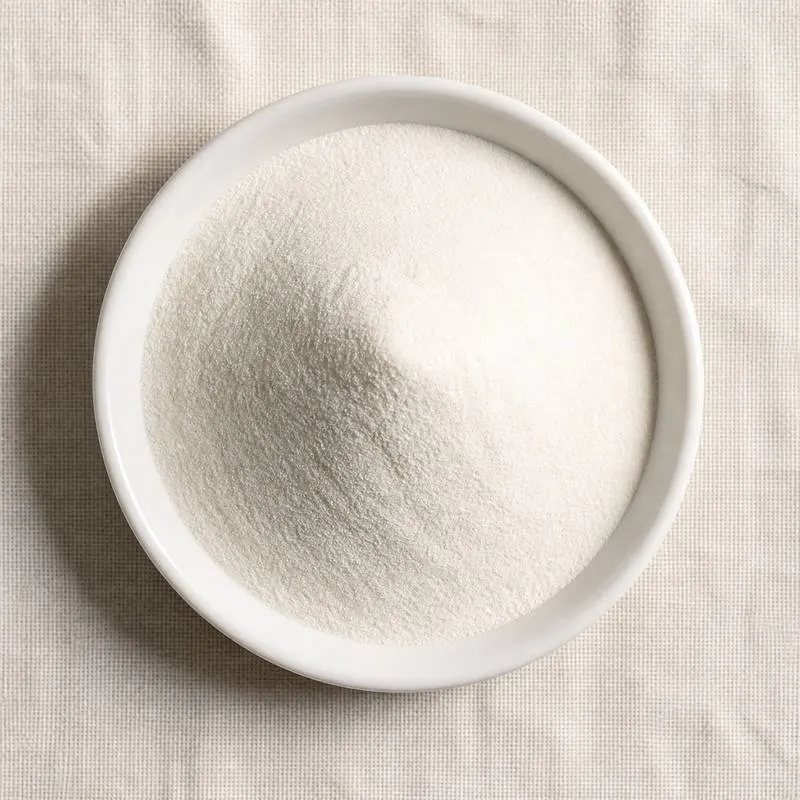
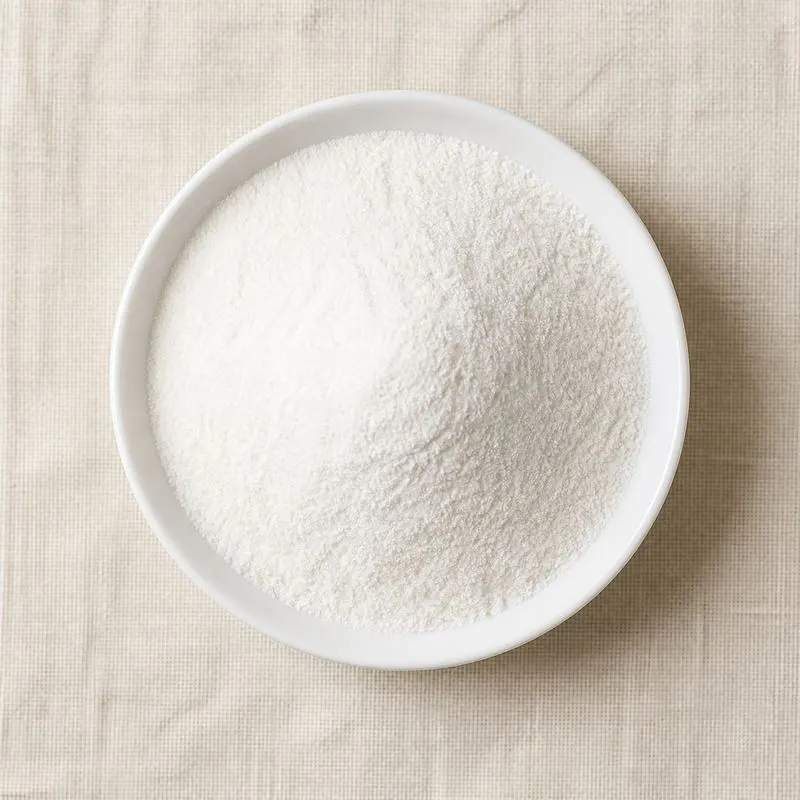
Kappa carrageenan also reacts with the kappa-casein of milk protein, forming a weak gel in milk at a small fraction of the dose needed in water, which is the basis of its use in dairy. It is a white to pale cream powder, dissolving in water above about 70 degrees Celsius and setting on cooling to around 35 to 60 degrees depending on the potassium level. It is stable at neutral and alkaline pH and hydrolyses on prolonged hot holding under acid.
We source bulk Refined Kappa Carrageenan from top China manufacturers for our partners, working with several of them. The manufacturers are in Jiangsu, Guangdong and Fujian. A smaller requirement can ship in a combined container with other ingredients.
Please send the grade you need, the volume and your destination port, and we will come back with a solution and a price.
or call +86-21-6858 0751
- Function
- Thickener / Hydrocolloid
Specifications
| Item | Specification |
|---|---|
| Appearance | White to pale cream powder, free of foreign matter |
| Odour and Taste | Almost odourless, bland |
| Identification | Infrared spectrum characteristic of kappa carrageenan |
| Gel Strength, 1.5% in 0.2% potassium chloride | Not less than 900 g per square centimetre |
| Gelling Temperature | 35 to 50 degrees Celsius |
| Melting Temperature | 55 to 70 degrees Celsius |
| Sulphate, dry basis | 18.0% to 25.0% |
| Loss on Drying | Not more than 12.0% |
| Sulphated Ash, dry basis | 15.0% to 40.0% |
| Acid Insoluble Matter | Not more than 2.0% |
| pH, 1% solution | 8.0 to 11.0 |
| Residual Isopropanol | Not more than 0.1% |
| Particle Size | Not less than 95% through 80 mesh |
| Lead | Not more than 2 mg/kg |
| Arsenic | Not more than 3 mg/kg |
| Cadmium | Not more than 1 mg/kg |
| Total Plate Count | Not more than 5,000 CFU/g |
| Salmonella | Absent in 25 g |
Common Markets Grades
Kappa carrageenan is rarely sold neat. Commercial grades are standardised with potassium chloride and a sugar diluent to a declared gel strength in a stated test system, and most are blended with a small proportion of iota carrageenan, locust bean gum or konjac gum to soften the brittleness and suppress syneresis, since a pure kappa gel is often too short and too prone to weeping for use on its own.
Grades are ordered by gel strength in water or in milk, by gelling and melting temperature, and by dispersibility. Cold soluble sodium form material and agglomerated instant grades are offered where hot dissolution is impractical. Application lines exist for water dessert jelly, dairy dessert, ice cream, processed meat and pet food, each with its own salt and diluent balance. Buyers should confirm both the gel strength and the standardising system, because two grades quoting the same strength can behave very differently in a formulation with its own potassium and calcium load.
Applications
- Water jelly desserts, giving a firm brittle vegetarian set that holds at room temperature
- Dairy desserts, flans and custards, forming a set at very low dose through reaction with milk casein
- Chocolate milk and flavoured dairy drinks, suspending cocoa particles without adding perceptible viscosity
- Processed meat and poultry, binding injected brine and improving cook yield and slice cohesion
- Ice cream and frozen desserts, controlling whey separation and ice crystal growth
- Plant based cheese analogues, providing the firm sliceable structure that casein would otherwise give
- Pet food chunks in jelly, setting the jelly phase and keeping the chunk intact
- Confectionery jellies and gummies as a gelatin alternative
- Air freshener gels and cosmetic sticks requiring a rigid heat set structure
- Toothpaste and oral gels, giving body and preventing separation
China Manufacturers of Refined Kappa Carrageenan
Top Refined Kappa Carrageenan manufacturers in China.
 Benefit Ocean3 ingredients in the directory
- Guangdong Xinmei Biotechnology Co., Ltd.3 ingredients in the directory
 Quanzhou Xizhilang Biotechnology Co., Ltd.7 ingredients in the directory
Company names and logos are the property of the manufacturers themselves. They are listed here because our own directory records them as producing this ingredient. A listing is not an endorsement by them, and we do not represent them or speak on their behalf.
Regulatory Status
Kappa carrageenan is not regulated as a separate additive; it falls within carrageenan. In the United States that means 21 CFR 172.620, which permits carrageenan as a direct food additive under stated conditions, with a companion regulation at 21 CFR 172.626 for carrageenan with polysorbate 80. The label declaration is carrageenan.
In the European Union it is covered by E407 carrageenan under the food additives regulation, with the purity criteria setting limits on sulphate, ash, acid insoluble matter, residual isopropanol and heavy metals, and requiring control of the molecular weight distribution so that only a small proportion of material falls below the low molecular weight threshold. Degraded low molecular weight carrageenan is a different substance and is not permitted as a food additive. Carrageenan is generally allowed at quantum satis in the categories where it is permitted, with specific restrictions applying to foods for infants and young children. Codex and JECFA recognise carrageenan as INS 407 with specifications applying the same controls. Semi-refined material, which retains the cellulose residue, is listed separately in the European Union as E407a.
Manufacturing Process
Dried Kappaphycus alvarezii, traded as cottonii, is the principal raw material. The weed is washed to remove sand, salt and epiphytes, then extracted in hot potassium hydroxide or sodium hydroxide solution at 80 to 95 degrees Celsius for several hours. The alkali dissolves the carrageenan and, critically, converts galactose 6-sulphate residues into 3,6-anhydrogalactose, which is the unit that allows the helix to form. Without that conversion the extracted polymer would be a weakly gelling precursor.
The viscous extract is diluted and clarified by centrifugation and by filtration through a filter press with diatomaceous earth, which removes the cellulose residue and is the step that distinguishes refined from semi-refined material. The clarified solution is recovered either by precipitation into isopropanol, which throws the polymer out as fibres that are pressed, washed and desolventised with the alcohol recovered by distillation, or by the gel press route, in which the solution is extruded into a concentrated potassium chloride bath so that it sets to a gel that is then pressed or frozen and thawed to expel water. The gel press route is used almost exclusively for kappa, because kappa is the type that gels reliably with potassium. The recovered polymer is dried, milled, and blended with potassium chloride and sugar to the declared gel strength before packing.