Spermidine Trihydrochloride
Spermidine trihydrochloride is the tris hydrochloride salt of spermidine, the triamine N 3 aminopropyl 1,4 butanediamine. Spermidine itself is a polyamine found in every living cell, formed from putrescine by transfer of an aminopropyl group from decarboxylated S adenosylmethionine, and present in food at its highest levels in wheat germ, soybean products, aged cheese and mushrooms.
The free base is a hygroscopic and corrosive liquid or low melting solid that oxidises in air, which is why the material of commerce is almost always the hydrochloride salt. Protonating the three nitrogen centres converts it into a stable white crystalline solid, easy to weigh and to handle, and freely soluble in water. The trade interest in spermidine rests on its role as an inducer of autophagy, the cellular recycling process, and on the epidemiological and animal work that has linked polyamine intake to longevity endpoints.
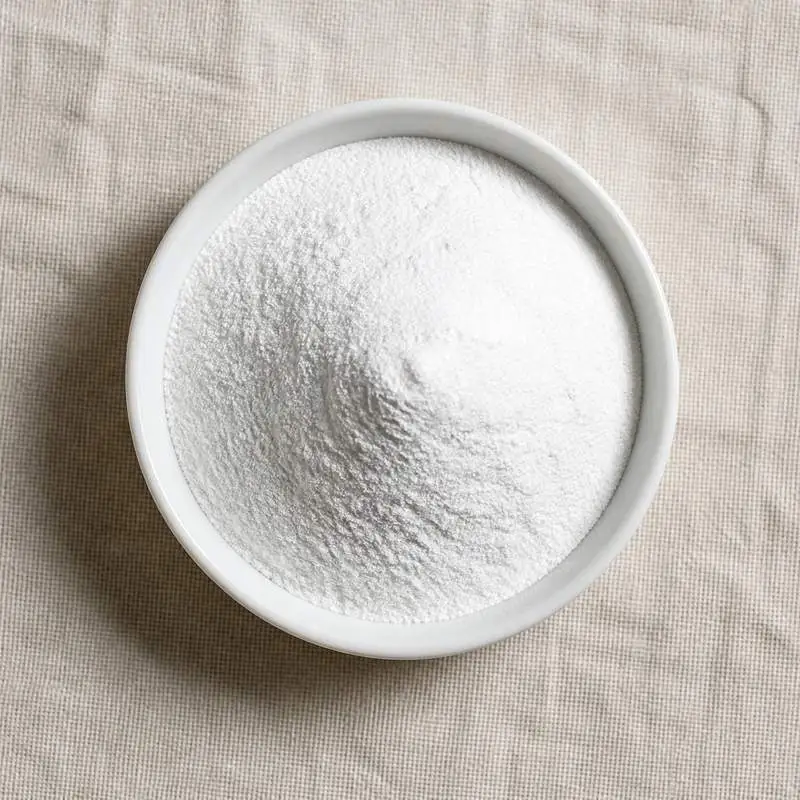
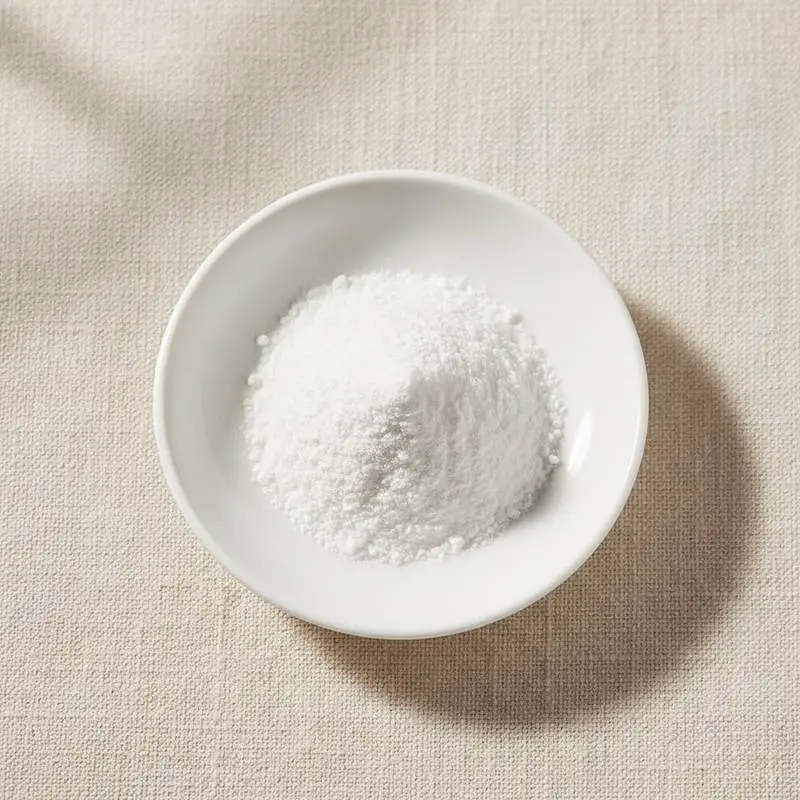
The salt is a white to off white crystalline powder, very soluble in water giving an acidic solution, slightly soluble in methanol and practically insoluble in most non polar solvents. It is deliquescent, so it is packed in tightly sealed foil laminate with desiccant, and its solutions are stable at neutral to acidic pH but oxidise under alkaline conditions.
We source bulk Spermidine Trihydrochloride from top China manufacturers for our partners, working with several of them. The manufacturers are in Zhejiang, Guangdong and Jiangsu. A smaller requirement can ship in a combined container with other ingredients.
Please send the grade you need, the volume and your destination port, and we will come back with a solution and a price.
or call +86-21-6858 0751
- Function
- Nutraceutical
Specifications
| Item | Specification |
|---|---|
| Appearance | White to off white crystalline powder |
| Assay (anhydrous basis) | Not less than 98.0 percent |
| Identification | Infrared spectrum and HPLC retention conform to reference |
| Putrescine Dihydrochloride | Not more than 0.5 percent |
| Spermine Tetrahydrochloride | Not more than 0.5 percent |
| Related Substances (total) | Not more than 1.5 percent |
| pH (1 percent solution) | 3.0 to 5.0 |
| Loss on Drying | Not more than 1.0 percent |
| Residue on Ignition | Not more than 0.2 percent |
| Residual Solvents | Conforms to ICH Class 3 limits |
| Nickel | Not more than 5 mg/kg |
| Lead | Not more than 1 mg/kg |
| Arsenic | Not more than 1 mg/kg |
| Heavy Metals (as Pb) | Not more than 10 mg/kg |
| Total Plate Count | Not more than 1000 cfu/g |
| Salmonella | Absent in 25 g |
Common Markets Grades
The commercial trade divides between synthetic spermidine trihydrochloride and plant derived spermidine preparations, and the two are not interchangeable on a specification sheet. Synthetic salt is traded at 98 percent and 99 percent minimum assay by titration or chromatography, with related polyamines, principally putrescine and spermine, controlled as named impurities. Reference and analytical grades above 99.5 percent come in small pack sizes for laboratory use.
Plant derived material is a different product class, usually a wheat germ extract standardised to a stated spermidine content in the range of 0.2 to 1.5 percent, sold as a powder in which the polyamine sits in its natural matrix. Because several markets accept the food derived extract more readily than the isolated synthetic salt, formulators choose between them on regulatory grounds as much as on cost. Physical grades of the synthetic salt are limited to fine crystalline powder and micronised powder, with no coated or encapsulated version in general trade.
Applications
- Longevity and autophagy supplements in capsule form, the largest supplement position for the compound
- Combination formulations with nicotinamide adenine dinucleotide precursors, resveratrol or urolithin A
- Cognitive support products, following studies on memory endpoints in older adults
- Hair and skin supplements, drawing on work associating polyamines with follicle activity
- Cell culture media supplementation, where polyamines support growth of certain cell lines
- Molecular biology reagents, where spermidine salts stabilise nucleic acids and are used in transcription and crystallisation buffers
- Preclinical research material for autophagy, cardiac ageing and neurodegeneration studies
- Topical cosmetic formulations positioned on cell renewal
- Analytical reference standard for polyamine quantification in food and biological matrices
Brands Using Spermidine Trihydrochloride
Widely-distributed consumer products that list Spermidine Trihydrochloride on the ingredient label.
Brand names, product names and logos are the property of their owners. They appear here as published evidence that the ingredient is used, taken from the brand's own label or website. Their appearance is not an endorsement, and it does not mean the brand buys from us or from any manufacturer listed on this site.
China Manufacturers of Spermidine Trihydrochloride
Top Spermidine Trihydrochloride manufacturers in China.
 Great Forest13 ingredients in the directory
 Maintain Biotech Co., Ltd.1 ingredient in the directory
- Suzhou Sanyi Polymer Chemical Technology Co., Ltd.9 ingredients in the directory
Company names and logos are the property of the manufacturers themselves. They are listed here because our own directory records them as producing this ingredient. A listing is not an endorsement by them, and we do not represent them or speak on their behalf.
Regulatory Status
Regulatory standing differs sharply between the isolated compound and the food derived extract, and this is the practical issue for buyers. In the European Union a wheat germ extract rich in spermidine has been authorised as a novel food, with conditions covering the permitted food categories and the maximum daily amount set in the Union list. Synthetic spermidine trihydrochloride as an isolated substance does not share that authorisation and would require its own novel food approval before being placed on the European market as a food supplement ingredient.
In the United States spermidine is present in the ordinary diet and spermidine rich wheat germ extracts are marketed as dietary ingredients, but the isolated synthetic salt has no generally recognised as safe determination and no widely accepted new dietary ingredient notification. It is not a food additive and carries no E number in any jurisdiction, and neither JECFA nor Codex has evaluated it or published specifications. Material sold as a laboratory reagent or research chemical moves under chemical rather than food rules, and buyers should confirm the food status of the specific form in each destination market rather than relying on the status of spermidine as a dietary constituent.
Manufacturing Process
The dominant industrial route is chemical synthesis by cyanoethylation. Putrescine, 1,4 diaminobutane, is reacted with acrylonitrile in a Michael addition that adds a cyanoethyl group to one primary amine, with the stoichiometry and addition rate controlled to favour the mono adduct over the bis adduct. The nitrile is then hydrogenated over a Raney nickel or cobalt catalyst under hydrogen pressure, usually in the presence of ammonia to suppress secondary amine formation, converting the cyanoethyl group into the aminopropyl arm and giving spermidine free base. An alternative route protects one amine of putrescine, alkylates with a protected aminopropyl halide, then deprotects, which gives cleaner selectivity at higher cost.
Crude free base is separated from unreacted putrescine, spermine and higher polyamines by fractional vacuum distillation, since the homologues differ enough in boiling point for the separation to work at scale. The purified base is dissolved in ethanol or isopropanol and treated with hydrogen chloride to precipitate the trihydrochloride, which is filtered, washed with cold alcohol and recrystallised from aqueous ethanol to lift assay and strip residual homologues. Crystals are dried under vacuum at moderate temperature, milled and sieved in a low humidity room, then packed under nitrogen with desiccant. Where a fermentation route is used instead, an engineered bacterium overproducing the polyamine is grown on a sugar substrate and the product is recovered from the broth by ion exchange before the same salt formation and crystallisation steps.