Gardenoside
Gardenoside is an iridoid glycoside found in the fruit of Gardenia jasminoides, the cape jasmine known in Chinese herbal practice as zhi zi. It is a bitter, water soluble compound of molecular formula C17H24O11 and molar mass around 404, structurally close to geniposide and differing from it by an additional hydroxyl group on the iridoid ring. The two occur together in gardenia fruit and are usually assayed together in trade specifications.
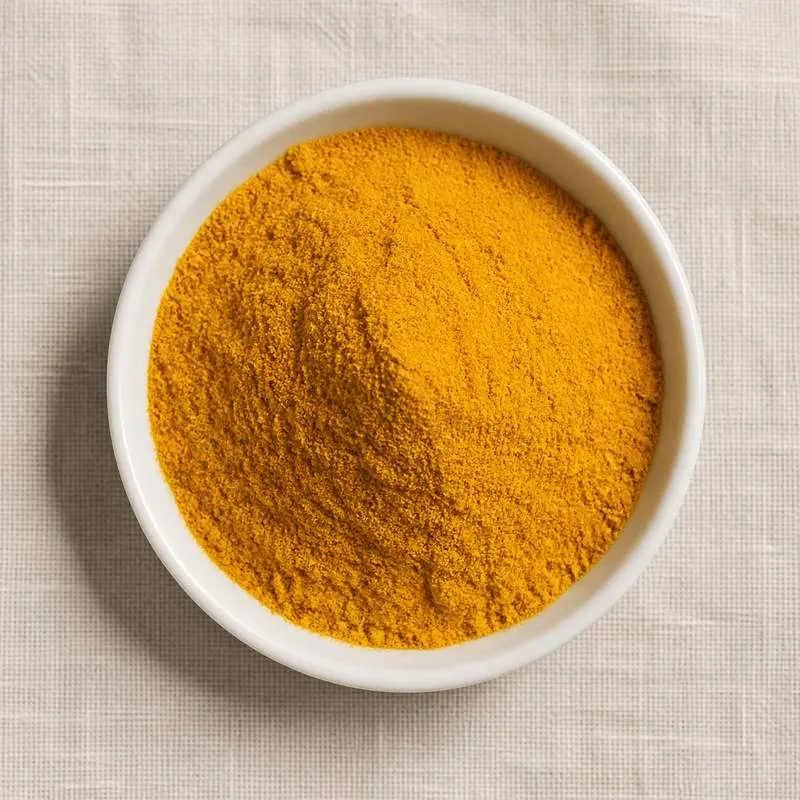
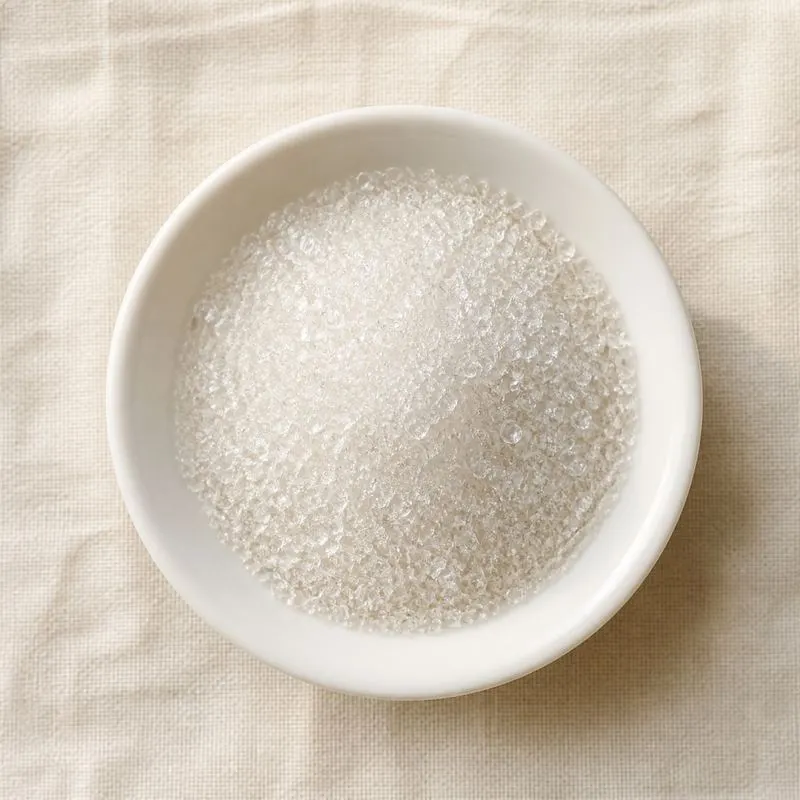
The purified compound is a white to off-white crystalline powder, odourless, with a pronounced bitter taste. It dissolves readily in water, methanol and dilute ethanol and is poorly soluble in non-polar solvents. Like other glycosides it is stable in the dry solid state and near-neutral pH but is hydrolysed by acid and by beta-glucosidase, which cleaves the glucose unit and releases an unstable aglycone. That aglycone chemistry is the same route that produces the blue pigments of gardenia blue, so browning or bluing of the gardenia iridoids in a formulation is a real risk in protein-containing systems.
Commercially the compound is traded in two quite different ways: as a high purity analytical reference standard for pharmacopoeial and quality control work, and as the marker compound on which broader gardenia fruit extracts are standardised.
We source bulk Gardenoside from top China manufacturers for our partners. The manufacturer is in Henan. A smaller requirement can ship in a combined container with other ingredients.
Please send the grade you need, the volume and your destination port, and we will come back with a solution and a price.
or call +86-21-6858 0751
- Function
- Plant extract
Specifications
| Item | Specification |
|---|---|
| Appearance | White to off-white crystalline powder |
| Odour and Taste | Odourless, bitter |
| Identification | Conforms by HPLC retention and UV spectrum against reference standard |
| Assay | Not less than 98.0% by HPLC |
| Related Iridoids | Not more than 1.5% total |
| Loss on Drying | Not more than 3.0% |
| Residue on Ignition | Not more than 0.5% |
| Residual Ethanol | Not more than 0.5% |
| Heavy Metals | Not more than 10 mg/kg |
| Lead | Not more than 2.0 mg/kg |
| Arsenic | Not more than 1.0 mg/kg |
| Total Plate Count | Not more than 1,000 cfu/g |
| Yeast and Mould | Not more than 100 cfu/g |
| E. coli | Absent in 1 g |
| Salmonella | Absent in 25 g |
Common Markets Grades
Reference standard grades are the highest purity material, typically 98 percent or better by HPLC, sold in gram and milligram quantities with a certificate of analysis, structural confirmation data and an assigned potency value. These are used to calibrate the assay of other lots rather than to formulate anything.
Extract grades are the bulk material and are sold as gardenia fruit extract standardised to a stated iridoid content, commonly 5, 10, 20 or 40 percent expressed as gardenoside or as combined gardenoside and geniposide by HPLC. These are brown to yellow-brown powders carrying the natural pigments, gums and sugars of the fruit alongside the marker compound. Physical options are limited to particle size, usually 80 mesh, and to whether a carrier such as maltodextrin has been added to standardise the assay downward. Buyers should confirm which marker the declared percentage refers to, since gardenoside and geniposide figures are frequently quoted interchangeably and are not the same measurement.
Applications
- Analytical reference standard for pharmacopoeial identity and assay testing of gardenia fruit and of finished herbal preparations
- Marker compound for standardising bulk gardenia fruit extracts in supplement manufacture
- Traditional Chinese herbal formulations built on gardenia fruit, sold as decoction granules and concentrated extracts
- Herbal supplement capsules and tablets, where a gardenia extract is dosed against its declared iridoid content
- Herbal tonic beverages and instant granules in East Asian formats, contributing a bitter cooling character
- Intermediate for gardenia blue and gardenia red pigment manufacture, where the iridoid fraction is the substrate for enzymatic conversion
- Botanical research and stability studies, used as a spiking standard in method development
- Cosmetic actives, where gardenia iridoid fractions are used in soothing and brightening positioning
- Bitter botanical component in herbal liqueur and amaro style beverage bases
China Manufacturers of Gardenoside
Top Gardenoside manufacturers in China.
Company names and logos are the property of the manufacturers themselves. They are listed here because our own directory records them as producing this ingredient. A listing is not an endorsement by them, and we do not represent them or speak on their behalf.
Regulatory Status
In the United States gardenia fruit and its extracts are used as dietary ingredients under DSHEA, with gardenia having a long history of use as a botanical. Gardenoside itself is not an approved food additive and has no independent GRAS listing, so a use in conventional food rests on a GRAS conclusion for the specific preparation. Gardenia blue, a pigment derived from the same iridoid chemistry, is not an approved colour additive for food in the United States, and that distinction matters because a gardenia iridoid extract must not be presented as a permitted colour there.
In the European Union gardenoside is a plant constituent rather than a food additive and has no E number. A concentrated or purified iridoid preparation is likely to be assessed under the Novel Food Regulation, since purified single constituents of a botanical rarely have a demonstrable history of significant consumption in the EU before May 1997, and gardenia blue colouring preparations have been the subject of novel food evaluation. Reference standard material sold for laboratory use falls outside food law entirely and counts as a research chemical. Codex has no standard for this substance, and specifications are set by contract.
Manufacturing Process
Dried gardenia fruit is cleaned, milled and extracted with water or with dilute ethanol at 60 to 80 degrees Celsius, a temperature range chosen to give good glycoside recovery without driving hydrolysis. The extract is separated from the marc by filter press and clarified. Because gardenia fruit carries a heavy load of crocin pigments, sugars and pectin, the crude liquor is dark orange-brown and needs substantial cleaning before the iridoid fraction is usable.
Purification is normally done on macroporous adsorption resin. The clarified liquor is loaded onto the column, water washing removes sugars, salts and part of the pigment load, and a graded ethanol elution then recovers the iridoid fraction. For extract grades the eluate is concentrated under vacuum, blended to the declared marker assay and spray dried or vacuum belt dried. For reference standard grades the enriched fraction goes on through preparative chromatography and one or more recrystallisations from aqueous alcohol, followed by vacuum drying, before purity is confirmed by HPLC and structure by spectroscopic methods.