Gardenia Extract
Gardenia extract is a family of water soluble colours obtained from the ripe fruit of Gardenia jasminoides, a shrub cultivated across southern China and Japan. The fruit contains two useful classes of compound: crocins, the same water soluble carotenoid glycosides that give saffron its colour, and iridoid glycosides, chiefly geniposide. Which colour is produced depends on which of the two is worked up.
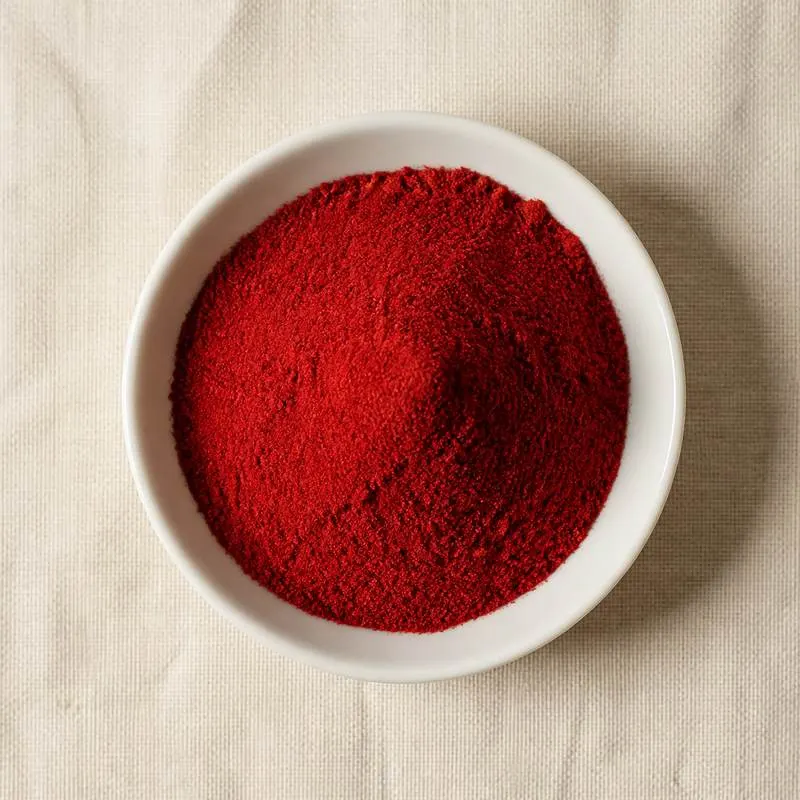
Gardenia yellow is the crocin fraction, giving a bright lemon to orange yellow that is unusual among natural yellows in being fully water soluble rather than needing emulsification. Gardenia blue and gardenia green are made from the iridoid fraction: geniposide is hydrolysed enzymatically to genipin, which then reacts with primary amino groups from an amino acid or protein to form a polymeric blue pigment. Gardenia red is produced by a related reaction under different conditions. The blue is one of the few plant derived blues that holds its shade across a wide pH range and through heat processing.
All grades come as spray dried powders on maltodextrin, and as liquid concentrates. They dissolve readily in water and dilute alcohol and are insoluble in oil. Gardenia yellow is light sensitive and will fade in clear packaging; gardenia blue is markedly more stable to heat, light and pH than the anthocyanin blues it competes with.
We source bulk Gardenia Extract from top China manufacturers for our partners. The manufacturers are in Hubei and Yunnan. A smaller requirement can ship in a combined container with other ingredients.
Please send the grade you need, the volume and your destination port, and we will come back with a solution and a price.
or call +86-21-6858 0751
- Function
- Colorant
Specifications
| Item | Specification |
|---|---|
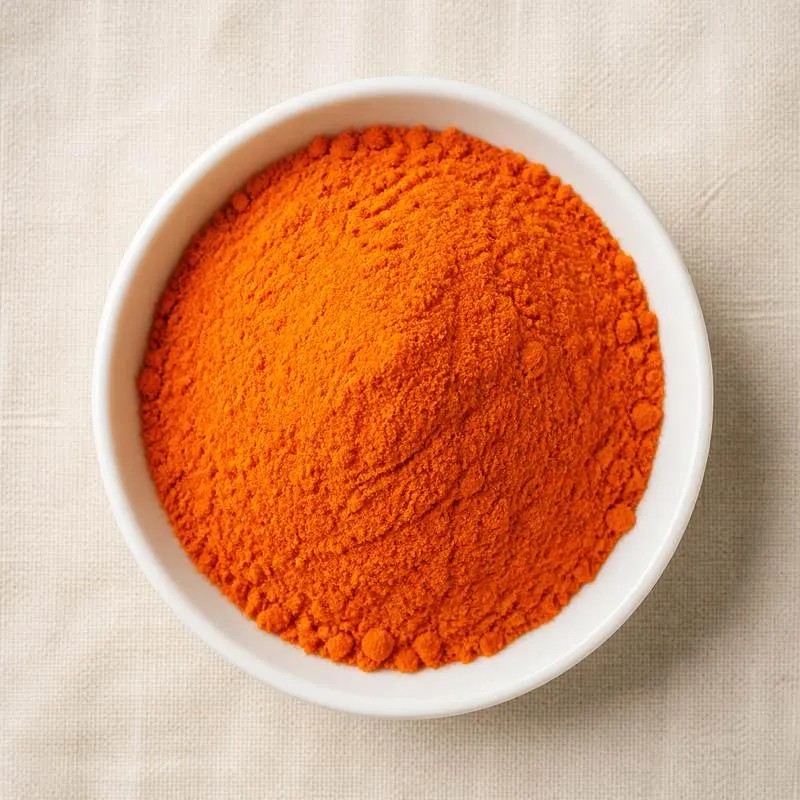
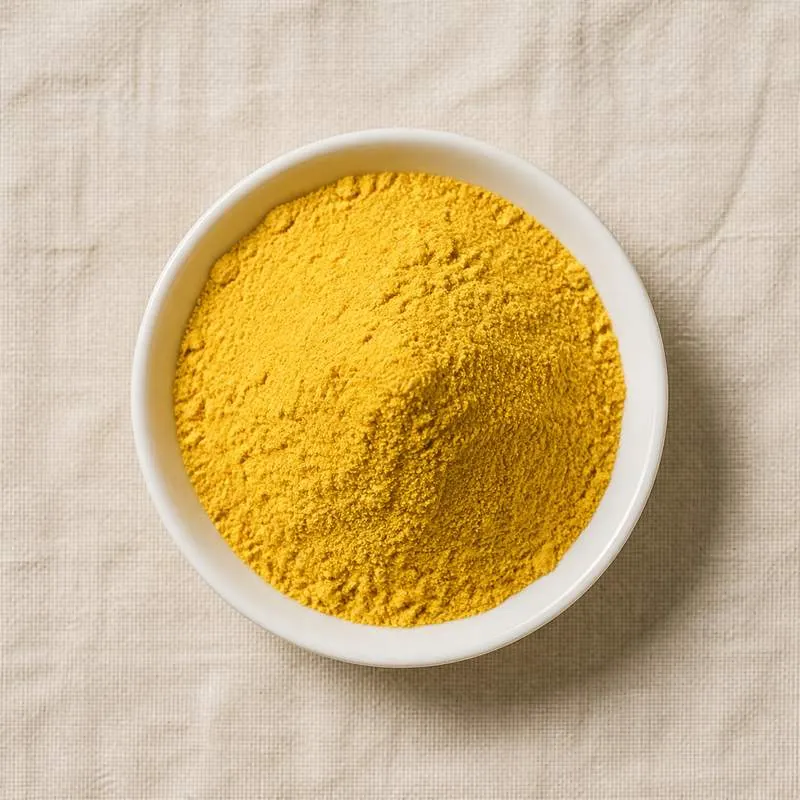
| Appearance | Yellow to orange brown free flowing powder |
| Colour Value E1% 1cm at 440 nm | 200 minimum |
| Identification | Absorption maxima at 440 nm and 465 nm in water |
| Loss on Drying | 6.0% maximum |
| Ash | 5.0% maximum |
| pH, 1% aqueous solution | 4.0 to 7.0 |
| Residual Geniposide | 1.0% maximum |
| Solvent Residue, ethanol | 0.5% maximum |
| Lead | 2 mg/kg maximum |
| Arsenic | 1 mg/kg maximum |
| Total Plate Count | 1000 cfu/g maximum |
| Yeast and Mould | 100 cfu/g maximum |
| E. coli | Absent in 5 g |
| Salmonella | Absent in 25 g |
Common Markets Grades
The traded grades split first by colour. Gardenia yellow is standardised on colour value E1% 1cm at about 440 nm, commonly at 100, 200 or 400, and a crocin content figure is quoted alongside for buyers dosing on the active. Gardenia blue is standardised near 590 nm at colour value 100 to 300. Green grades are blends of the yellow and blue fractions and are specified on hue as well as strength. Red grades are made in smaller volume and are specified near 530 nm.
Within each colour the practical distinctions are carrier and purity. Maltodextrin carried powders are standard; starch free and high purity grades are made by additional resin polishing, which also removes the residual geniposide that some specifications cap. Liquid concentrates are preserved and shipped chilled. Deodorised grades are produced where the characteristic fruit note would carry through at high dosage.
Applications
- Noodles, wrappers and steamed products in East Asian manufacture, where gardenia yellow gives an egg like colour without egg
- Chinese and Japanese pickled vegetables, including the yellow radish used in bento and sushi
- Hard boiled sweets and jellies, using gardenia blue for a stable blue that survives the cook
- Ice cream, sorbet and frozen desserts in blue and green shades
- Bakery fillings, icings and decorated confectionery applied after bake
- Chestnut, sweet potato and bean paste products, a traditional use of the yellow in Japanese confectionery
- Flavoured drinks and ready to drink teas, where full water solubility avoids the ring formation an emulsified carotenoid can cause
- Surimi and fish paste products, where the yellow tints the surface layer
- Liqueurs and coloured spirits at moderate alcohol strength
- Blending component with safflower and turmeric colours to build orange and green shades
China Manufacturers of Gardenia Extract
Top Gardenia Extract manufacturers in China.
- Wuhan Green Food Biological Engineering Co., Ltd.1 ingredient in the directory
- Yunnan Tonghai Yang Natural Products Co., Ltd.8 ingredients in the directory
Company names and logos are the property of the manufacturers themselves. They are listed here because our own directory records them as producing this ingredient. A listing is not an endorsement by them, and we do not represent them or speak on their behalf.
Regulatory Status
Regulatory status differs sharply by market and by colour, and this decides where the material can be sold. Gardenia colours have a long history of authorised use in Japan, where they are listed among the natural colouring agents, and are widely used across East and Southeast Asia. In the United States the Food and Drug Administration acted on a colour additive petition for gardenia derived blue and listed it for use in specified beverage and confectionery categories, so gardenia blue may be used in the United States within the conditions of that listing; gardenia yellow does not have an equivalent listing and should not be assumed to be permitted there. Suppliers should be asked to confirm the listing and its permitted categories in writing.
In the European Union neither gardenia yellow nor gardenia blue holds an E number under Regulation (EC) No 1333/2008, and neither may be used as a food colour. Crocin reaches European products through saffron used as a colouring food rather than through a gardenia additive. Codex does not carry a gardenia colour provision in the General Standard for Food Additives, and JECFA has not adopted specifications for it. Export documentation should therefore state the destination market explicitly.
Manufacturing Process
Dried gardenia fruit is cleaned, crushed and extracted with warm water or dilute food grade ethanol. The crude extract carries both the crocins and the iridoid geniposide, and the two are separated on a food grade adsorption resin, the crocin fraction and the geniposide fraction being eluted under different conditions. For gardenia yellow the crocin eluate is concentrated under vacuum at low temperature, standardised to colour value with maltodextrin and spray dried.
For gardenia blue the geniposide fraction is treated with a beta-glucosidase, which cleaves the glucose unit to release genipin. The genipin is then reacted with a primary amine source, in practice an amino acid such as glycine or a protein hydrolysate, under controlled temperature and pH. The reaction builds a polymeric pigment over several hours, and the colour is followed by absorbance until the target hue is reached. The reaction mixture is then filtered, desalted and concentrated on resin or by ultrafiltration to remove unreacted amino acid and residual geniposide, standardised, and spray dried. Green grades are blended from the finished yellow and blue rather than made as a single reaction.