Nicotinamide Riboside Hydrogen Malate
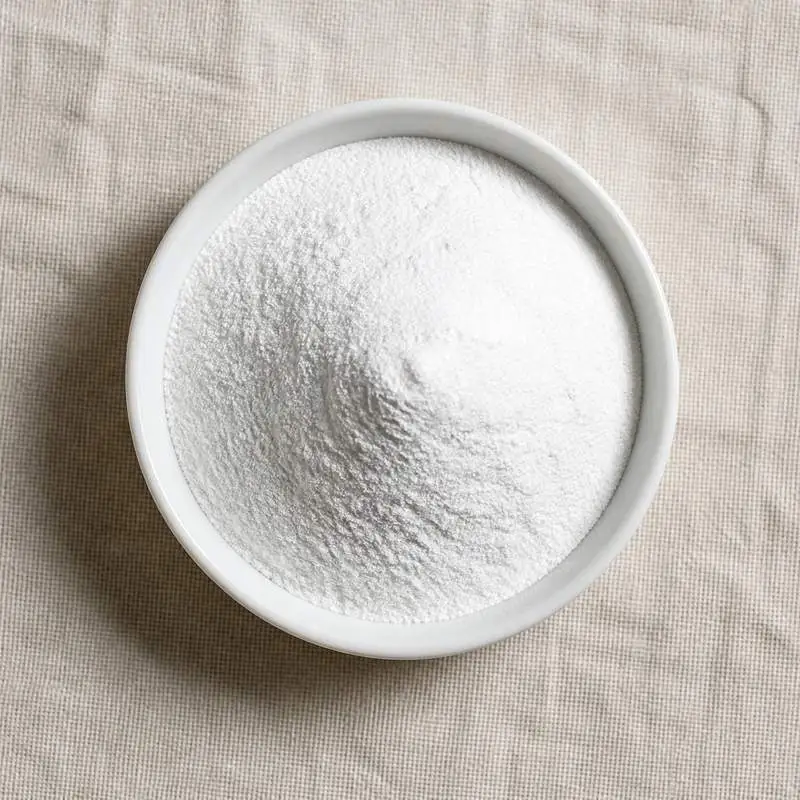
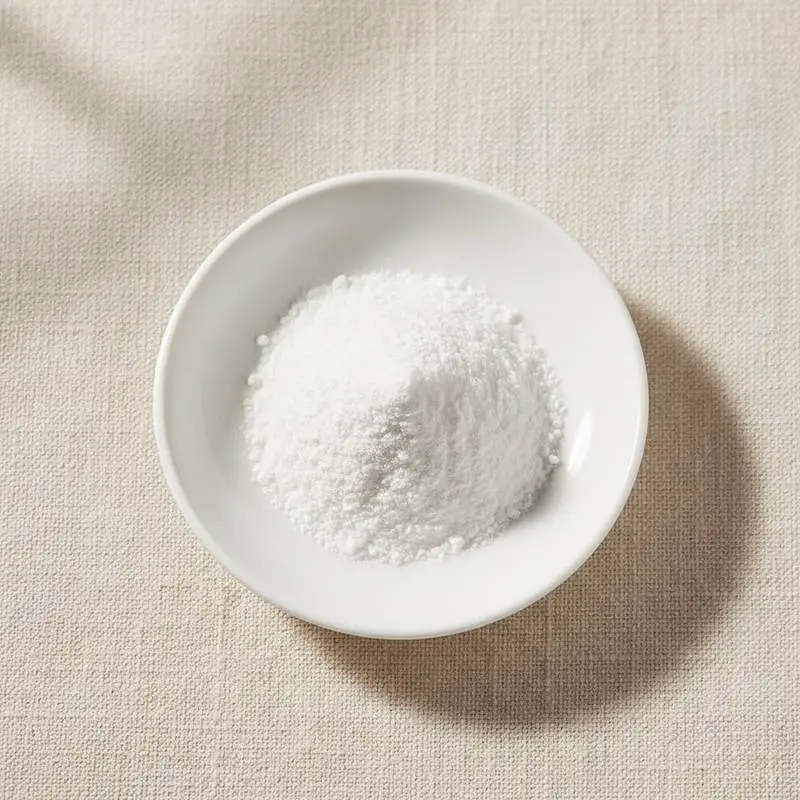
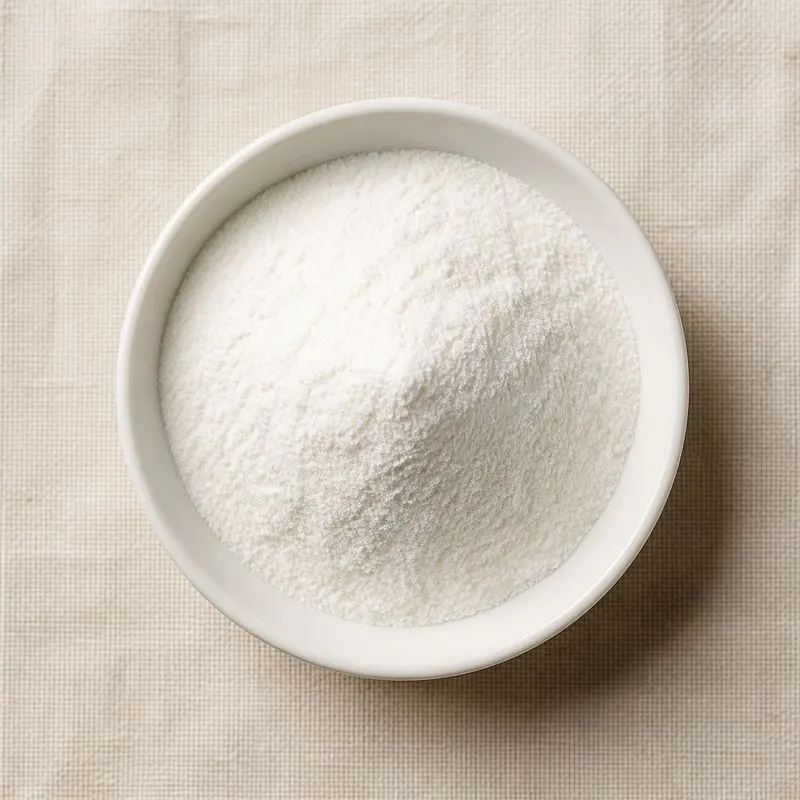
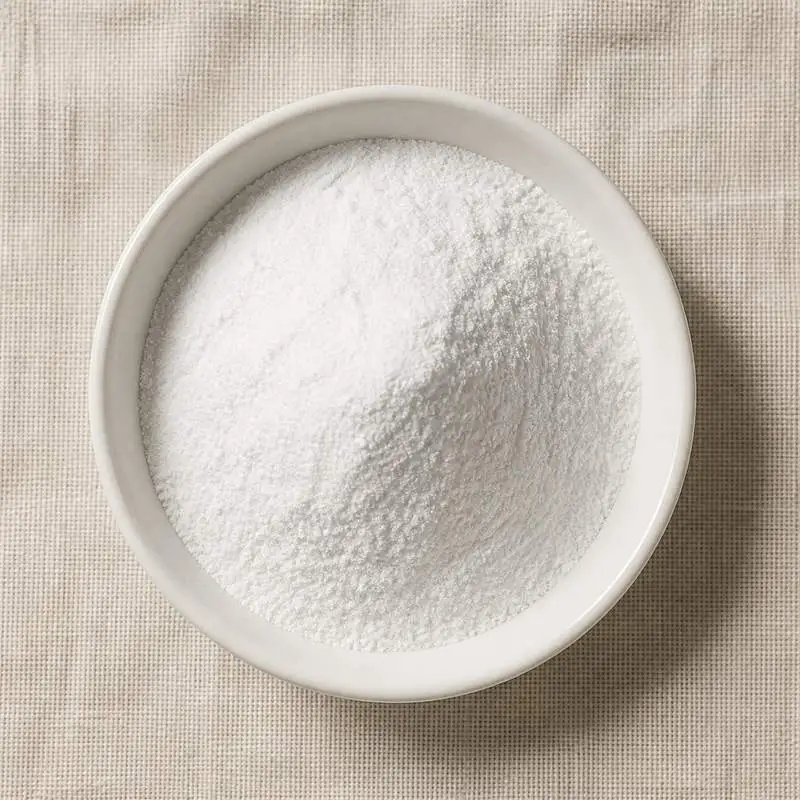
Nicotinamide riboside hydrogen malate is a salt of the pyridinium nucleoside nicotinamide riboside in which the counterion is hydrogen malate, the singly deprotonated form of malic acid, rather than chloride. Trade material is a white to off-white crystalline or amorphous powder, and it exists as a commercial article for one reason: the choice of counterion changes the hygroscopicity, thermal stability and taste of a compound whose stability is its principal weakness.
Nicotinamide riboside itself is a cation and must be isolated as a salt. The chloride salt, the established form, is strongly hygroscopic and hydrolyses at the glycosidic bond to nicotinamide and ribose when warm or moist. Pairing the cation with hydrogen malate, an organic dicarboxylate that buffers in the mildly acidic range where the nucleoside is most stable, gives a salt that takes up less water and holds its assay better under accelerated storage, which is the claim on which it is sold. The malate contributes about 40 percent of the molecular weight, so the nicotinamide riboside content per gram is lower than in the chloride and the label must be explicit about which figure is being declared.
The salt is freely soluble in water, giving an acidic solution, and it carries a faint sour note from the malate that is noticeable in unflavoured powders. It remains sensitive to heat and to pH above about 5 in solution, so it is packed under nitrogen in foil laminate with desiccant and formulated in acidic or dry systems.
We source bulk Nicotinamide Riboside Hydrogen Malate from top China manufacturers for our partners. The manufacturer is in Guangdong. A smaller requirement can ship in a combined container with other ingredients.
Please send the grade you need, the volume and your destination port, and we will come back with a solution and a price.
or call +86-21-6858 0751
- Function
- Nutraceutical
Specifications
| Item | Specification |
|---|---|
| Appearance | White to off-white crystalline or amorphous powder |
| Odour and taste | Faint characteristic odour, slightly sour taste |
| Assay as the salt by HPLC, anhydrous basis | Not less than 98.0 percent |
| Nicotinamide riboside content | Not less than 58.0 percent |
| Identification | Infrared spectrum and HPLC retention correspond to reference standard |
| Beta anomer content | Not less than 99.0 percent of total nicotinamide riboside |
| Malate content | Conforms to a one to one molar ratio |
| Nicotinamide | Not more than 1.0 percent |
| Nicotinic acid | Not more than 0.1 percent |
| Residual chloride | Not more than 0.5 percent |
| Lead | Not more than 1.0 mg/kg |
| Arsenic | Not more than 1.0 mg/kg |
| Total plate count | Not more than 1000 cfu/g |
| Salmonella | Absent in 25 g |
Common Markets Grades
The material is traded essentially as a single specification at 98 percent minimum assay expressed as the salt, with the nicotinamide riboside content stated separately as a percentage, and with nicotinamide, nicotinic acid, free malic acid and residual solvents controlled as related substances. Because nicotinamide is the degradation product that accumulates on storage, its limit and the stability data behind it are the points on which grades are actually compared.
Physical forms are a standard crystalline powder for capsule filling, a milled grade for premix blending, and a granulated direct compression grade for tablets. Coated and microencapsulated versions are made where the salt has to sit alongside hygroscopic or alkaline excipients or survive a gummy matrix. Anomeric purity is specified, only the beta anomer being the relevant species, and the stoichiometry of the salt, one malate hydrogen per nicotinamide riboside cation, is confirmed by the malate assay rather than assumed. Suppliers offering this form generally provide comparative accelerated stability data against the chloride as part of the specification package.
Applications
- Cellular energy and healthy ageing supplement capsules and tablets, the primary outlet
- Nicotinamide adenine dinucleotide precursor stacks combined with pterostilbene, resveratrol and quercetin
- Powdered drink mixes and stick packs, where the lower hygroscopicity of the malate salt eases handling
- Effervescent and chewable tablets, the acidic malate suiting an already acidic matrix
- Gummies and soft chews using a coated grade to survive the moisture of the matrix
- Ready-to-drink shots formulated at acidic pH
- Sports and endurance formulations sold on mitochondrial energy metabolism
- Cognitive and neurological support blends alongside choline sources and B vitamins
- Beauty-from-within products marketed with collagen peptides and hyaluronic acid
Brands Using Nicotinamide Riboside Hydrogen Malate
Widely-distributed consumer products that list Nicotinamide Riboside Hydrogen Malate on the ingredient label.
- ProHealth LongevityNicotinamide Riboside Pro 300 + 100 mg TMG ↗The supplement facts panel lists nicotinamide riboside as NR hydrogen malate at 300 mg per serving.Label verified 2026-08-31
- ProHealth LongevityNicotinamide Riboside Pro Complete ↗Each serving carries 500 mg of NR hydrogen malate with trans-resveratrol and trimethylglycine.Label verified 2026-08-31
- CodeageLiposomal NRHM+ ↗Provides 300 mg of nicotinamide riboside hydrogen malate per serving alongside trans-resveratrol, D-ribose and quercetin.Label verified 2026-08-31
Brand names, product names and logos are the property of their owners. They appear here as published evidence that the ingredient is used, taken from the brand's own label or website. Their appearance is not an endorsement, and it does not mean the brand buys from us or from any manufacturer listed on this site.
China Manufacturers of Nicotinamide Riboside Hydrogen Malate
Top Nicotinamide Riboside Hydrogen Malate manufacturers in China.

Company names and logos are the property of the manufacturers themselves. They are listed here because our own directory records them as producing this ingredient. A listing is not an endorsement by them, and we do not represent them or speak on their behalf.
Regulatory Status
In the United States the established regulatory position covers nicotinamide riboside chloride, which has been the subject of new dietary ingredient notifications and GRAS notifications to FDA with no objection letters issued. A different salt is a different substance for these purposes, so a hydrogen malate form does not automatically inherit that status; a manufacturer marketing it as a dietary ingredient would rely on its own new dietary ingredient notification or on a documented basis that the salt is not a new dietary ingredient, and any use in conventional food would require an independent determination. Claims are limited to structure and function statements with the required disclaimer.
In the European Union nicotinamide riboside chloride is authorised as a novel food and entered in the Union list under Regulation (EU) 2015/2283, with the authorisation specifying the permitted preparation, the food categories and the maximum use levels. That listing is drawn in terms of the chloride, so a hydrogen malate salt is not covered by it and would itself require authorisation as a novel food before being placed on the Union market. The substance is not a food additive and carries no E number, and it is distinct from the nicotinamide and nicotinic acid forms of vitamin B3 listed as permitted nutrient sources in Annex II to Directive 2002/46/EC. Malic acid is separately an authorised food additive in the Union under the number E 296, but that authorisation concerns its use as an acidity regulator and does not extend to the nucleoside salt. No health claim relating to nicotinamide riboside has been authorised. Codex Alimentarius has no standard for the compound.
Manufacturing Process
Manufacture proceeds in two stages. The nicotinamide riboside cation is first made, either by chemical glycosylation, in which nicotinamide is coupled to a peracetylated ribose derivative under Lewis acid catalysis to give the beta nucleoside, followed by removal of the acetyl protecting groups, or by an enzymatic route using a phosphorylase or phosphatase acting on nicotinamide and a ribose donor in aqueous buffer. In the chemical route the initially isolated material is usually the chloride or triflate salt, and it is purified by ion exchange and reversed phase chromatography to bring nicotinamide and nicotinic acid below their limits.
The second stage is the salt exchange. The purified nicotinamide riboside is passed over an anion exchange resin in the hydroxide or malate form, or the chloride is treated with a malate salt under conditions that precipitate the displaced counterion, so that hydrogen malate becomes the associated anion. The resulting solution is checked for residual chloride, concentrated under vacuum at low temperature, and the salt is crystallised or precipitated by the controlled addition of an alcoholic antisolvent. Solids are separated, washed, and dried under vacuum at low temperature, drying being carried further than for many salts because residual moisture drives hydrolysis of the glycosidic bond in storage. The dried material is milled and sieved in a dehumidified room and packed under nitrogen with desiccant and an oxygen scavenger.