Quercetin Microcapsule
Quercetin microcapsule is quercetin that has been encapsulated in a food grade wall material, most often modified starch, gum acacia, maltodextrin, a whey or pea protein, or a lipid matrix, and dried to a free flowing powder in which the flavonol sits as a dispersed core inside protective particles. The active is the same 3,3',4',5,7-pentahydroxyflavone as bulk quercetin, and the encapsulation addresses the two properties that limit it: near insolubility in water and rapid darkening under oxidation.
The functional purpose is delivery rather than any change in the molecule. Encapsulation lets the powder be dispersed into an aqueous beverage or a wet food system without the gritty sediment that neat quercetin gives, masks the pronounced bitterness of the aglycone, protects the catechol ring from oxidation during processing and storage, and in some designs delays release until the intestinal phase.
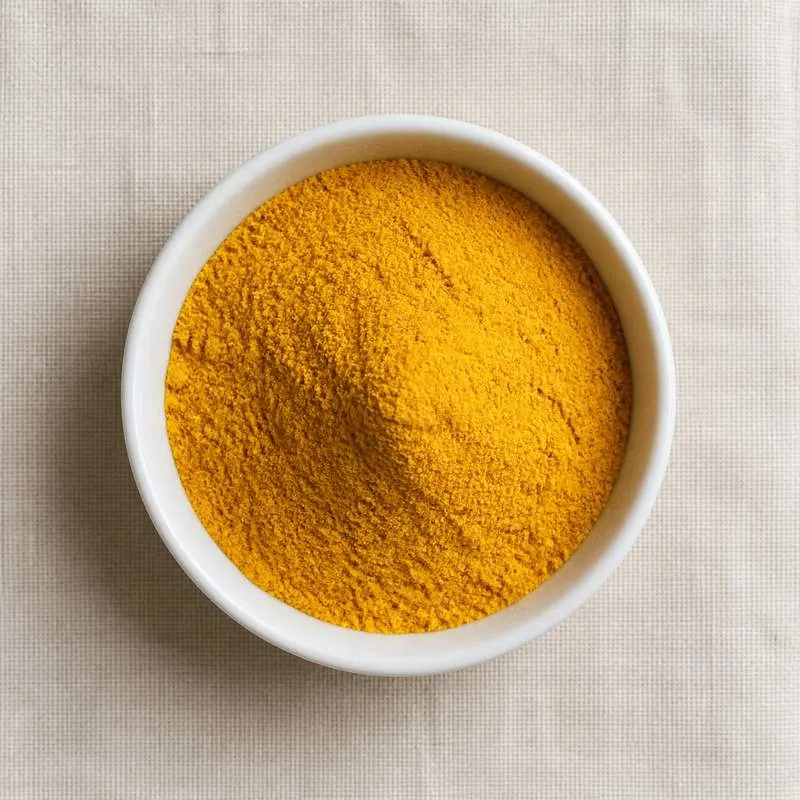
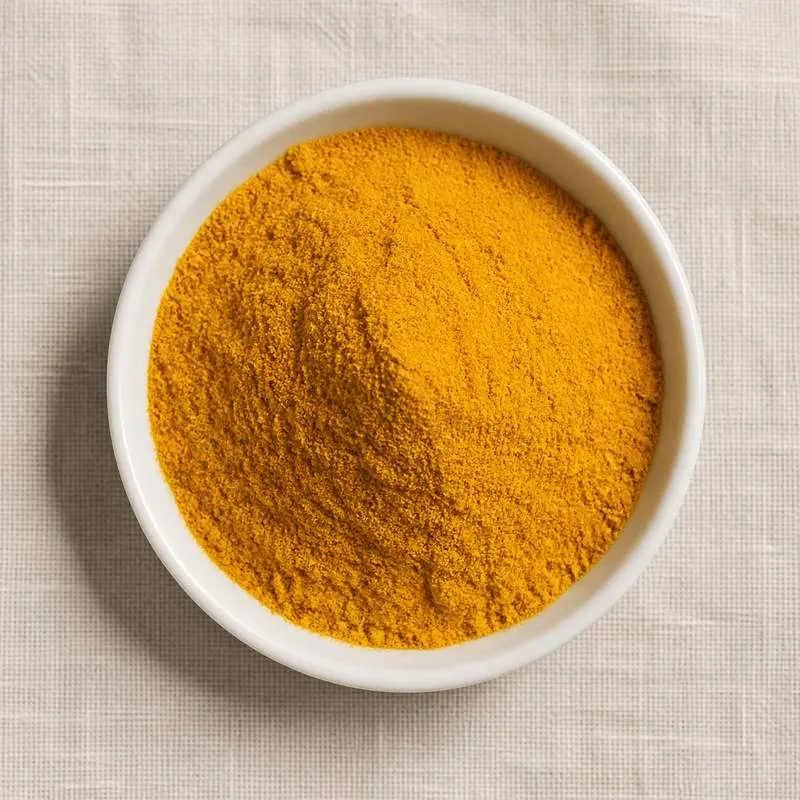
The commercial powder is pale yellow to yellow, considerably lighter than neat quercetin because the wall dilutes the colour, and is free flowing with a defined particle size. It disperses in water to a stable slightly turbid suspension rather than a true solution. Wall integrity is the critical handling property: high shear, prolonged heat above the softening point of the carrier and high humidity all break the capsule and release the core.
We source bulk Quercetin Microcapsule from top China manufacturers for our partners. The manufacturer is in Hubei. A smaller requirement can ship in a combined container with other ingredients.
Please send the grade you need, the volume and your destination port, and we will come back with a solution and a price.
or call +86-21-6858 0751
- Function
- Plant extract
Specifications
| Item | Specification |
|---|---|
| Appearance | Pale yellow to yellow free flowing powder |
| Odour and Taste | Neutral to slightly bitter, no off note |
| Quercetin Content (HPLC) | 20.0% ± 1.0% |
| Encapsulation Efficiency | ≥ 90.0% |
| Surface Quercetin | ≤ 2.0% |
| Identification | Conforms by HPLC against quercetin reference |
| Loss on Drying | ≤ 5.0% |
| Residue on Ignition | ≤ 2.0% |
| Particle Size D50 | 30 to 80 µm |
| Bulk Density | 0.35 to 0.55 g/ml |
| Dispersibility in water at 25°C | Disperses within 60 seconds, no visible sediment |
| Lead | ≤ 1.0 mg/kg |
| Arsenic | ≤ 1.0 mg/kg |
| Total Plate Count | ≤ 1,000 cfu/g |
| Yeast and Mould | ≤ 100 cfu/g |
| E. coli | Negative |
| Salmonella | Absent in 25 g |
Common Markets Grades
Grades are defined by active load and by wall material. Loads of 10, 20 and 30 percent quercetin are standard, with the balance made up of carrier, and the specification states both the quercetin assay by HPLC and the encapsulation efficiency, meaning the proportion of active actually enclosed rather than adhering to the particle surface. Spray dried grades on modified starch or gum acacia are the volume article, while spray chilled lipid grades using hydrogenated vegetable fat or beeswax are made for chewable and tablet applications.
Beyond the standard powders, phospholipid complexed and cyclodextrin inclusion grades are traded as enhanced absorption forms, and enteric coated versions with a pH responsive polymer are made where release is to be delayed past the stomach. Particle size is specified because it controls mouthfeel, typically with the bulk of the distribution between 20 and 150 micrometres. Organic certified and allergen free wall systems are available where the label requires them.
Applications
- Functional beverages and instant drink powders, where neat quercetin would settle out as sediment
- Ready to drink immune support shots, dosed as a dispersible encapsulated powder
- Gummies and chewable supplements, where the capsule wall masks the bitterness of the aglycone
- Tablets and capsules, where the free flowing powder improves blending and compression behaviour
- Dairy and plant based drinks, where the wall protects the flavonol from oxidation during pasteurisation
- Nutrition bars and baked functional snacks, where a lipid coated grade survives the process
- Sports nutrition powders, blended dry with protein and electrolytes
- Delayed release supplement formats built on an enteric coated grade
- Pet supplements and functional pet treats, where palatability depends on masking the taste
China Manufacturers of Quercetin Microcapsule
Top Quercetin Microcapsule manufacturers in China.

Company names and logos are the property of the manufacturers themselves. They are listed here because our own directory records them as producing this ingredient. A listing is not an endorsement by them, and we do not represent them or speak on their behalf.
Regulatory Status
Encapsulation does not change the regulatory position of the active, so a quercetin microcapsule is assessed on both the quercetin and the wall material. In the United States quercetin is a dietary ingredient under the Dietary Supplement Health and Education Act, and high purity quercetin has been the subject of GRAS notices to the Food and Drug Administration for defined food uses. The carriers used are separately permitted: modified food starch, gum acacia and maltodextrin all have established food additive or GRAS status, and the finished capsule is declared by listing the active and the wall components individually.
In the European Union quercetin has no E number and is not an authorised additive, and its use in food supplements is handled at member state level, with preparations lacking a history of consumption before May 1997 falling within Regulation 2015/2283 on novel foods. The encapsulating agents are regulated additives or foods in their own right: modified starches carry E numbers in the E 1400 series and gum acacia is E 414, each with purity criteria in Regulation 231/2012. Where a nanoscale delivery system is used, the engineered nanomaterial provisions of the food information and novel food regulations also apply. The Joint FAO WHO Expert Committee has evaluated the common wall materials as additives.
Manufacturing Process
Purified quercetin, usually the dihydrate made by hydrolysing rutin, is first reduced to a fine particle size by jet milling or wet bead milling, since the size of the core particle sets the achievable capsule size. The milled active is dispersed into a solution of the wall material, most often octenyl succinic anhydride modified starch or gum acacia in water, with an emulsifier and sometimes a small quantity of vegetable oil to form a fine oil in water emulsion carrying the active. The dispersion is homogenised at high pressure to a narrow droplet distribution, which is what determines encapsulation efficiency.
The homogenised feed is spray dried in a tower with the inlet temperature set high enough to form the wall quickly but low enough to avoid degrading the flavonol, and the powder is collected in a cyclone. An agglomeration or fluid bed stage follows where an instantised or coated grade is required, and enteric grades receive a further fluid bed coating with a pH responsive polymer. Lipid encapsulated grades replace the whole aqueous train with spray chilling, in which the active is dispersed into molten fat and atomised into a cold chamber where the droplets solidify. Finished powder is sieved, assayed for total and surface quercetin, and packed under a moisture and light barrier.