Spray Dried Licorice Extract
Spray dried licorice extract is a powdered aqueous extract of the root and stolon of Glycyrrhiza glabra or Glycyrrhiza uralensis, traded on its content of glycyrrhizin, the triterpene saponin responsible for the root's sweetness and its characteristic flavour.
Glycyrrhizin, also called glycyrrhizic or glycyrrhizinic acid, is a glucuronide of glycyrrhetinic acid and is many times sweeter than sucrose on a weight basis, with a slow onset and a long lingering sweetness quite unlike sugar. Alongside it the extract carries flavonoids of the liquiritin and glabridin series, polysaccharides and free sugars, all of which contribute to the body and the brown colour of the powder. The bulk of a standard extract is not glycyrrhizin but this accompanying matrix.
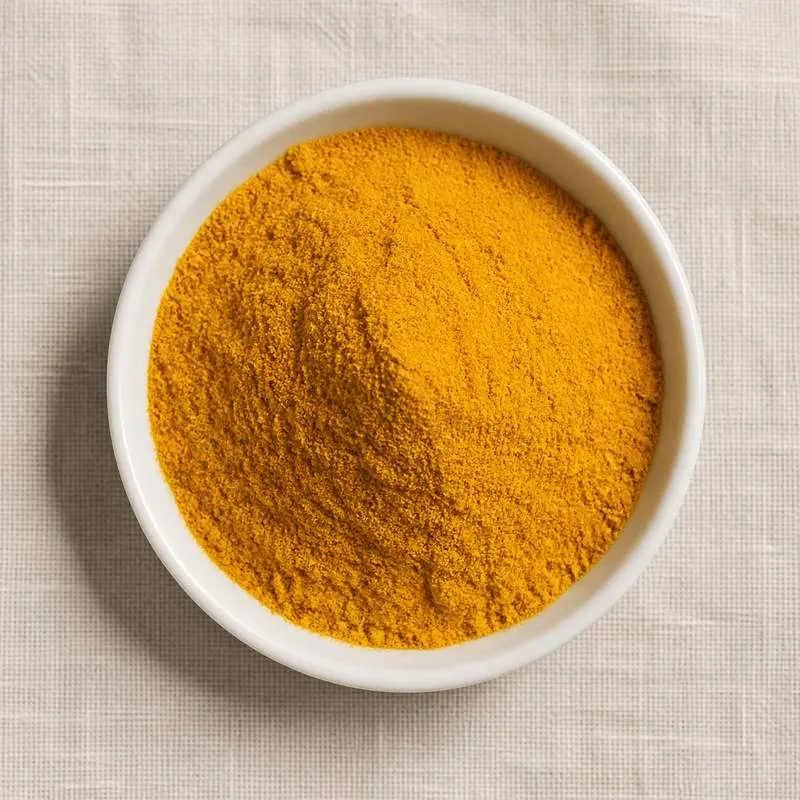
Spray dried material is a light brown to dark brown free-flowing powder with the sweet, slightly medicinal aroma of the root. It dissolves readily in warm water and in aqueous ethanol; glycyrrhizin itself is poorly soluble in cold water in the free acid form and much more soluble as its ammonium or potassium salt, which is why the salt forms dominate in beverage use. Solutions are stable through pasteurisation but the sweetness is suppressed at low pH, so the ingredient performs better in neutral and confectionery systems than in acidic drinks.
We source bulk Spray Dried Licorice Extract from top China manufacturers for our partners. The manufacturer is in Jiangsu. A smaller requirement can ship in a combined container with other ingredients.
Please send the grade you need, the volume and your destination port, and we will come back with a solution and a price.
or call +86-21-6858 0751
- Function
- Plant extract
Specifications
| Item | Specification |
|---|---|
| Appearance | Light to dark brown free-flowing powder |
| Botanical source | Glycyrrhiza glabra, dried root and stolon |
| Glycyrrhizin by HPLC | 10.0 percent minimum |
| Identification | Conforms by HPLC against reference standard |
| Water solubility | Complete at 5 percent in water at 60 degrees Celsius |
| pH of 2 percent solution | 4.5 to 6.5 |
| Loss on drying | 6.0 percent maximum |
| Sulphated ash | 8.0 percent maximum |
| Particle size | 100 percent through 60 mesh |
| Lead | 1.0 ppm maximum |
| Arsenic | 1.0 ppm maximum |
| Total plate count | 10,000 cfu per gram maximum |
| Yeast and mould | 500 cfu per gram maximum |
| E. coli | Negative in 1 gram |
| Salmonella | Negative in 25 grams |
Common Markets Grades
Grades are set by glycyrrhizin assay. Block and paste extracts, the traditional forms, run around 6 to 12 percent; standard spray dried powder runs 8 to 20 percent; purified powders are traded at 25 and 40 percent. Above that the article is properly monoammonium glycyrrhizinate or dipotassium glycyrrhizinate at 90 to 98 percent, which is a purified salt rather than an extract and is specified separately. A deglycyrrhizinated grade is also traded, in which glycyrrhizin has been removed to leave the flavonoid and flavour fraction, and is used where the flavour is wanted without the saponin.
Physical grades are standard spray dried powder milled to pass 60 to 80 mesh, an agglomerated instant grade for sachet and dry mix use, and a maltodextrin-carried grade where the native powder proves too hygroscopic. Ratio extracts at 4:1 to 20:1 without a glycyrrhizin declaration serve the herbal trade. Organic-certified and species-declared material, distinguishing Glycyrrhiza glabra from Glycyrrhiza uralensis, is a routine buyer requirement because the flavonoid profiles differ.
Applications
- Liquorice confectionery, pastilles and hard candy, where the extract supplies both sweetness and the defining flavour
- Tobacco-free chewing products and herbal lozenges, using the extract as a sweetener and demulcent flavour
- Throat and cough preparations, where the root has a long history as a soothing flavour base
- Brewing and soft drinks, principally in root beer and in dark stout styles, using the salt form for solubility
- Savoury sauces and marinades in East Asian cooking, where the root contributes background sweetness and depth
- Herbal tea blends and instant beverage sachets, using the agglomerated instant grade
- Sweetness modification in reduced-sugar systems, where low levels lengthen sweetness and mask bitterness from high intensity sweeteners
- Toothpaste and mouthwash, where the extract is used as a flavour and foaming component
- Cosmetic brightening serums, using the glabridin-bearing fraction rather than the glycyrrhizin
China Manufacturers of Spray Dried Licorice Extract
Top Spray Dried Licorice Extract manufacturers in China.

Company names and logos are the property of the manufacturers themselves. They are listed here because our own directory records them as producing this ingredient. A listing is not an endorsement by them, and we do not represent them or speak on their behalf.
Regulatory Status
In the United States licorice and licorice derivatives, including the extract and ammoniated glycyrrhizin, are affirmed as GRAS for use as flavouring agents and surface-active agents under 21 CFR 184.1408, with maximum use levels specified by food category. That regulation is the normal basis for use in food and beverage in the United States. Glycyrrhizin is not permitted as a sweetener in the ordinary sense but as a flavouring, which shapes how it can be labelled.
In the European Union licorice extract used for flavour falls under the flavourings framework as a flavouring preparation produced from food, and has no E number. The controlling requirement is a labelling one: under the EU food information rules, confectionery and beverages containing glycyrrhizinic acid or its ammonium salt at or above the thresholds set in the regulation must carry a statement identifying the presence of liquorice, and beverages above the higher threshold must additionally carry a warning that people suffering from hypertension should avoid excessive consumption. Codex includes glycyrrhizin among evaluated flavouring agents and JECFA has assessed glycyrrhizinic acid and its ammonium salt, adopting specifications for the purified material. Consumption of glycyrrhizin at sustained high levels is associated with raised blood pressure and potassium loss, which is the reason for the labelling regime rather than a prohibition.
Manufacturing Process
Dried licorice root and stolon are cleaned, cut and coarsely milled, then extracted with hot water in a countercurrent battery, since glycyrrhizin and the accompanying sugars and polysaccharides are water soluble and no organic solvent is needed for a standard extract. Extraction is run at 80 to 95 degrees Celsius over several stages so fresh water meets the most exhausted root.
The pooled liquor is screened and either filtered or centrifuged to remove fibre and starch, then clarified further, in many plants by an acid precipitation step in which the liquor is acidified so that crude glycyrrhizic acid and other saponins drop out and can be recovered separately for the purified salt trade. For a standard extract the clarified liquor goes straight to vacuum evaporation, which concentrates it to a syrup at low enough temperature to avoid scorching the sugars. The concentrate is standardised with water or with a carrier to the target assay and viscosity, then fed to a spray dryer, where hot air atomisation gives a free-flowing powder in one step. Inlet and outlet temperatures are held low enough to protect the flavour, and maltodextrin is added where the sugar content would otherwise make the powder tacky in the tower. The dried powder is sieved, assayed for glycyrrhizin, and blended to the declared specification.