Sugar Free Powdered Sugar
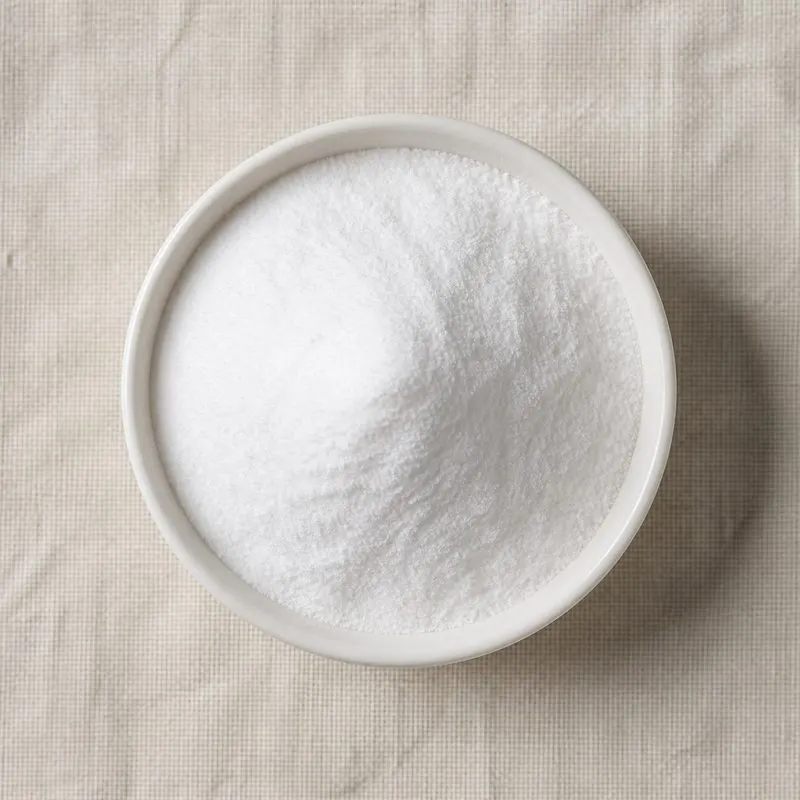
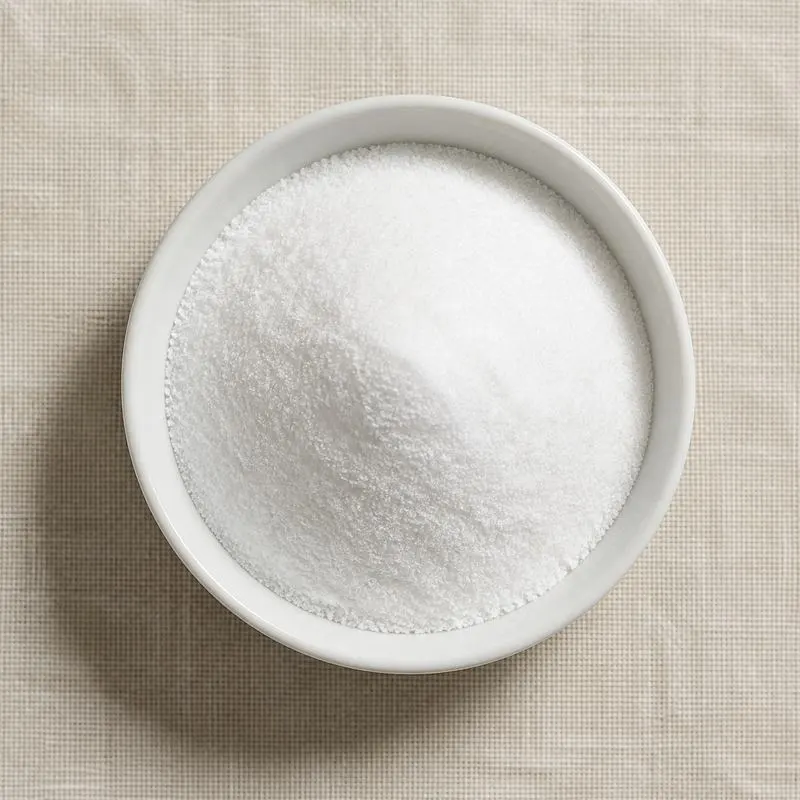
Sugar free powdered sugar is a blended dry sweetener milled to the fineness of icing sugar and built on a bulk sweetener that is not sucrose. The base is usually erythritol, or a blend of erythritol with maltitol, isomalt or allulose, milled to a mean particle size below about 100 micrometres so that it dissolves on the tongue without grit. A high intensity sweetener such as steviol glycosides, sucralose or monk fruit extract is dosed in at fractions of a percent to bring the blend up to the sweetness of sucrose, since erythritol alone reaches only about 70 percent of it.
An anticaking or bulking component is almost always present. Maize starch or tapioca starch at 2 to 5 percent is the traditional choice, matching the composition of conventional icing sugar, while tricalcium phosphate or silicon dioxide is used where a starch free declaration is wanted. That component keeps the powder free flowing and stops the very fine particles bridging in the pack.
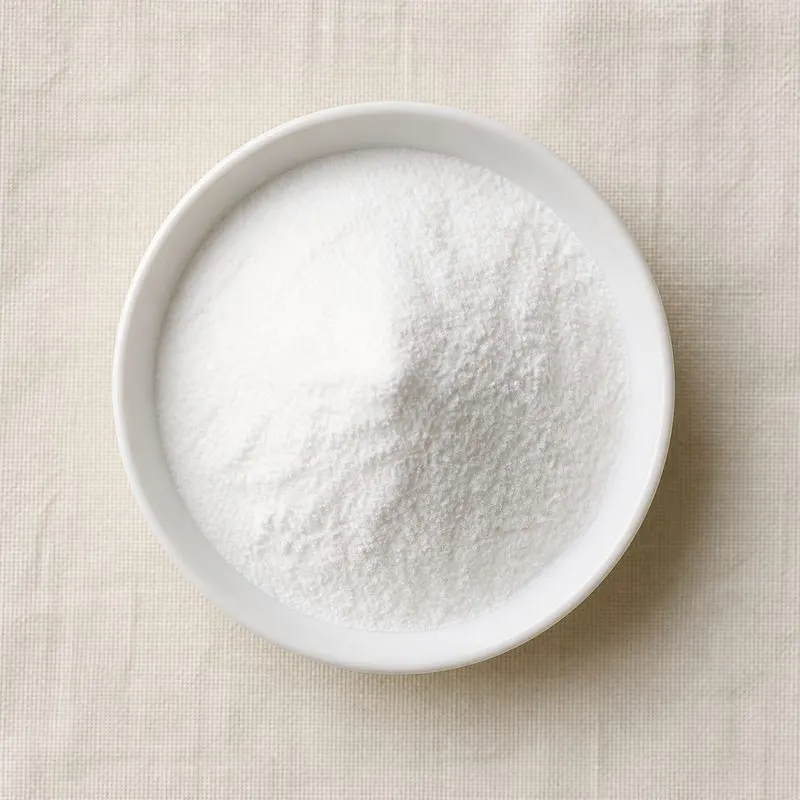
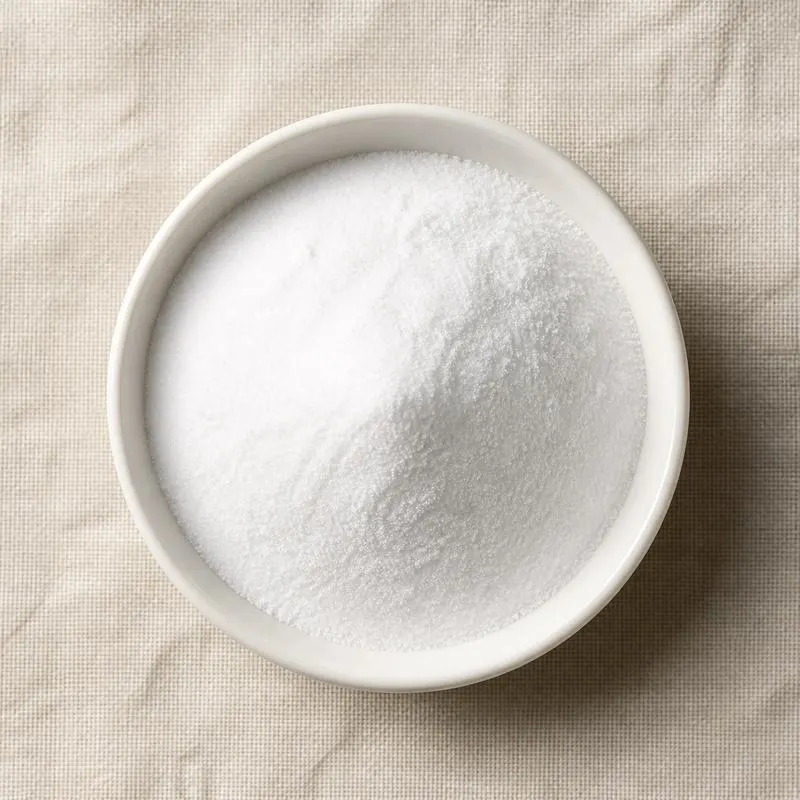
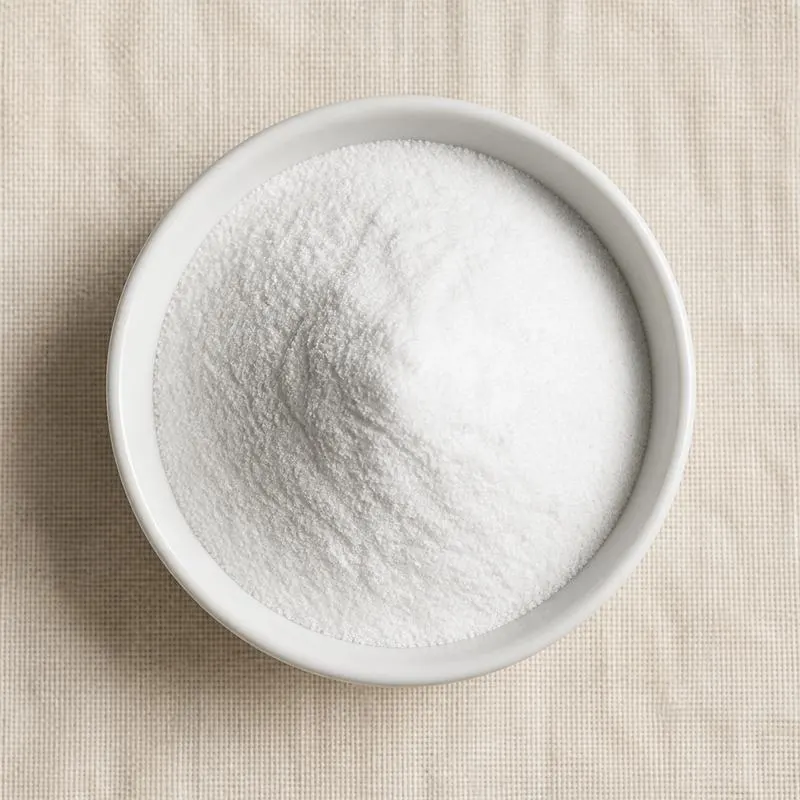
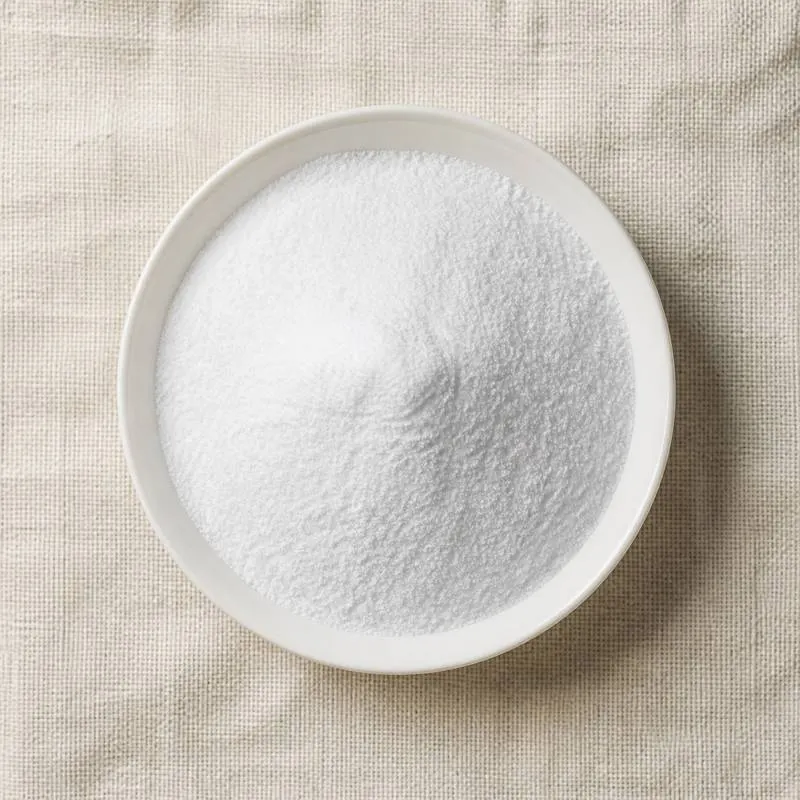
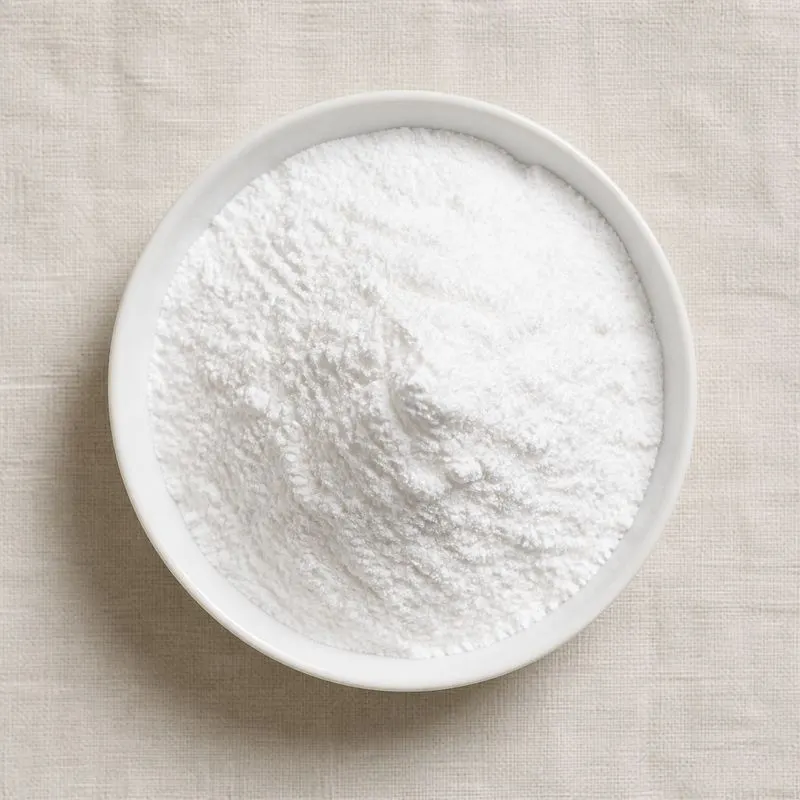
The blend is a fine white free flowing powder. It dissolves readily in water and in the moisture of a buttercream or a glaze, but behaves differently from icing sugar in two ways that matter: erythritol has a strong negative heat of solution and gives a cooling sensation, and it crystallises on drying, so a glaze made from it sets harder and with more visible sparkle than a sucrose glaze.
We source bulk Sugar Free Powdered Sugar from top China manufacturers for our partners. The manufacturer is in Shandong. A smaller requirement can ship in a combined container with other ingredients.
Please send the grade you need, the volume and your destination port, and we will come back with a solution and a price.
or call +86-21-6858 0751
- Function
- Sweetener
Specifications
| Item | Specification |
|---|---|
| Appearance | Fine white free flowing powder, free of lumps and foreign matter |
| Odour and taste | Odourless, clean sweet taste with cooling effect |
| Erythritol content | 93.0 percent minimum |
| Anticaking agent, maize starch | 3.0 to 5.0 percent |
| High intensity sweetener | Declared level, plus or minus 10 percent of target by HPLC |
| Particle size, through 100 mesh | 98 percent minimum |
| Loss on drying | 0.5 percent maximum |
| Sulphated ash | 0.3 percent maximum |
| Reducing sugars, as glucose | 0.3 percent maximum |
| Lead | 0.5 mg/kg maximum |
| Arsenic | 0.5 mg/kg maximum |
| Total plate count | 1000 cfu/g maximum |
| Yeast and mould | 100 cfu/g maximum |
| E. coli | Absent in 1 g |
| Salmonella | Absent in 25 g |
Common Markets Grades
Grades are distinguished first by the bulk sweetener. Erythritol based powder is the most common and is the only widely traded version with no digestive load caveat on the label; maltitol based powder is closer to sucrose in browning and hygroscopicity but carries a polyol laxation statement; isomalt based powder is used where a hard, non hygroscopic set is wanted; allulose based powder browns and behaves most like sucrose but is not permitted everywhere.
Beyond the base, the traded variables are the sweetness equivalence, quoted as a one to one or a two to one replacement for icing sugar, the identity of the high intensity sweetener, and the anticaking system, with starch bearing and starch free versions offered separately. Particle size is specified by sieve residue, with a fine grade for icing and buttercream and an extra fine or impalpable grade for dusting and for confectionery coatings. Organic certified and non GMO certified lines are made where the base polyol and the stevia or monk fruit component can be sourced accordingly.
Applications
- Buttercream, royal icing and frosting for reduced sugar cakes, where the fine particle size prevents a gritty mouthfeel
- Glazes and drizzle icings, where erythritol recrystallises on drying to give a firm, matte set
- Dusting of cakes, doughnuts and pastries, in place of icing sugar as a finishing sugar
- No bake cheesecakes, mousses and chilled desserts, dissolving into a cold base without heating
- Sugar free fondant and modelling paste, providing bulk and set without sucrose
- Shortbread, cookies and sablés where a fine sweetener is worked into fat rather than dissolved
- Protein bars and keto positioned baked goods, contributing sweetness and bulk at low digestible carbohydrate
- Confectionery coatings and compound chocolate, ground into the fat phase as the powdered sweetener
- Retail packs for diabetic and low carbohydrate home baking, sold as a direct volume replacement for icing sugar
China Manufacturers of Sugar Free Powdered Sugar
Top Sugar Free Powdered Sugar manufacturers in China.
Company names and logos are the property of the manufacturers themselves. They are listed here because our own directory records them as producing this ingredient. A listing is not an endorsement by them, and we do not represent them or speak on their behalf.
Regulatory Status
The blend has no regulatory identity of its own; each component is regulated separately and the label declares them. In the United States erythritol is affirmed as generally recognised as safe under 21 CFR 184.1852, sucralose is a permitted food additive under 21 CFR 172.831, maltitol is the subject of GRAS notices and steviol glycosides of purity not less than 95 percent are similarly the subject of GRAS notices to the Food and Drug Administration. Maize starch and tricalcium phosphate are themselves generally recognised as safe. The name sugar free may be used only where the product meets the nutrient content claim definition in 21 CFR 101.60.
In the European Union erythritol is E 968, maltitol E 965, isomalt E 953, sucralose E 955 and steviol glycosides from stevia leaf E 960a, all authorised under the food additives framework, with silicon dioxide as E 551 and tricalcium phosphate as E 341 (iii) where used as anticaking agents. EU labelling requires the statement that excessive consumption may produce laxative effects on any product containing more than 10 percent added polyols, which applies to the maltitol and isomalt based versions. JECFA maintains specification monographs for the individual polyols and sweeteners, and Codex lists them among the permitted additives in the General Standard for Food Additives.
Manufacturing Process
The bulk polyol arrives as crystal from its own manufacturing route, erythritol from the fermentation of glucose by osmophilic yeast, maltitol from the hydrogenation of maltose syrup, isomalt from the enzymatic rearrangement and hydrogenation of sucrose. It is dried to low moisture, then milled in an impact or pin mill, with a classifier returning oversize to the mill until the target particle size distribution is reached. Milling generates heat and the mill is cooled or purged with dry air, since a warm hygroscopic polyol powder cakes immediately.
The milled base is charged to a ribbon or conical screw blender with the anticaking agent and with a premix in which the high intensity sweetener has been diluted into a portion of the base, since dosing a few hundred grams of sucralose or steviol glycoside directly into a tonne of powder gives poor distribution. Blending runs to a validated time and the uniformity of the intense sweetener is checked by assay on samples drawn from several points in the blender. The finished blend is sieved to break any agglomerates, passed over a magnet and metal detector, and packed into moisture barrier bags, since erythritol and maltitol powders pick up water rapidly from humid air.