Turmeric Microcapsule
Turmeric microcapsule is curcuminoid material from the rhizome of Curcuma longa enclosed in a food grade wall system, most often octenyl succinic anhydride modified starch, gum acacia, maltodextrin, a whey or pea protein, or a lipid matrix, and dried to a free flowing powder. The core is either turmeric oleoresin or purified curcumin, a mixture of curcumin, demethoxycurcumin and bisdemethoxycurcumin.
Encapsulation addresses the properties that make unprotected curcumin difficult to formulate. The curcuminoids are practically insoluble in water, so a neat powder sinks and settles in a beverage. They stain everything they touch a strong yellow. They degrade rapidly above pH 7 and fade under light, and their oral absorption is poor. A wall material disperses the core in water, contains the staining, shields the pigment and, in the emulsion based designs, improves uptake.
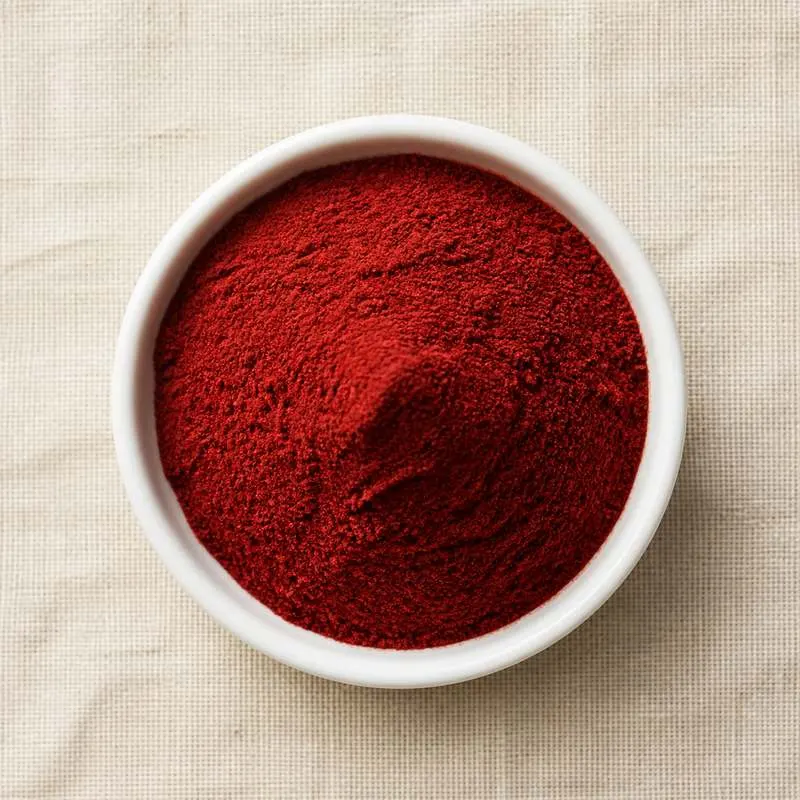
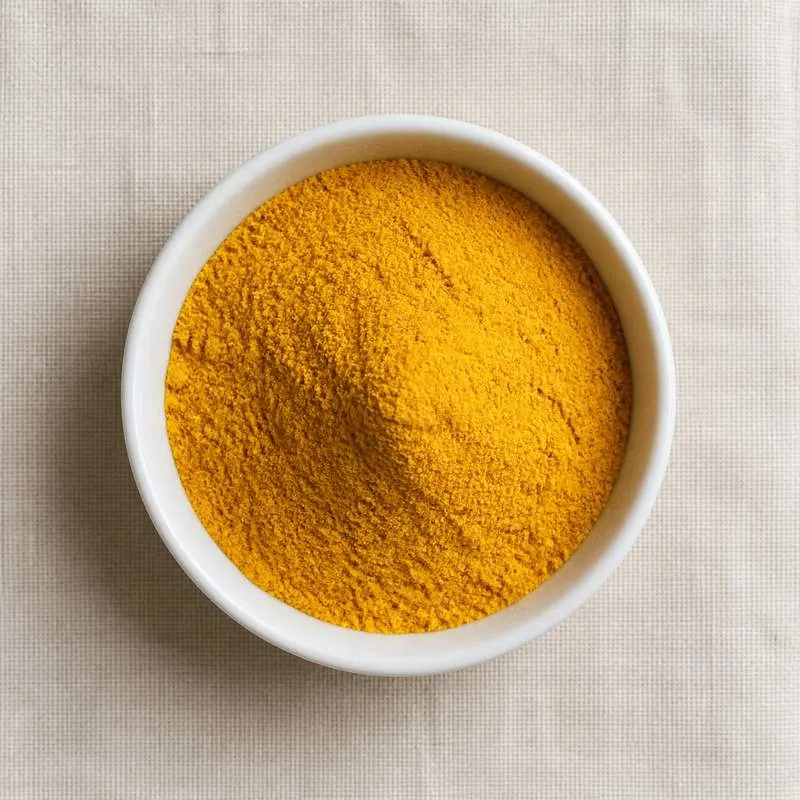
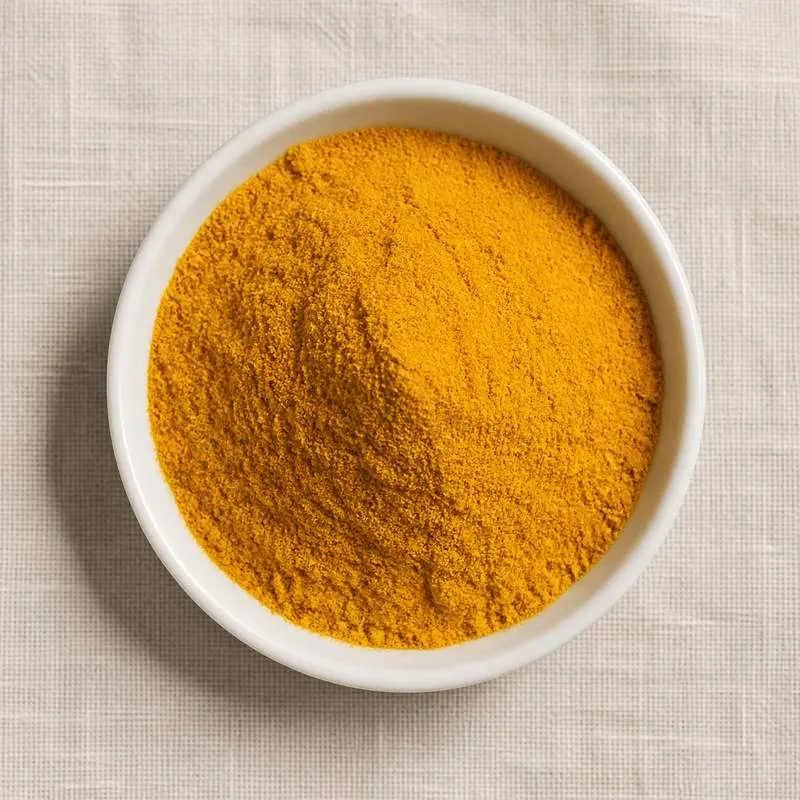
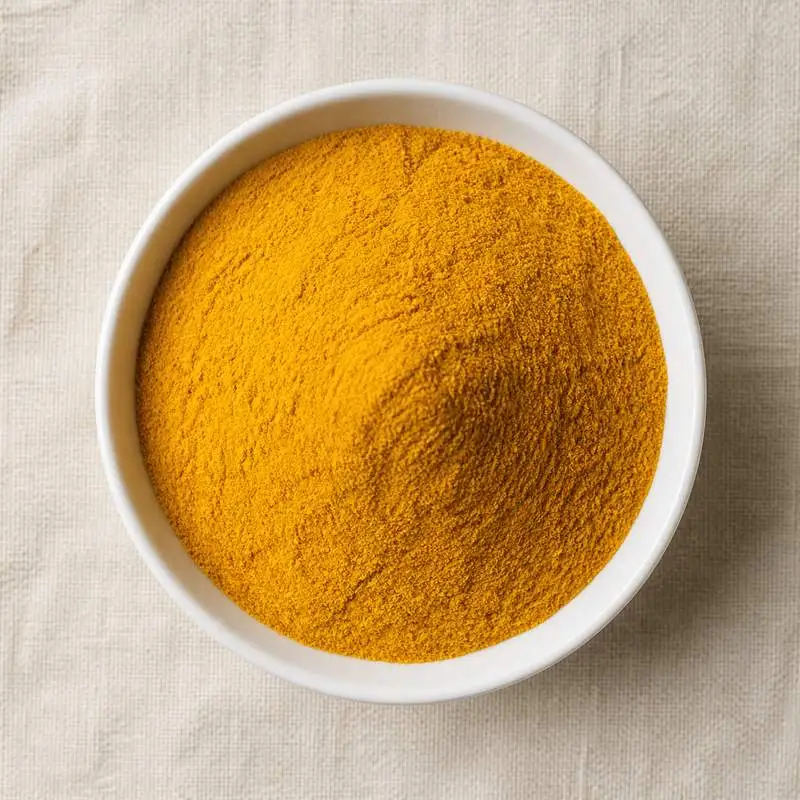
The commercial powder is yellow to orange yellow, lighter than neat curcumin because the wall dilutes the colour, free flowing and of defined particle size. It disperses in water to a stable turbid yellow suspension rather than a true solution. Wall integrity is the critical handling property: high shear, heat above the softening point of the carrier and high humidity all rupture the capsule and release the core.
We source bulk Turmeric Microcapsule from top China manufacturers for our partners. The manufacturer is in Hubei. A smaller requirement can ship in a combined container with other ingredients.
Please send the grade you need, the volume and your destination port, and we will come back with a solution and a price.
or call +86-21-6858 0751
- Function
- Plant extract
Specifications
| Item | Specification |
|---|---|
| Appearance | Yellow to orange yellow free flowing powder |
| Odour and Taste | Faint turmeric character, no harsh bitterness |
| Total Curcuminoids (HPLC) | 20.0% ± 1.0% |
| Encapsulation Efficiency | ≥ 90.0% |
| Surface Curcuminoids | ≤ 2.0% |
| Identification | Conforms by HPLC against curcumin reference |
| Loss on Drying | ≤ 5.0% |
| Residue on Ignition | ≤ 2.0% |
| Particle Size D50 | 30 to 80 µm |
| Bulk Density | 0.35 to 0.55 g/ml |
| Dispersibility in water at 25°C | Disperses within 60 seconds, no visible sediment |
| Residual Solvent | ≤ 25 mg/kg |
| Lead | ≤ 1.0 mg/kg |
| Arsenic | ≤ 1.0 mg/kg |
| Total Plate Count | ≤ 1,000 cfu/g |
| Yeast and Mould | ≤ 100 cfu/g |
| E. coli | Negative |
| Salmonella | Absent in 25 g |
Common Markets Grades
Grades are defined by curcuminoid load and by wall system. Loads of 5, 10, 20 and 30 percent total curcuminoids are standard, and the specification gives both the assay by HPLC and the encapsulation efficiency, meaning the proportion of active enclosed rather than adhering to the particle surface. Spray dried grades on modified starch or gum acacia are the bulk of the trade for beverages, while spray chilled lipid grades using hydrogenated vegetable fat are made for chewable and tablet applications.
Beyond standard powders, the trade offers phospholipid complexes, cyclodextrin inclusion complexes and self emulsifying grades built on a polysorbate or lecithin system, all sold on enhanced absorption rather than on assay alone, and enteric coated versions where release is to be delayed past the stomach. Colour grades are quoted on colour value instead of curcuminoid percentage, since the buyer is purchasing shade rather than active. Particle size is specified because it decides mouthfeel and dispersion rate, and the residual solvent figure carried over from the oleoresin is stated.
Applications
- Functional beverages and golden milk style drinks, where neat curcumin would float and settle out
- Instant drink powders and stick packs, dispersed cold without staining the mixing equipment
- Dietary supplements in capsule and tablet form, where the free flowing powder blends and compresses well
- Gummies and chewable supplements, where the wall masks the earthy bitterness of the oleoresin
- Dairy and plant based drinks, where encapsulation prevents protein interaction and sediment
- Nutrition bars and baked functional snacks, using a lipid coated grade that survives the process
- Sports nutrition and joint comfort formulations, the dominant supplement positioning for curcumin
- Natural colour applications in confectionery, sauces and dairy, where a dispersible yellow is required
- Clinical and elderly nutrition products, where dosing accuracy and dispersion matter
- Pet supplements and functional treats, where palatability depends on masking the taste
China Manufacturers of Turmeric Microcapsule
Top Turmeric Microcapsule manufacturers in China.

Company names and logos are the property of the manufacturers themselves. They are listed here because our own directory records them as producing this ingredient. A listing is not an endorsement by them, and we do not represent them or speak on their behalf.
Regulatory Status
Encapsulation does not change the status of the active, so the product is assessed on both core and wall. In the United States 21 CFR 73.600 and 73.615 list turmeric and turmeric oleoresin as colour additives exempt from certification, and turmeric and its oleoresin also appear among the spices and natural extractives generally recognised as safe at 21 CFR 182.10 and 182.20 for flavouring use. Curcumin preparations have additionally been the subject of GRAS notices to the Food and Drug Administration. The carriers are separately permitted, modified food starch, gum acacia and maltodextrin each having established food additive or GRAS status, and the finished capsule is declared by listing the components individually.
In the European Union curcumin is an authorised food colour with the number E 100, regulated under Regulation 1333/2008 with purity criteria in Regulation 231/2012 and permitted uses defined by food category. The encapsulating agents are regulated in their own right, modified starches carrying E numbers in the E 1400 series and gum acacia being E 414. Where a nanoscale or novel delivery system is used, the engineered nanomaterial provisions and, for some formulations, Regulation 2015/2283 on novel foods may apply, since certain enhanced absorption curcumin preparations have been treated as novel. The Joint FAO WHO Expert Committee has evaluated curcumin as a colour, and Codex includes it in the general standard for food additives.
Manufacturing Process
The core is prepared first. Dried turmeric rhizome is milled and extracted with ethanol, acetone or supercritical carbon dioxide to give an oleoresin, which is then crystallised from solvent to yield purified curcumin at 95 percent where a high assay core is required. The core is jet milled or dissolved in a carrier oil, since core particle size and physical state set what the encapsulation step can achieve.
The active is dispersed into a solution of the wall material in water together with an emulsifier and a quantity of vegetable oil, forming an oil in water emulsion in which the curcuminoids sit in the oil phase. The emulsion is homogenised at high pressure to a narrow droplet distribution, which is what determines encapsulation efficiency and how fine the finished dispersion will be. It is then spray dried in a tower at an inlet temperature high enough to form the wall quickly but low enough to avoid degrading the pigment, and the powder collected in a cyclone. A fluid bed agglomeration stage follows for instantised grades, or a further coating stage for enteric grades. Lipid encapsulated grades replace the aqueous train with spray chilling, in which the active is dispersed into molten fat and atomised into a cold chamber. Finished powder is sieved, assayed for total and surface curcuminoids, and packed under a moisture and light barrier.