Ammonium Alginate
Ammonium alginate is the ammonium salt of alginic acid, the linear copolymer of beta-D-mannuronic and alpha-L-guluronic acid extracted from brown seaweed. It is the least used of the four soluble alginate salts, and it exists commercially because it introduces no metal cation into the formulation.
In solution it behaves much as sodium and potassium alginate do, dissolving in cold water to give a viscous pseudoplastic solution and forming a heat-stable gel when calcium is introduced, as guluronic acid sequences on adjacent chains chelate the divalent ion into the egg-box junctions that characterise alginate gels. Guluronic-rich source weed gives firm brittle gels, mannuronic-rich weed gives softer elastic ones.
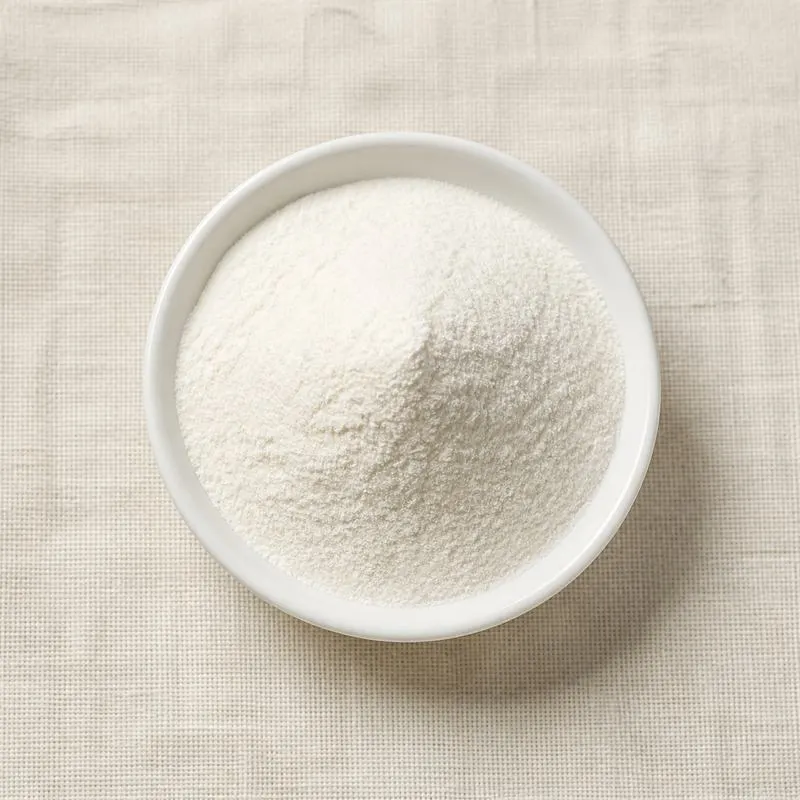
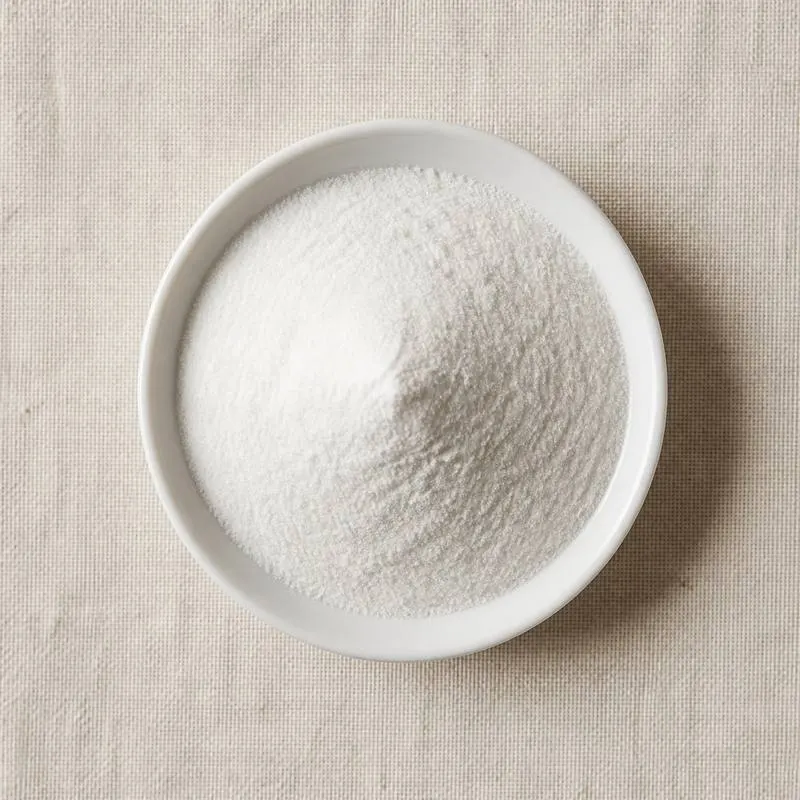
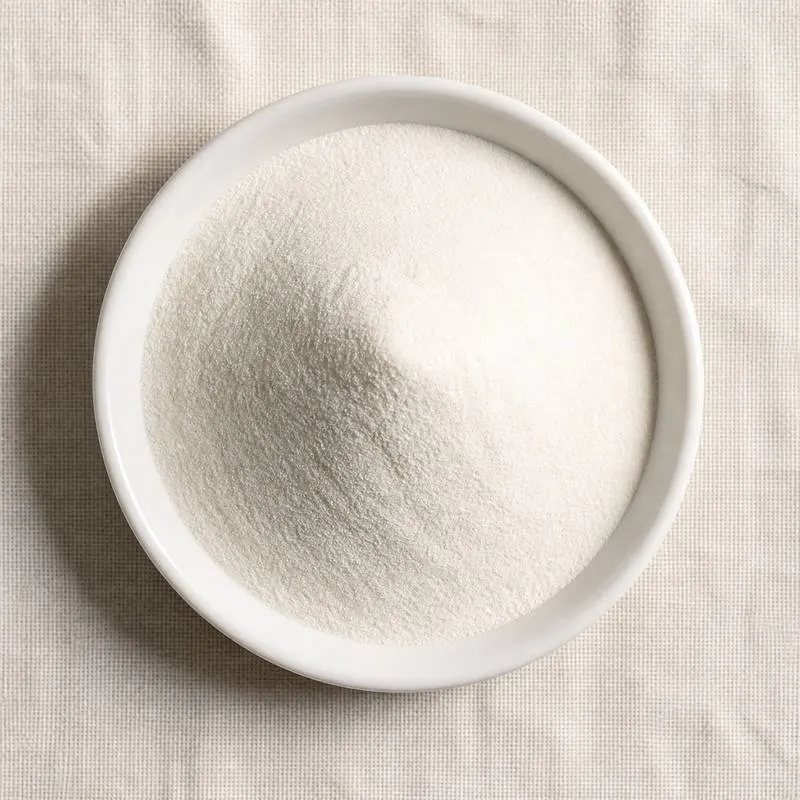
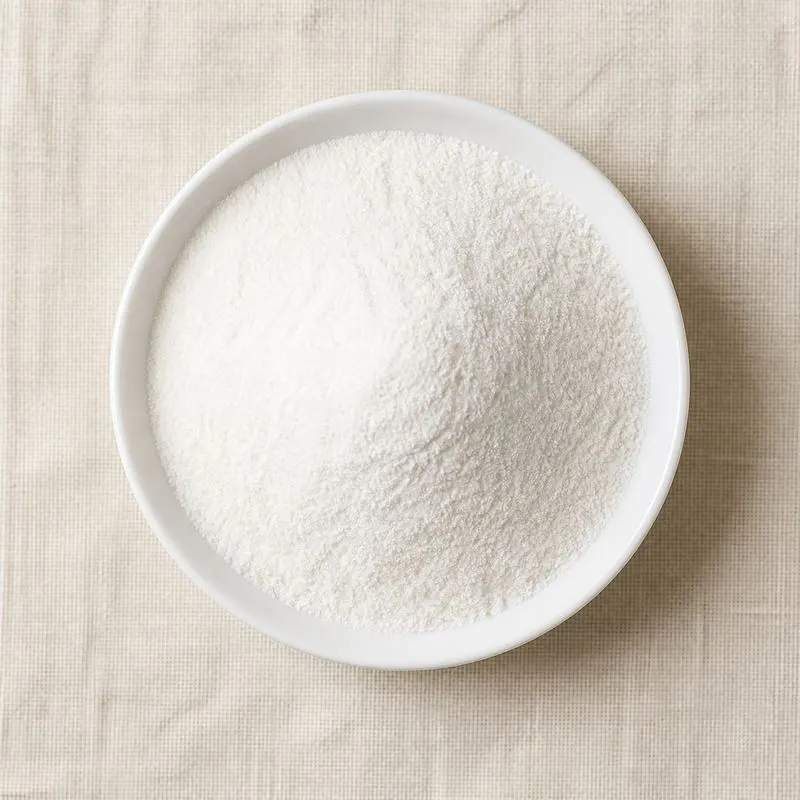
Its distinguishing property is what happens on heating or on drying. The ammonium counter-ion is volatile, so a film or gel of ammonium alginate loses ammonia as it dries or is heated and converts progressively towards alginic acid, which is insoluble. That makes it useful where a water soluble binder must become water resistant after processing, and it is why the salt is chosen for certain film, textile and technical applications rather than for its solution behaviour. It is a white to pale yellow fibrous or granular powder, odourless in the dry state, with a faint ammoniacal note detectable in warm solution.
We source bulk Ammonium Alginate from top China manufacturers for our partners. The manufacturer is in Shandong. A smaller requirement can ship in a combined container with other ingredients.
Please send the grade you need, the volume and your destination port, and we will come back with a solution and a price.
or call +86-21-6858 0751
- Function
- Thickener / Hydrocolloid
Specifications
| Item | Specification |
|---|---|
| Appearance | White to pale yellow fibrous or granular powder |
| Odour and Taste | Odourless when dry, faint ammoniacal note in warm solution |
| Identification | Positive for alginate and for ammonium |
| Assay, as ammonium alginate on dry basis | 88.7% to 103.6% |
| Viscosity, 1% solution at 20 degrees Celsius | 300 to 600 mPa s |
| Loss on Drying | Not more than 15.0% |
| Sulphated Ash, dry basis | Not more than 7.0% |
| pH, 1% solution | 5.5 to 7.5 |
| Water Insoluble Matter | Not more than 2.0% |
| Solubility | Complete in cold water, free of insoluble skins |
| Particle Size | Not less than 95% through 80 mesh |
| Lead | Not more than 2 mg/kg |
| Arsenic | Not more than 3 mg/kg |
| Cadmium | Not more than 1 mg/kg |
| Total Plate Count | Not more than 5,000 CFU/g |
| Yeast and Mould | Not more than 500 CFU/g |
| Salmonella | Absent in 25 g |
Common Markets Grades
Ammonium alginate is traded by the viscosity of a 1 percent solution, in low, medium and high viscosity bands, and by particle size, with coarse granular material dispersing without lumping and fine powder hydrating faster. As with the other alginates, the gel character delivered with calcium depends on the guluronic content of the source weed and should be specified alongside viscosity where a set gel is the objective.
Volumes are small compared with sodium alginate, so the grade range on offer is narrow and lead times are longer. Food grade and technical grade are the two streams. Because the ammonium ion is volatile, storage conditions matter more than for the other salts: warm or humid storage drives off ammonia and progressively lowers solubility, so the material is packed in moisture barrier liners and the specification includes a solubility check rather than assay alone.
Applications
- Formulations where no sodium, potassium or calcium may be introduced, since the ammonium ion can be removed by drying
- Edible films and coatings that must become water resistant after drying as ammonia is lost
- Textile print pastes, thickening the pigment carrier and washing out cleanly without leaving metal residue
- Paper coating and surface sizing, giving film strength and a controlled water hold
- Bakery fillings and icings, providing body and controlling water migration
- Restructured and reformed food pieces set by contact with a calcium source
- Welding rod coatings and ceramic bodies as a binder and extrusion aid
- Reduced sodium formulations where the alginate contribution to the sodium figure must be eliminated
- Laboratory and technical gel systems requiring an alginate free of alkali metal ions
China Manufacturers of Ammonium Alginate
Top Ammonium Alginate manufacturers in China.

Company names and logos are the property of the manufacturers themselves. They are listed here because our own directory records them as producing this ingredient. A listing is not an endorsement by them, and we do not represent them or speak on their behalf.
Regulatory Status
In the United States ammonium alginate is affirmed as generally recognised as safe under 21 CFR 184.1133 for use as a food ingredient in accordance with good manufacturing practice.
In the European Union it is authorised as E403 ammonium alginate under the food additives regulation, with identity and purity criteria covering assay, loss on drying, ash, water insoluble matter and heavy metals. Alginates are generally permitted at quantum satis in the food categories in which they are allowed and are declared in the ingredient list by name or E number, with restrictions applying to foods intended for infants and young children. Codex and JECFA recognise the substance as INS 403, covered by the JECFA specifications published for alginic acid and its ammonium, calcium, potassium and sodium salts. As a seaweed derived ingredient it is subject to the contaminant limits applying to heavy metals in such materials, with cadmium monitored because seaweeds concentrate it.
Manufacturing Process
The route follows standard alginate manufacture as far as the isolated free acid. Washed and milled brown seaweed is pretreated with dilute mineral acid, which converts the alginate present as calcium and magnesium salts into insoluble alginic acid inside the tissue and washes out pigments, mannitol and soluble salts. The pretreated weed is digested with sodium carbonate so the alginate dissolves as sodium alginate, and the very viscous extract is diluted heavily and clarified by screening, filtration and flotation to remove cellulose residue.
The clarified solution is then precipitated, either directly with mineral acid to give alginic acid or first with calcium chloride to give calcium alginate fibres that are subsequently converted with acid. The resulting wet fibrous alginic acid is washed free of salts and reslurried in aqueous alcohol, usually ethanol or isopropanol at a concentration high enough that the salt formed will not dissolve. Ammonia or ammonium carbonate is then added to neutralise the acid to ammonium alginate. Carrying out the neutralisation in alcohol is essential, since in water the salt would dissolve and turn the batch into an unworkable gel. Drying is done at low temperature, because heat drives ammonia off and reverts the product towards insoluble alginic acid. The dried material is milled to the specified particle size, blended to a uniform viscosity and packed with a moisture barrier.