Konjac Thickening And Stabilizing Agent
Konjac Thickening and Stabilising Agent is a compound hydrocolloid preparation built around konjac glucomannan and blended with one or more companion gums, most often xanthan gum, kappa carrageenan, locust bean gum, sodium alginate or modified starch.
The point is synergy rather than dilution. Konjac glucomannan alone hydrates to a very high viscosity but sets no gel unless it is deacetylated; combined with xanthan it forms an elastic thermo-reversible gel, and combined with kappa carrageenan it raises gel strength and reduces syneresis at total gum levels well below what either component would need on its own. Blenders use that to hit a defined texture at a defined dose.
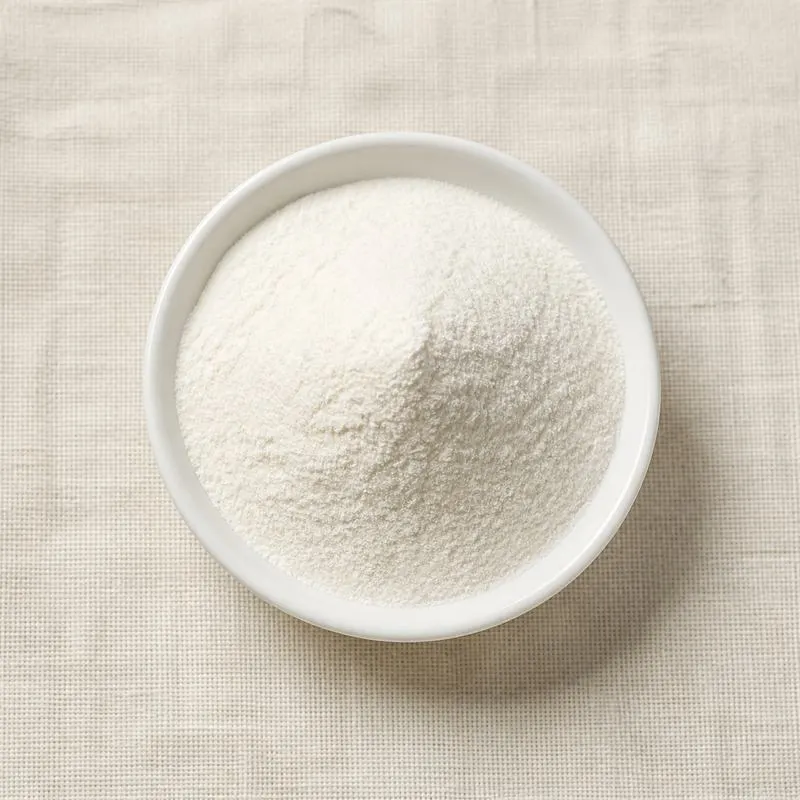
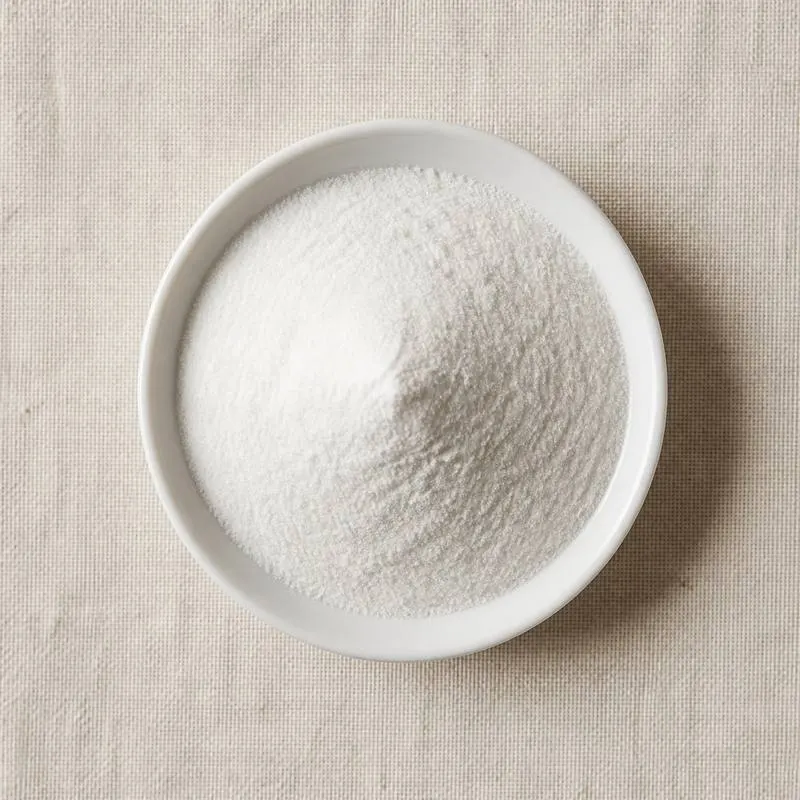
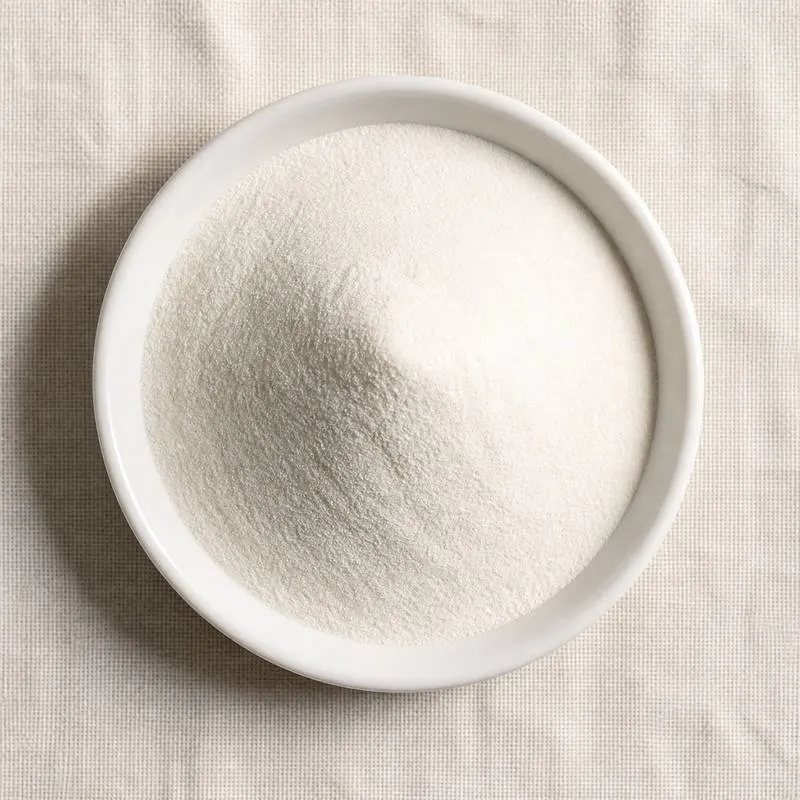
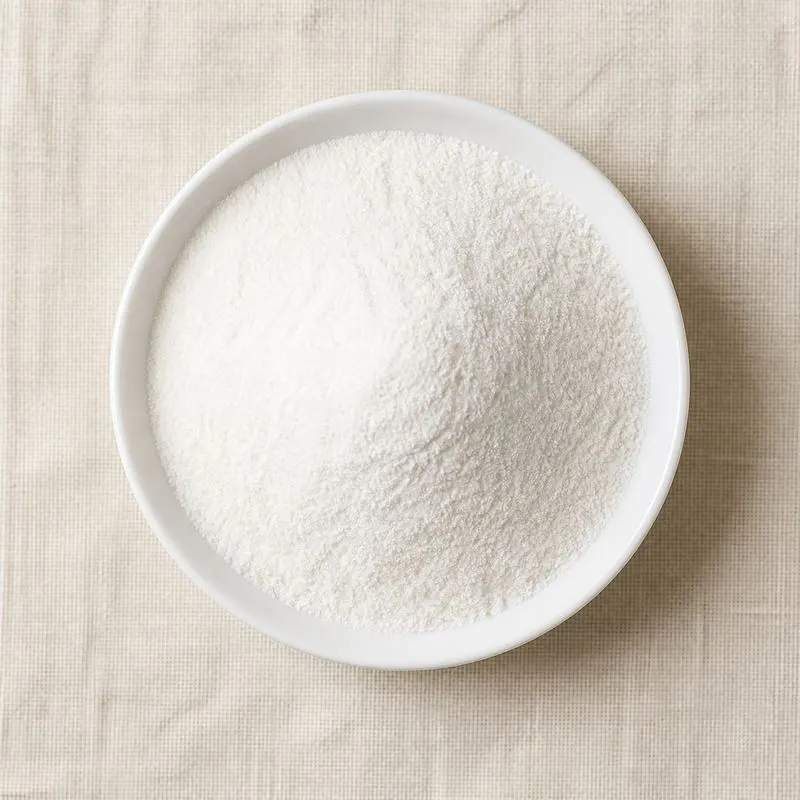
The product is a dry powder, usually off-white to pale cream, screened to a uniform mesh so that the components do not segregate in transit. A dispersing carrier such as dextrose, sucrose or maltodextrin is commonly included to keep the fast-swelling konjac fraction from lumping on addition. Because the formulation is set to a target application, functional performance is quoted as viscosity or gel strength under a stated use condition rather than as an assay of any single gum.
We source bulk Konjac Thickening And Stabilizing Agent from top China manufacturers for our partners. The manufacturer is in Hubei. A smaller requirement can ship in a combined container with other ingredients.
Please send the grade you need, the volume and your destination port, and we will come back with a solution and a price.
or call +86-21-6858 0751
- Function
- Thickener / Hydrocolloid
Specifications
| Item | Specification |
|---|---|
| Appearance | Off-white to pale cream free-flowing powder |
| Glucomannan (KGM) Content | ≥ 30.0% (declared per formulation) |
| Viscosity (1% solution, 30 °C, Brookfield) | ≥ 6,000 mPa·s |
| Particle Size | ≥ 95% through 80 mesh |
| Moisture (Loss on Drying) | ≤ 12.0% |
| Ash | ≤ 5.0% |
| pH (1% aqueous solution) | 5.0 – 7.0 |
| Starch | ≤ 3.0% |
| Sulfur Dioxide (SO₂) | ≤ 0.5 g/kg |
| Heavy Metals (as Pb) | ≤ 10 mg/kg |
| Arsenic (as As) | ≤ 2 mg/kg |
| Total Plate Count | ≤ 10,000 cfu/g |
| Yeast and Mould | ≤ 500 cfu/g |
| E. coli | Negative/g |
| Salmonella | Negative/25g |
Common Markets Grades
These products are not sold to a single specification. They are traded as application-specific formulations: jelly and dessert blends weighted towards carrageenan for a clean brittle set, meat and surimi blends weighted towards konjac and starch for water binding through retorting, noodle and vegetarian-product blends built for the alkali-set thermo-irreversible gel, and beverage or dairy blends where konjac is a minor partner to xanthan and cellulose gum.
Within a given formulation the variables a buyer specifies are total gum content against carrier, mesh and dispersibility, hydration speed, and the target viscosity or gel strength measured under agreed test conditions. Halal, Kosher and non-GMO declarations follow the individual components, and each component must itself be a permitted additive in the destination market.
Applications
- Jelly cups, dessert gels and konjac candies, where the blend fixes set strength and reduces water release on storage
- Konjac noodles and vegetarian meat analogues, providing the heat-stable gel that survives retorting
- Surimi, fish balls and emulsified sausage, binding free water and raising gel strength at low addition
- Ice cream and frozen desserts, controlling ice crystal growth and slowing meltdown
- Sauces, gravies and ready meal components, giving body that holds through freeze and thaw
- Low-fat dressings and spreads, replacing the mouthfeel contribution of removed fat
- Gluten-free bakery, supplying water binding and dough extensibility in place of gluten
- Pet food gravies and chunk-in-jelly products, setting the jelly phase and holding cling
China Manufacturers of Konjac Thickening And Stabilizing Agent
Top Konjac Thickening And Stabilizing Agent manufacturers in China.
Company names and logos are the property of the manufacturers themselves. They are listed here because our own directory records them as producing this ingredient. A listing is not an endorsement by them, and we do not represent them or speak on their behalf.
Regulatory Status
A compound stabiliser has no additive number of its own. Each constituent must be an approved food additive in the market of use and is declared separately on the ingredient list. In the European Union that means konjac appears as E425 under Regulation (EC) No 1333/2008, with xanthan gum as E415, carrageenan as E407, locust bean gum as E410 and alginate as E401, each carrying its own conditions of use.
The konjac fraction brings a restriction that controls formulation for confectionery: the European Union prohibits konjac in jelly mini-cup confectionery, and the United States has taken import action against konjac mini-cup jelly candies, both on choking grounds. In the United States the individual gums are used under GRAS status or under their respective food additive regulations, and Codex covers each of them in the General Standard for Food Additives as thickeners, stabilisers and gelling agents.
Manufacturing Process
Manufacture is a dry blending operation rather than a chemical synthesis. Each component gum is received to its own specification, checked for viscosity or gel strength, moisture and microbiological load, and milled or screened to a common particle size band so that the finished blend does not segregate during handling and transport.
The weighed components are combined in a ribbon or double cone blender, sometimes with a carrier sugar or maltodextrin added as a diluent and dispersing aid, and mixed until homogeneity is confirmed by tracer or by repeat functional testing of samples drawn at several points in the vessel. Some blends are agglomerated in a fluid bed with a light water or ethanol spray to improve wetting. The finished powder is sieved through a safety screen, passed over a metal detector and packed into lined bags under low humidity, with each lot released against a functional test in a model food system rather than against a chemical assay.