L(+)-Tartaric Acid
L(+)-Tartaric Acid is the naturally occurring enantiomer of 2,3-dihydroxybutanedioic acid, used as an acidulant, antioxidant synergist, leavening reactant, and chiral building block in food, beverage, pharmaceutical, and fine-chemical applications.
The molecule has the formula C₄H₆O₆ and a molar mass of 150.09 g/mol. It carries two carboxyl groups with pKa values of 2.98 and 4.34, giving it a sharper, more lingering sourness than citric acid at equivalent dose.
The (2R,3R) configuration is the form synthesised by grapes and other higher plants. It is optically active with a specific rotation of approximately +12° in aqueous solution and is the only tartaric stereoisomer that humans encounter through diet.
We source bulk L(+)-Tartaric Acid from top China manufacturers for our partners, working with several of them. The manufacturers are mostly in Zhejiang, Jiangsu and Hebei. For this ingredient the minimum order is 1,000 kg and a 20-foot container takes 20 MT, and a smaller requirement can ship in a combined container with other ingredients.
Please send the grade you need, the volume and your destination port, and we will come back with a solution and a price.
or call +86-21-6858 0751
- Minimum order
- 1,000 kg
- Qty in 20' FCL
- 20 MT
- Packaging
- 25 kg kraft paper bag with PE inner liner
- ISO 9001
- HACCP
- Halal
- Kosher
Specifications
| Item | Specification |
|---|---|
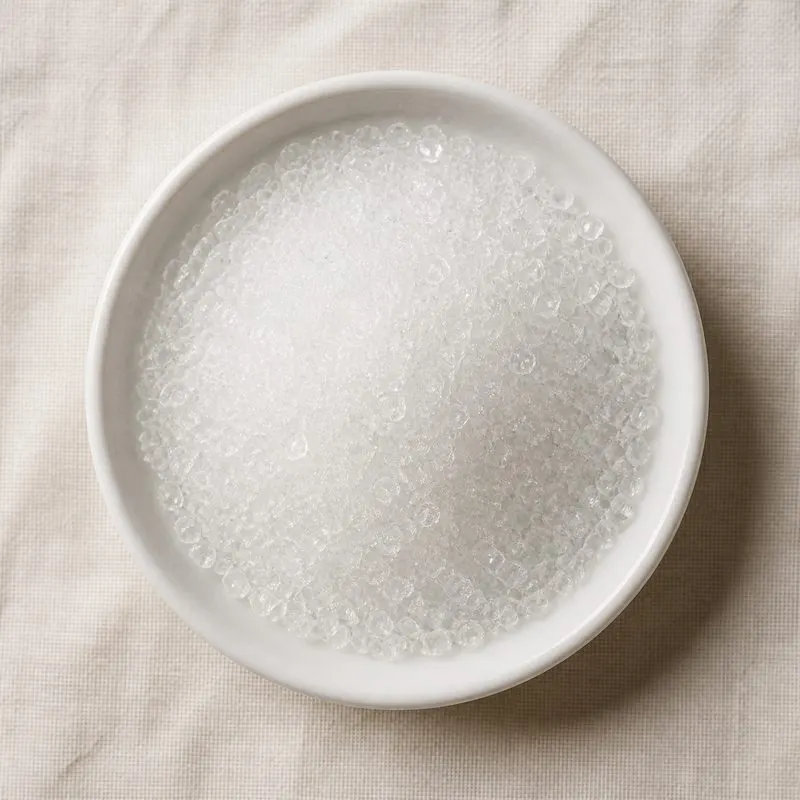
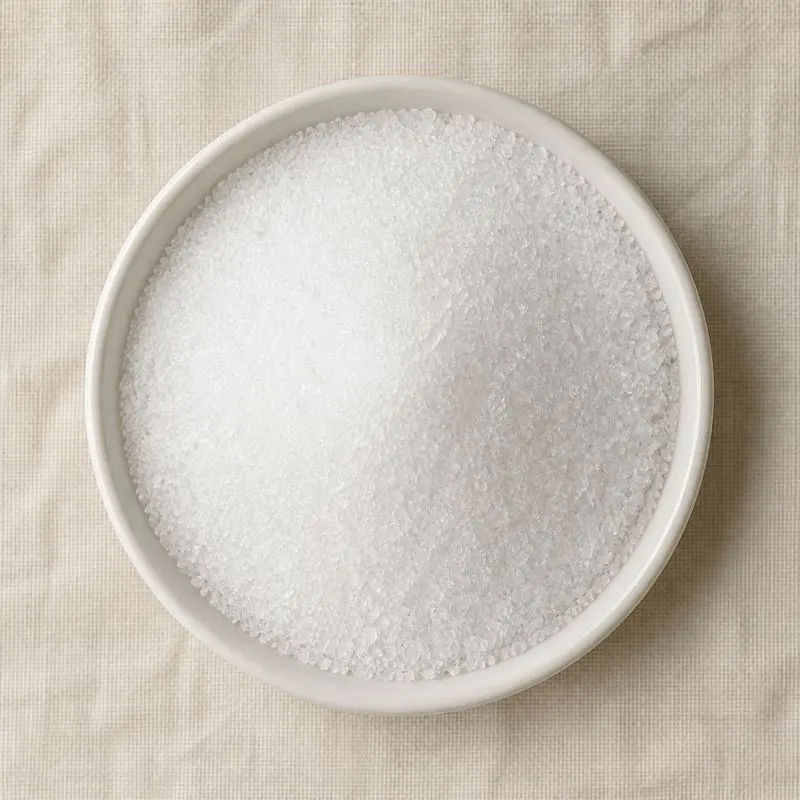
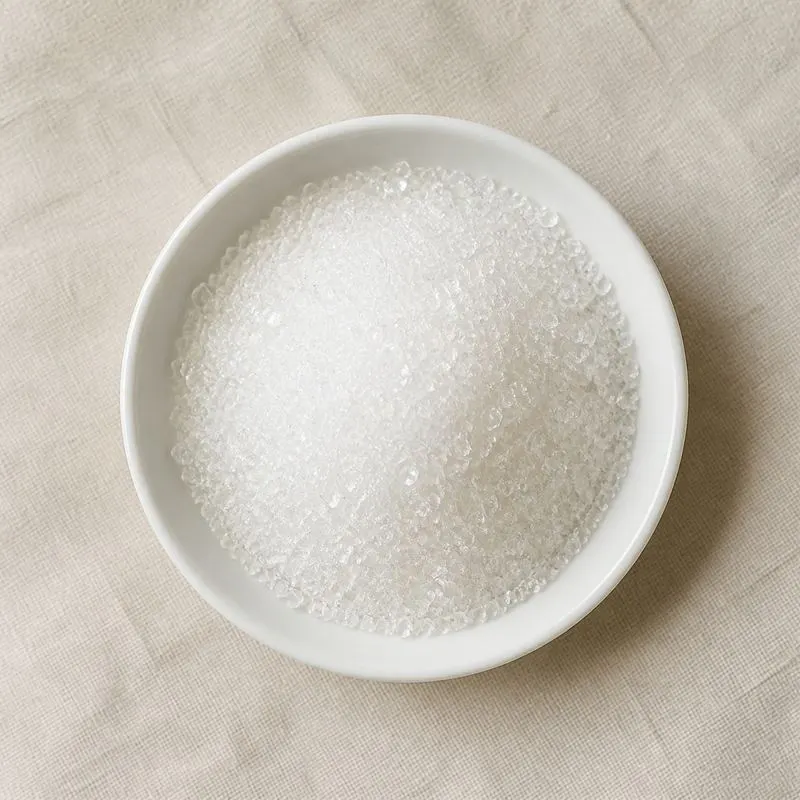
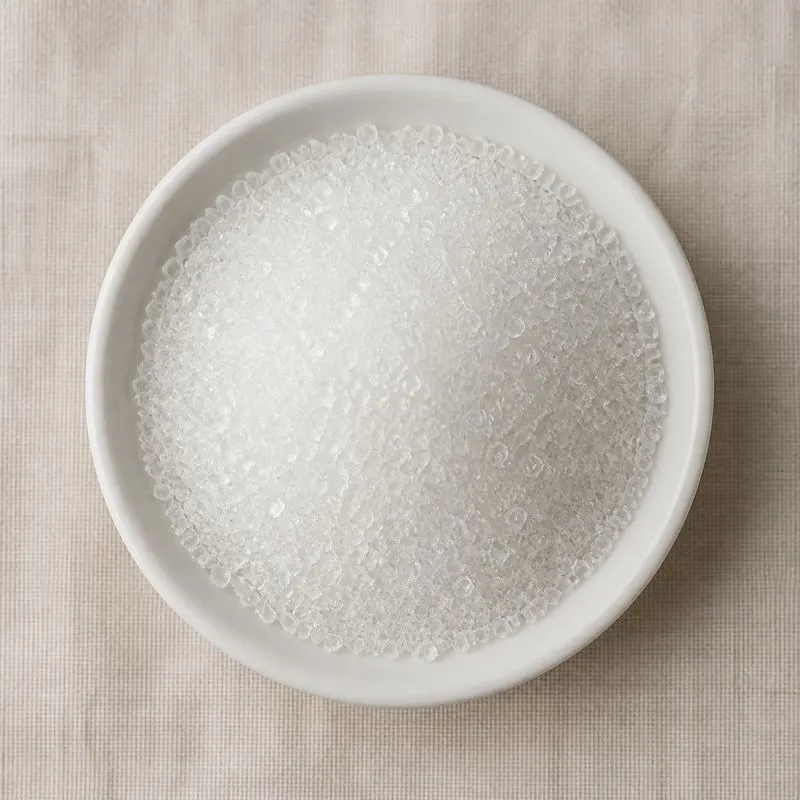
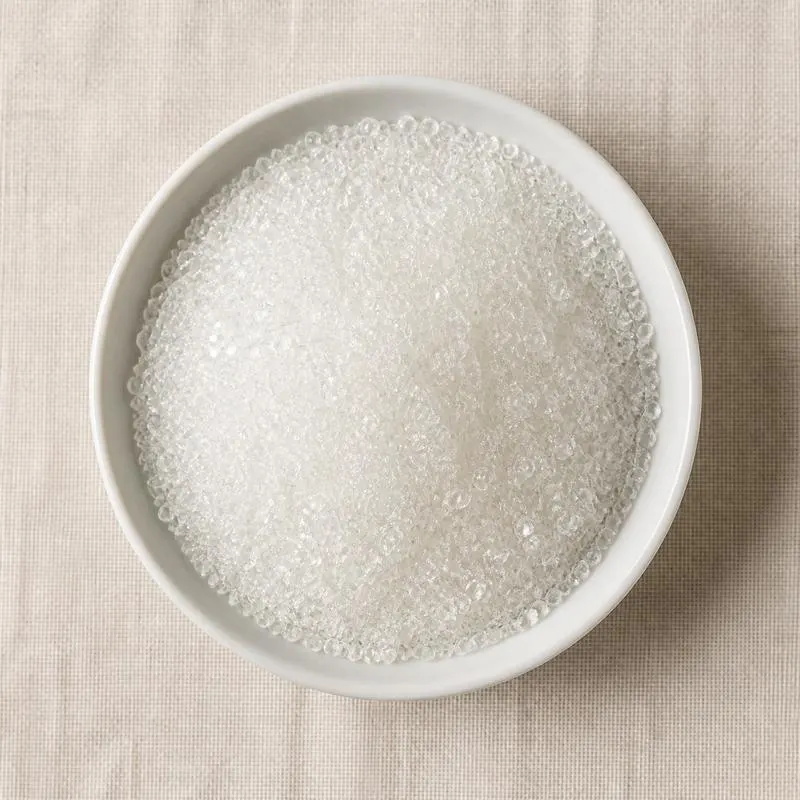
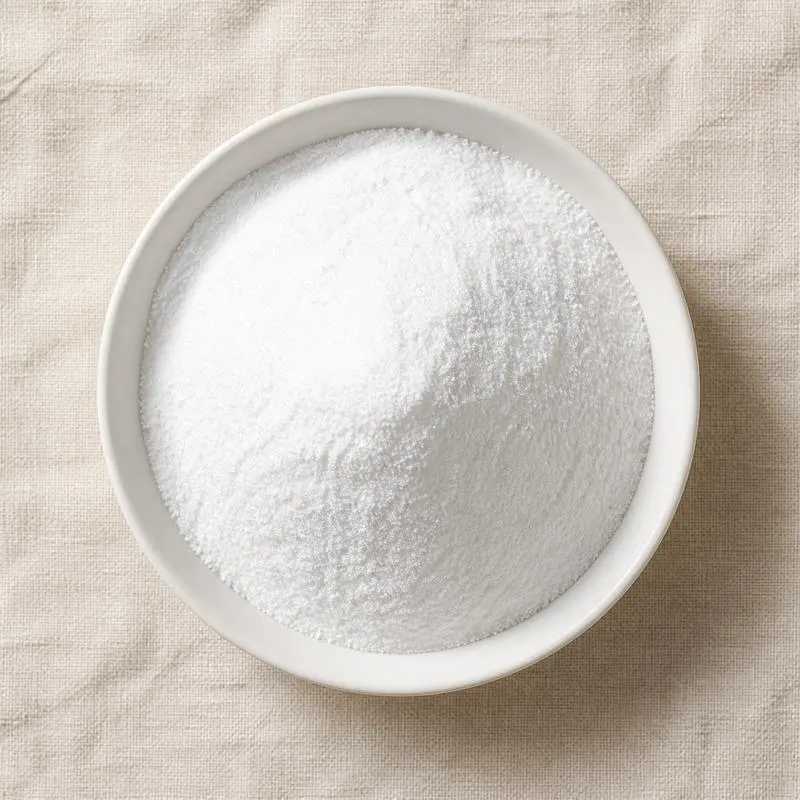
| Appearance | Colourless translucent crystals or white fine granular crystalline powder |
| Odour | Odourless, with a clean acid taste |
| Assay (dried basis) | 99.7-100.5% |
| Specific Rotation [α]D20 | +12.0° to +13.0° |
| Loss on Drying | ≤ 0.5% |
| Residue on Ignition | ≤ 0.05% |
| Oxalate | Conforms |
| Sulfate | Conforms |
| Chloride (as Cl) | ≤ 0.02% |
| Readily Carbonisable Substances | Conforms |
| Heavy Metals (as Pb) | ≤ 10 mg/kg |
| Lead | ≤ 2 mg/kg |
| Arsenic (as As) | ≤ 2 mg/kg |
| Total Plate Count | ≤ 100 CFU/g |
Common Markets Grades
L(+)-Tartaric Acid is graded at a minimum assay of 99.5 percent on the dry basis, with defined limits on sulfated ash, oxalate, and heavy metals.
Standard particle-size grades cover fine powder (60 to 200 mesh) for instant beverage premixes, regular granular (30 to 60 mesh) for general acidification, and coarse granular (12 to 30 mesh) for tableting and effervescent formulations where flow and low dust matter.
Food, USP, BP, Ph. Eur., JP, and FCC grades share the same chemical specification but differ in supporting documentation, microbial limits, and pharmaceutical residual-solvent control. Pharmaceutical grades qualify for use in oral and parenteral formulations.
The L(+)- form is distinguished commercially from synthetic DL-tartaric acid and from the rare meso-tartaric acid. Only the L(+)- form is recognised as the natural enantiomer by the OIV for wine treatment and by EU food law for general food use.
Specific rotation is typically reported on certificates as a confirmation of optical purity, and finished grades are usually offered in Halal and Kosher certified variants.
Applications
- Wine acidification, deacidification adjustment, and tartrate stabilisation control
- Carbonated soft drinks and fruit-flavoured beverages for sharper, more wine-like sourness
- Effervescent tablets and powder sachets, paired with sodium bicarbonate for CO₂ release
- Baking powders as a fast-acting leavening acid (cream of tartar systems and direct-acid blends)
- Hard-boiled candies, fruit gums, and sour confectionery for tart flavour and inversion control of sucrose syrups
- Jellies, jams, and fruit fillings as a pectin-set acidifier and antioxidant synergist
- Gelatin desserts and pie fillings as a controlled-acid component
- Cheese making, where tartrate salts assist in pH and texture control of selected styles
- Pharmaceutical effervescent granules, antacids, and laxative preparations
- Chiral resolution and asymmetric synthesis as a low-cost natural chiral auxiliary
- Metal-plating and electroless-deposition baths for copper, silver, and gold chelation
- Plaster and gypsum retarders in construction chemistry
Brands Using L(+)-Tartaric Acid
Widely-distributed consumer products that list L(+)-Tartaric Acid on the ingredient label.
- Coca-Cola (Sprite GB)Sprite (UK) ↗Listed under 'Acids (Citric Acid, Tartaric Acid)'Label verified 2026-05-24
- Coca-Cola (GB)Coca-Cola Lemon (UK) ↗Listed: 'Acids (Tartaric Acid, Phosphoric Acid)'Label verified 2026-05-24
- HariboHaribo Sour Sparks (UK) ↗Listed: 'acids: citric acid, tartaric acid, malic acid'Label verified 2026-05-24
- HariboHaribo Z!NG Sour Kicks (CA) ↗Listed: '...tartaric acid, citric acid, malic acid...'Label verified 2026-05-24
Brand names, product names and logos are the property of their owners. They appear here as published evidence that the ingredient is used, taken from the brand's own label or website. Their appearance is not an endorsement, and it does not mean the brand buys from us or from any manufacturer listed on this site.
China Manufacturers of L(+)-Tartaric Acid
Top L(+)-Tartaric Acid manufacturers in China.
 Changmao Biochemical Engineering Co., Ltd.8 ingredients in the directory
 Hangzhou Bioking Biochemical Engineering Co., Ltd.1 ingredient in the directory
 Ningbo Jinzhan Biotechnology Co., Ltd.3 ingredients in the directory
 The Greatwall Bio-chemical Engineering Co., Ltd.5 ingredients in the directory
 Yantai Taroke Bio-engineering Co., Ltd.1 ingredient in the directory
Company names and logos are the property of the manufacturers themselves. They are listed here because our own directory records them as producing this ingredient. A listing is not an endorsement by them, and we do not represent them or speak on their behalf.
How We Help Source L(+)-Tartaric Acid
Direct Factory Sourcing
We run the whole process: selecting the manufacturer from the top Chinese food ingredient producers, negotiating the price, verifying quality, and coordinating the logistics. You deal with us instead of with several factories at once.
Original Packaging and Documents from the Manufacturer
The manufacturer sends your L(+)-Tartaric Acid out of its own factory in the original packing, through to your destination port. The COA, COO, MSDS, TDS and any certifications reach you from the manufacturer as well.
Free Samples and Lead Time
We send 100 to 500 g free for your own laboratory to test and you cover only the courier, usually within 2 to 3 working days. ETD is usually within 7 to 15 days once the order is confirmed, and we check that date against the factory's own manufacturing schedule before we give it to you.
Combined Shipment
We can load L(+)-Tartaric Acid together with other ingredients such as Calcium Acetate, Citric Acid and Glucono-Delta-Lactone into one 20' FCL. If your quantity is small, we can also ship LCL.
Regulatory Status
L(+)-Tartaric Acid is the only tartaric stereoisomer with broad food-grade acceptance in major markets.
In the European Union Regulation (EC) No 1333/2008 lists it as E334 (specifically the L(+)- form) and authorises it in defined food categories, including confectionery, bakery, beverages, and wine treatment under the relevant OIV-aligned wine regulations.
The U.S. Food and Drug Administration affirms tartaric acid as Generally Recognized as Safe under 21 CFR 184.1099 for use as a multipurpose ingredient, with additional permissions for use in baking powder and as a sequestrant.
JECFA has evaluated L(+)-tartaric acid and assigned it a group ADI with related tartrate salts, reflecting the long human dietary history with grape-derived tartrate.
Monographs appear in the United States Pharmacopeia (USP), the European Pharmacopoeia (Ph. Eur.), the British Pharmacopoeia (BP), the Japanese Pharmacopoeia (JP), and the Food Chemicals Codex (FCC). Halal and Kosher certifications are routinely available, and the wine-derived material is naturally vegan.
Manufacturing Process
Industrial L(+)-Tartaric Acid is produced almost exclusively from winemaking by-products, which makes it one of the few large-volume food acids that remains a recovered natural product rather than a fermentation or synthesis product.
The principal feedstocks are argols (the crystalline crust of potassium bitartrate that deposits in wine tanks and barrels) and grape-marc lees. These materials are extracted with hot water and treated with calcium hydroxide to precipitate calcium tartrate.
The calcium tartrate is then decomposed with sulphuric acid, releasing free tartaric acid in solution and producing calcium sulphate as a by-product. The solution is filtered, decolorised over activated carbon, concentrated, and crystallised to yield the L(+)- enantiomer.
A smaller share of supply comes from microbial conversion of cis-epoxysuccinate using Nocardia tartaricans or related strains carrying cis-epoxysuccinate hydrolase, which gives optically pure L(+)-tartaric acid from a petrochemical-derived intermediate. This route has gained share where grape-derived raw materials are limited.