Monascus Yellow
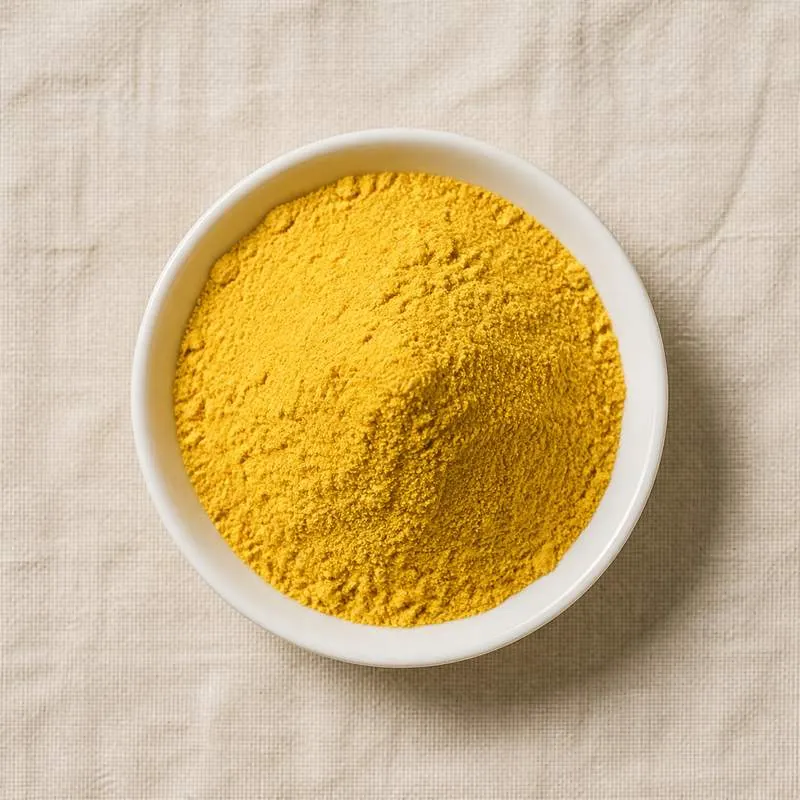
Monascus Yellow is a fermentation-derived natural colourant produced by submerged or solid-state culture of Monascus filamentous fungi, most commonly Monascus purpureus and Monascus ruber. The active pigments are the polyketide compounds ankaflavin and monascin.
Unlike the older Monascus Red, Monascus Yellow is produced with the citrinin-producing strains screened out or with citrinin removed during downstream processing. The pigment gives a clean lemon-to-golden yellow that holds up well across the pH range of most processed foods.
We source bulk Monascus Yellow from top China manufacturers for our partners, working with several of them. The manufacturers are in Fujian, Guangdong and Shandong. A smaller requirement can ship in a combined container with other ingredients.
Please send the grade you need, the volume and your destination port, and we will come back with a solution and a price.
or call +86-21-6858 0751
- Packaging
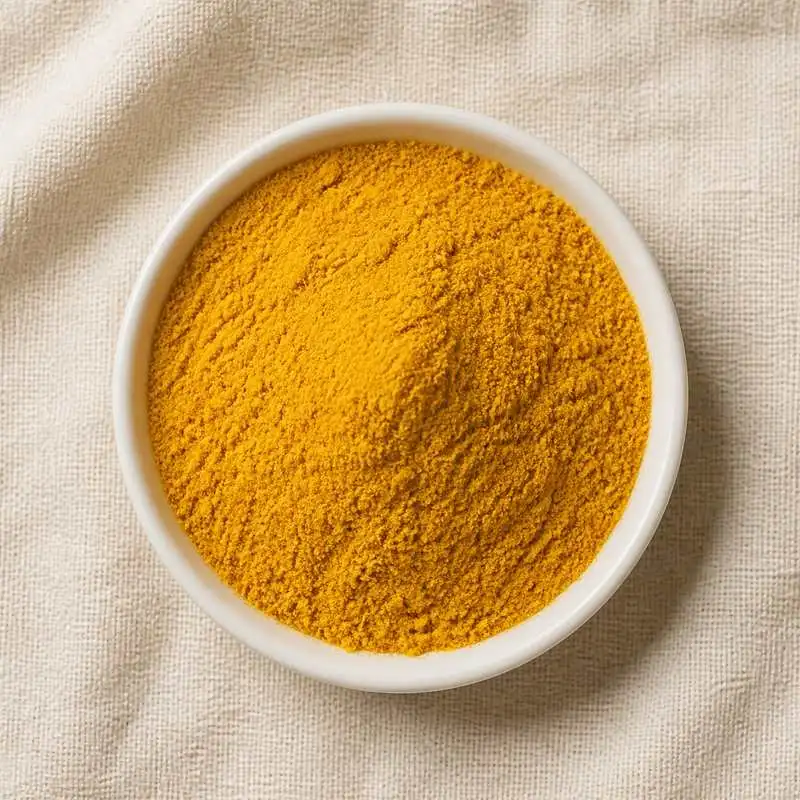
- 25 kg kraft paper bag with PE inner liner
- ISO 9001
- HACCP
- Halal
- Kosher
Specifications
Grades / Types Available: Food Grade, Feed Grade
| Item | Specification |
|---|---|
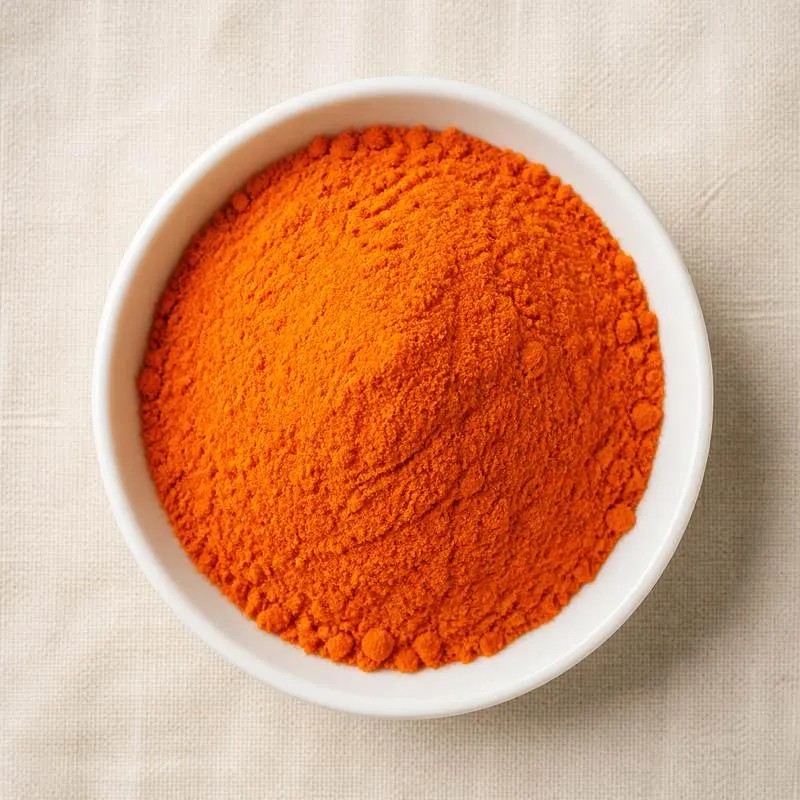
| Appearance | Yellow to amber powder |
| Colour Value (E1%, 380nm) | ≥ 50-200 (grade-dependent) |
| Moisture | ≤ 5.0% |
| Citrinin | ≤ 0.2 mg/kg (or ND) |
| Heavy Metals (as Pb) | ≤ 2 mg/kg |
| Total Plate Count | ≤ 1,000 cfu/g |
| Purity/Assay (Food Grade) | ≥ 95% |
| Viscosity (Food Grade) | 1000-3000 mPa·s |
| Moisture/Loss on Drying | ≤ 8% |
| pH | 4.0-6.0 |
| Particle Size/Mesh | 80 mesh |
| Ash | ≤ 5% |
| Lead | ≤ 2 mg/kg |
| Arsenic | ≤ 1 mg/kg |
| Yeast & Mold | ≤ 100 cfu/g |
Common Markets Grades
Monascus Yellow is graded by colour value, measured as E1%/1cm absorbance at 370 to 420 nm depending on the supplier method.
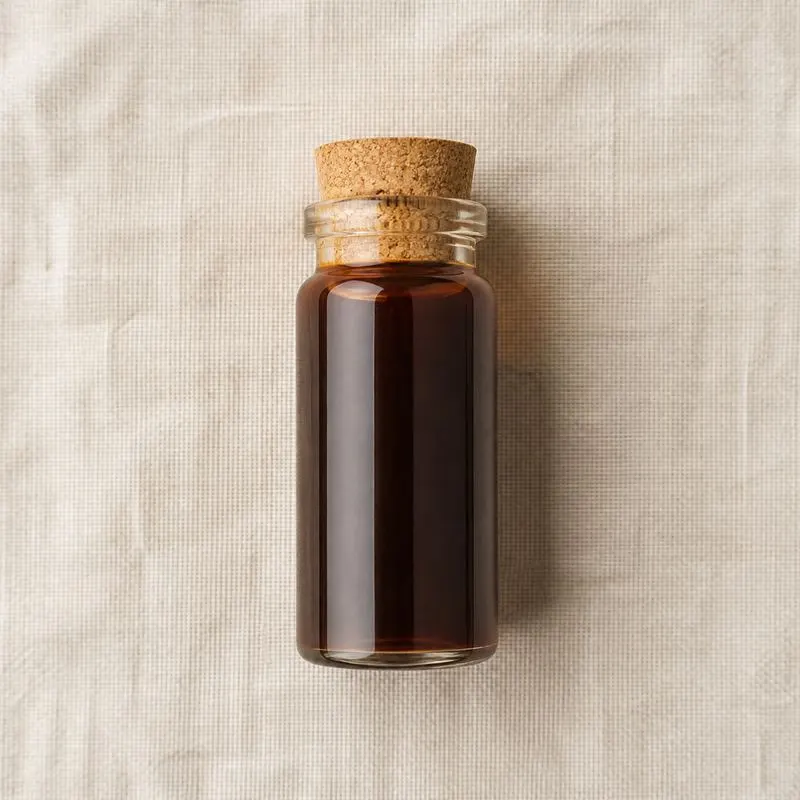
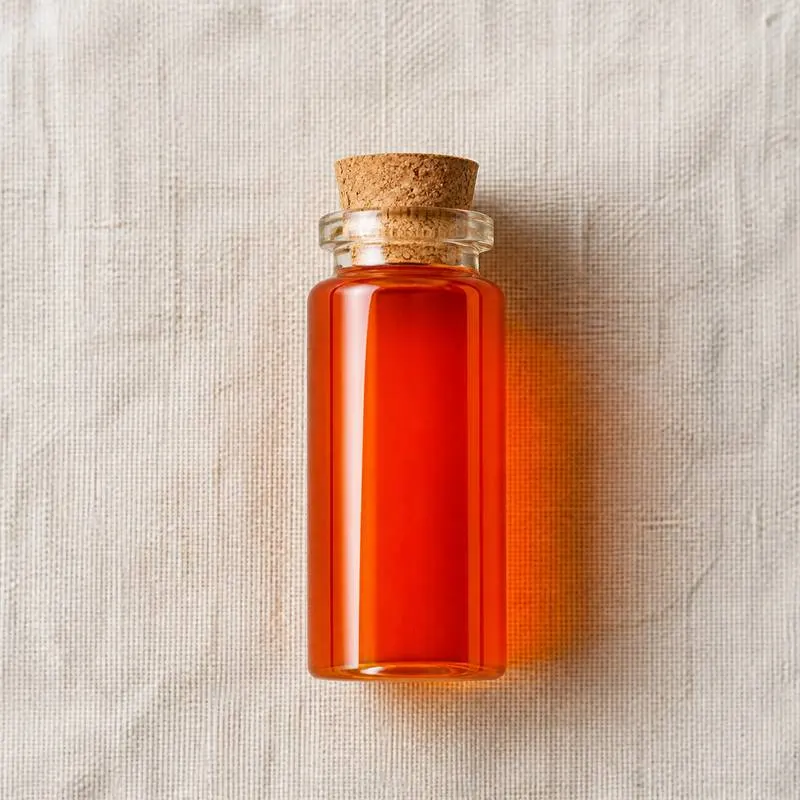
Liquid grades at colour value 50 to 200 are dispersed in propylene glycol or ethanol-water blends. These are the standard format for beverage and sauce applications.
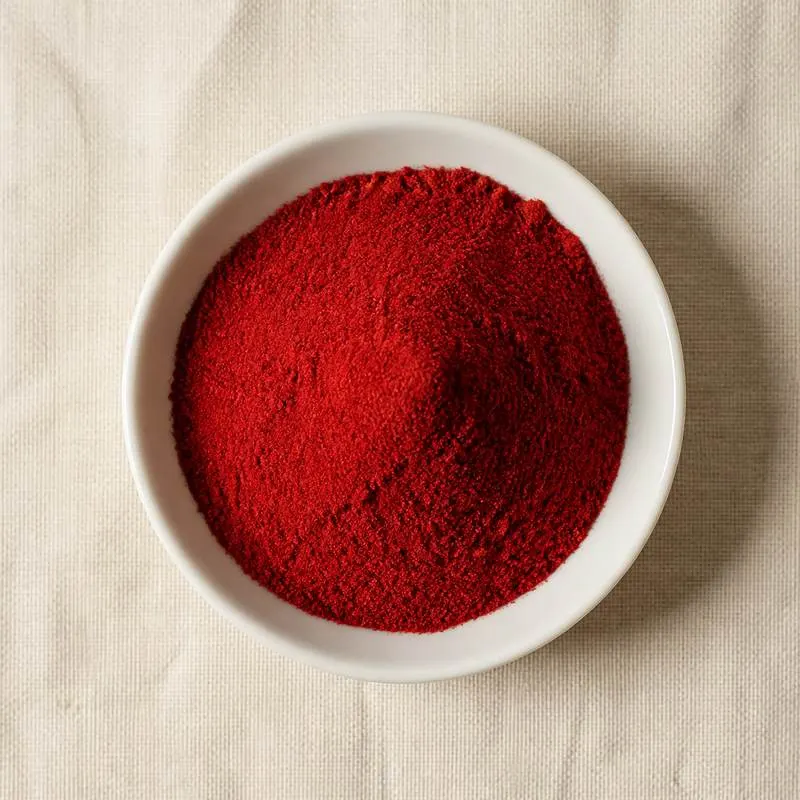
Powder grades at colour value 200 to 1000 are spray-dried on maltodextrin, gum arabic, or modified starch. The powders rehydrate cleanly and are preferred for dry mixes, seasonings, and bakery premixes.
Oil-soluble grades carry the pigment in a refined vegetable-oil carrier for fat-continuous applications such as cream-filled confectionery and bakery glazes.
All food-grade material comes with a documented citrinin specification, typically below 50 micrograms per kilogram, verified by HPLC with fluorescence detection.
Applications
- Soy sauce, oyster sauce, and braising sauces for a deeper golden tone
- Instant noodle seasoning sachets and ramen broth bases
- Marinades and glazes for roast pork, duck, and chicken in Asian-style products
- Bakery: sponge cakes, sweet breads, and steamed buns for an egg-yellow crumb
- Confectionery: hard candies, jellies, and chewing gum in yellow and gold shades
- Surimi and fish-paste products to mimic a richer egg-glazed appearance
- Pickled vegetables such as daikon, ginger, and bamboo shoots
- Ready-meal sauces and curry pastes where a stable yellow base is needed
- Plant-based egg and cheese analogs for a natural yellow tone
- Aquaculture feed for golden-skinned ornamental and food fish
China Manufacturers of Monascus Yellow
Top Monascus Yellow manufacturers in China.
- Fuzhou Longlixin Biological Products Co., Ltd.3 ingredients in the directory
 Guangdong Tianyi Biotechnology Co., Ltd.4 ingredients in the directory
- Gutian County Fengchi Biotechnology Co., Ltd.2 ingredients in the directory
 Shandong Zhonghui Biotechnology Co., Ltd.6 ingredients in the directory
Company names and logos are the property of the manufacturers themselves. They are listed here because our own directory records them as producing this ingredient. A listing is not an endorsement by them, and we do not represent them or speak on their behalf.
How We Help Source Monascus Yellow
Direct Factory Sourcing
We run the whole process: selecting the manufacturer from the top Chinese food ingredient producers, negotiating the price, verifying quality, and coordinating the logistics. You deal with us instead of with several factories at once.
Original Packaging and Documents from the Manufacturer
The manufacturer sends your Monascus Yellow out of its own factory in the original packing, through to your destination port. The COA, COO, MSDS, TDS and any certifications reach you from the manufacturer as well.
Free Samples and Lead Time
We send 100 to 500 g free for your own laboratory to test and you cover only the courier, usually within 2 to 3 working days. ETD is usually within 7 to 15 days once the order is confirmed, and we check that date against the factory's own manufacturing schedule before we give it to you.
Combined Shipment
We can load Monascus Yellow together with other ingredients such as Beta Carotene, Caramel Colour and Lycopene into one 20' FCL. If your quantity is small, we can also ship LCL.
Regulatory Status
Regulatory status for Monascus pigments varies sharply by region.
In the European Union, Monascus pigments are not listed as approved food colours in Regulation (EC) No 1333/2008 and may not be used as a colouring ingredient in foods sold within the bloc. Red yeast rice products containing monacolin K are separately regulated as foods or supplements with strict labelling requirements.
In the United States, Monascus pigments are not listed as approved colour additives, and the FDA has issued import alerts on red yeast rice products that carry lovastatin-equivalent monacolins. Use as a colouring agent in conventional food is not sanctioned.
Japan, Korea, Thailand, and several other Asian markets permit Monascus pigments as natural food colourants under their respective additive lists. Citrinin specifications, typically below 200 micrograms per kilogram for the colourant and below 2 milligrams per kilogram for red yeast rice products, are routinely enforced.
Manufacturing Process
Production starts with strain selection. Industrial strains of Monascus purpureus or Monascus pilosus are screened for high yellow-pigment yield and low or absent citrinin biosynthesis. The selected strains are maintained as cryopreserved master cell banks.
Submerged fermentation is run in stirred-tank bioreactors on a defined medium of glucose, peptone, and mineral salts at 28 to 32 degrees Celsius over five to seven days. Solid-state fermentation on steamed long-grain rice is an alternative that gives a more traditional flavour profile.
At harvest the broth or rice matrix is extracted with food-grade ethanol. The crude extract is concentrated under vacuum, then passed through activated-carbon or resin columns that selectively remove residual citrinin and colour impurities.
The purified concentrate is standardised to colour value with carrier solvents or spray-dried on a polysaccharide matrix. Final material is tested for pigment assay, citrinin, microbiological load, and heavy metals before release.