Potassium Lactate And Sodium Diacetate Blend
A potassium lactate and sodium diacetate blend is a compound antimicrobial and shelf life agent for ready to eat meat, poultry and seafood, combining the potassium salt of lactic acid with the sodium salt complex of acetic acid in a fixed ratio. The two components work together: the lactate suppresses outgrowth of psychrotrophic organisms over the chilled shelf life, while the diacetate acts quickly on the same organisms at the pH of cured muscle, so the pair gives a longer lag phase than either salt used alone.
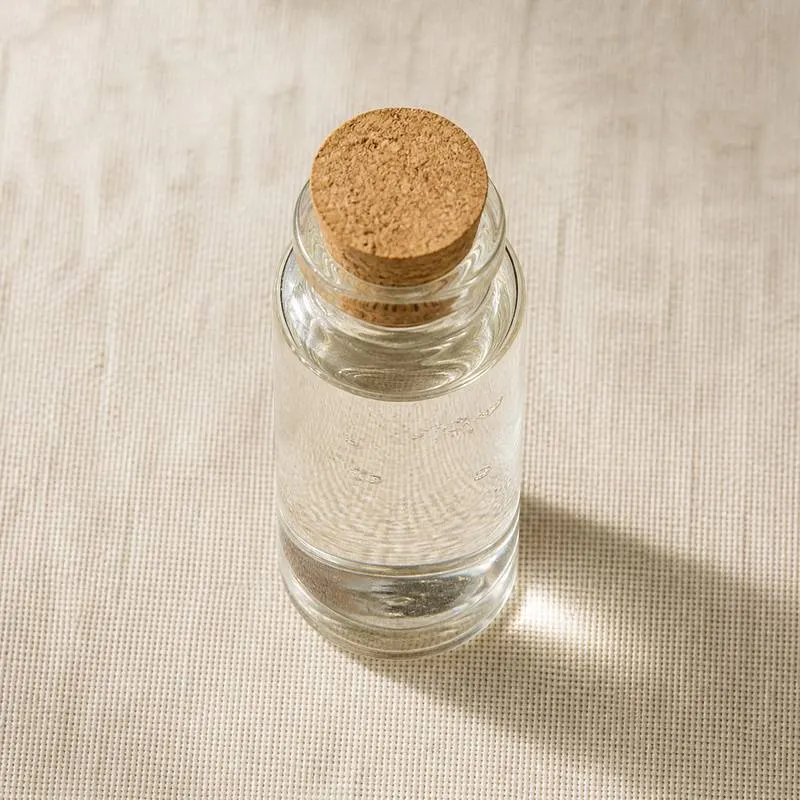
The usual trade form is a clear, slightly viscous aqueous solution carrying about 55 to 62 percent potassium lactate with roughly 3 to 5 percent sodium diacetate, designed to be metered into brine or added directly at the mixer. A spray dried powder blend on a carrier is also produced for dry sausage seasoning and for products where added water must be limited. The solution is fully miscible with water and with meat brines and does not salt out at normal brine strength.
Because potassium lactate is strongly hygroscopic and holds water in the muscle system, the blend also acts on yield and on texture, and its potassium base gives a measurable bitter and metallic note that limits how much can be used before flavour is affected.
We source bulk Potassium Lactate And Sodium Diacetate Blend from top China manufacturers for our partners. The manufacturer is in Shandong. A smaller requirement can ship in a combined container with other ingredients.
Please send the grade you need, the volume and your destination port, and we will come back with a solution and a price.
or call +86-21-6858 0751
- Function
- Acidulant
Specifications
| Item | Specification |
|---|---|
| Appearance | Clear colourless to pale yellow syrupy liquid |
| Odour | Faint acetic character, free from foreign odour |
| Potassium lactate content | 55.0 to 62.0% |
| Sodium diacetate content | 3.5 to 5.0% |
| pH, as supplied | 5.0 to 7.0 |
| Specific gravity at 20 degrees Celsius | 1.28 to 1.34 |
| Water content | Balance to 100%, to declared value |
| Reducing sugars, as glucose | Not more than 0.5% |
| Chloride, as Cl | Not more than 0.2% |
| Sulphate, as SO4 | Not more than 0.2% |
| Arsenic, as As | Not more than 1 mg/kg |
| Lead, as Pb | Not more than 1 mg/kg |
| Total plate count | Not more than 100 cfu/g |
| Salmonella | Absent in 25 g |
Common Markets Grades
Grades are defined by the ratio of the two active salts and by physical form. The common liquid presentations pair around 60 percent potassium lactate with about 4 percent sodium diacetate, and variants shift that ratio where the target organism or the product pH calls for more of the acetate component. Sodium free versions substitute potassium diacetate for the sodium salt where total sodium is being reduced, and buffered versions add lactic acid or acetic acid to bring the delivered pH down without changing the active content.
Dry blends are free flowing powders, either spray dried onto a maltodextrin or salt carrier or produced as a mechanical mix of the two crystalline salts, with the active content declared on the certificate. Some producers offer the blend already combined with sodium or potassium acetate, with vinegar derived ingredients, or with buffered vinegar for label friendly formulations. Certificates state the potassium lactate content by titration, the diacetate content, the specific gravity of the liquid and the delivered pH.
Applications
- Ready to eat deli meats and sliced ham, where the blend extends the lag phase of Listeria monocytogenes over refrigerated shelf life after post lethality exposure
- Frankfurters and emulsified sausage, where it is added to the emulsion to control outgrowth and to hold cooked yield
- Whole muscle injected products such as turkey breast and roast beef, where it is dosed into the pickle and distributed by tumbling
- Fresh sausage and ground meat, where the acetate component slows spoilage flora and delays the onset of sour off notes
- Cooked and cured poultry, where the lactate reduces liquid loss in the pack and keeps slices from drying at the cut face
- Smoked and cold smoked fish, where the pair is used against Listeria in a product that receives no terminal heat step
- Cooked seafood and surimi, where it supports water binding alongside its antimicrobial role
- Pet food and semi moist treats, where the acetate suppresses mould and yeast in an intermediate moisture matrix
- Vacuum packed cooked meals and sous vide components, where chilled shelf life is set by psychrotrophic spore formers
China Manufacturers of Potassium Lactate And Sodium Diacetate Blend
Top Potassium Lactate And Sodium Diacetate Blend manufacturers in China.

Company names and logos are the property of the manufacturers themselves. They are listed here because our own directory records them as producing this ingredient. A listing is not an endorsement by them, and we do not represent them or speak on their behalf.
Regulatory Status
Both components are established food ingredients in the United States. The FDA affirms potassium lactate as generally recognised as safe and lists it under 21 CFR 184.1639, and affirms and lists sodium diacetate under 21 CFR 184.1754, in each case for use consistent with good manufacturing practice. Use in meat and poultry is additionally administered by the Food Safety and Inspection Service, which lists lactate and diacetate salts as permitted antimicrobial and antioxidant agents in specified product classes and caps their combined addition as a share of the total formulation. Products relying on the blend for control of Listeria monocytogenes are handled under the post lethality treatment framework for ready to eat product, which requires the effect to be validated in the specific formulation.
In the European Union Regulation (EC) No 1333/2008 authorises potassium lactate as E 326 and sodium diacetate as E 262 (ii) and sets the permitted categories and levels, while Regulation (EU) No 231/2012 gives the identity and purity criteria. The blend itself is not a separate additive and is declared by its components. Codex covers both salts in the General Standard for Food Additives as acidity regulators and preservatives, and JECFA has published specifications for lactates and for the acetate salts.
Manufacturing Process
The two components are made separately and then combined. Potassium lactate begins with lactic acid produced by fermenting glucose from maize or cassava starch with lactic acid bacteria under pH control. The broth is filtered free of cells, and the acid is purified through ion exchange, carbon treatment and either esterification and distillation or membrane separation, since colour and residual sugar in the acid carry directly into the finished salt. The purified acid is neutralised with potassium hydroxide or potassium carbonate under temperature control to the target pH, then polish filtered and concentrated by vacuum evaporation to the declared solids.
Sodium diacetate is not a simple salt but a molecular compound of sodium acetate and acetic acid in equimolar proportion. It is made by reacting sodium hydroxide or sodium carbonate with an excess of glacial acetic acid, then crystallising the complex and drying it under conditions mild enough to avoid driving off the bound acetic acid. For the liquid blend the dried diacetate is dissolved into the concentrated potassium lactate solution in a jacketed vessel, the batch is adjusted to the declared specific gravity and pH, filtered and filled. Powder blends are made either by spray drying the combined solution onto a carrier or by dry mixing the two crystalline salts and verifying homogeneity.