Bakery Flavour
Bakery flavour is the collective name for compounded flavourings formulated to survive a bake and still read correctly in the finished crumb. The category covers a set of recurring profile families rather than one substance: butter and dairy, vanilla and custard, milk and condensed milk, cream cheese, caramel and toffee, chocolate and cocoa, nut profiles such as almond and hazelnut, and yeast or fresh bread notes.
What distinguishes a bakery flavour from a general purpose flavour is thermal behaviour. Oven temperatures of 180 to 220 degrees Celsius and bake times of ten minutes to an hour strip out light esters and aldehydes, so these blends are weighted towards higher boiling molecules that survive the bake. Butter profiles lean on diacetyl, acetoin and short chain lactones, vanilla on vanillin and ethyl vanillin, caramel on furaneol, maltol and cyclotene, bread on pyrazines and furans generated by the same Maillard chemistry the oven itself drives.
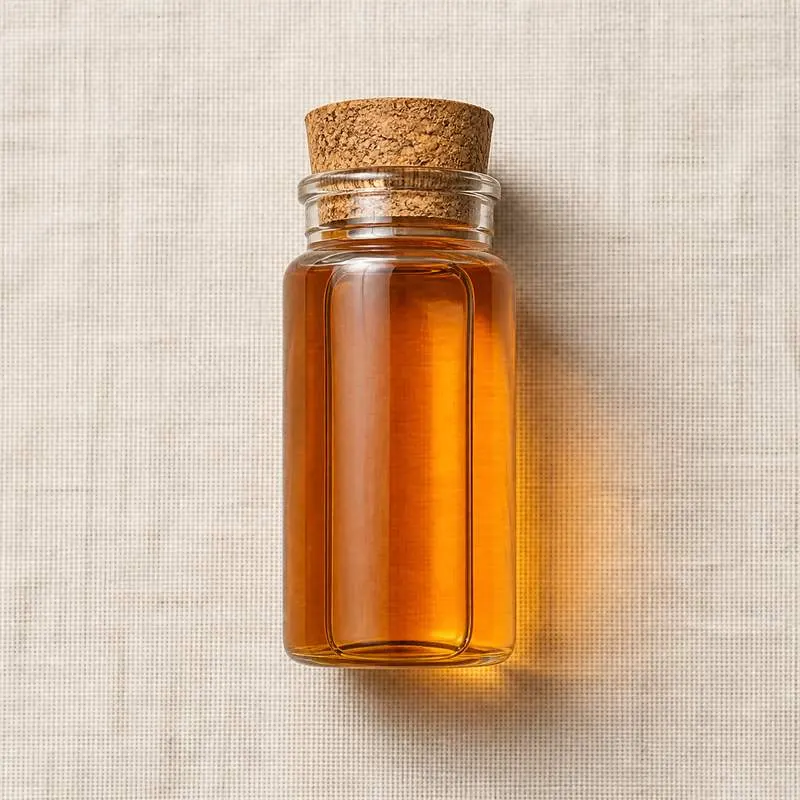
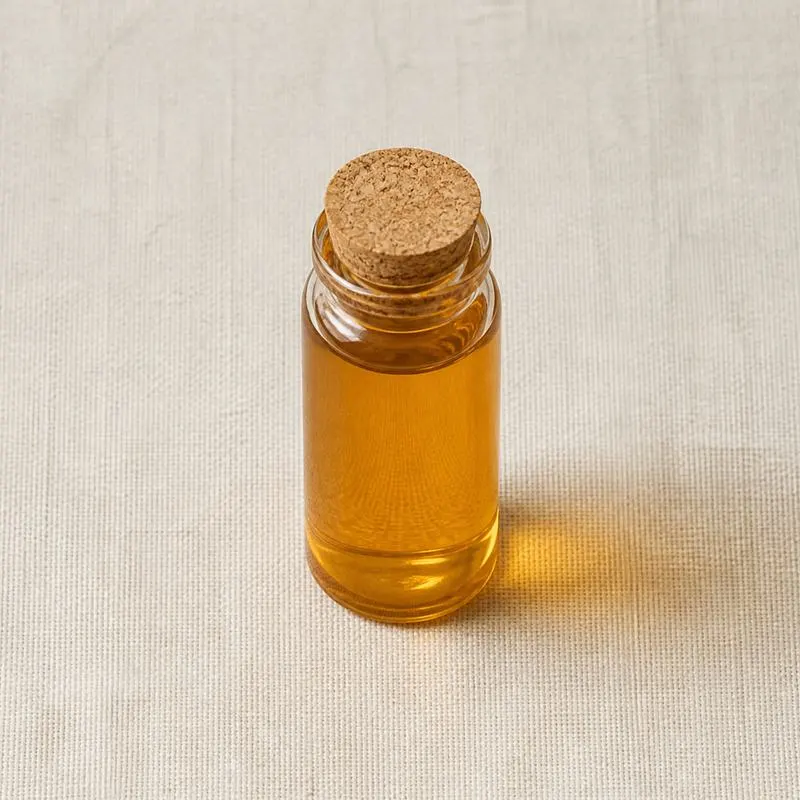
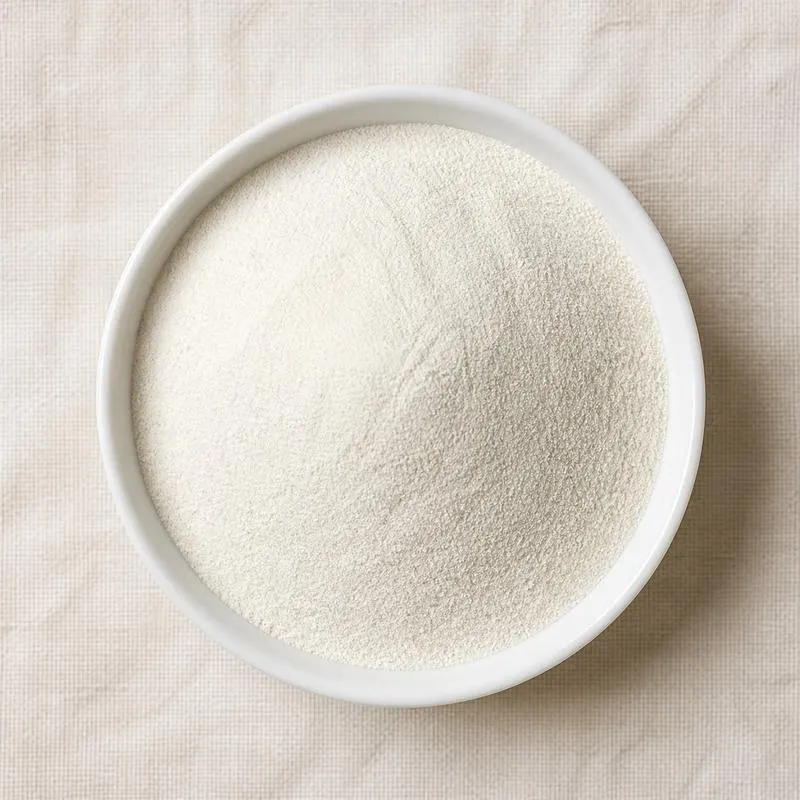
Supply forms are liquid in propylene glycol or vegetable oil, viscous paste, emulsion, and spray dried or fat encapsulated powder. Oil soluble and encapsulated grades dominate where the flavour has to sit in a fat phase or a dry premix.
We source bulk Bakery Flavour from top China manufacturers for our partners. The manufacturer is in Shanghai. A smaller requirement can ship in a combined container with other ingredients.
Please send the grade you need, the volume and your destination port, and we will come back with a solution and a price.
or call +86-21-6858 0751

- Function
- Flavours and Aromas
Specifications
| Item | Specification |
|---|---|
| Appearance | Clear to slightly hazy liquid, or free flowing powder for encapsulated grades |
| Colour | Colourless to amber, to retained standard |
| Odour and flavour | Characteristic of the declared profile, conforms to retained standard |
| Identification | Gas chromatographic profile matches reference batch |
| Solubility | Miscible with the declared carrier phase |
| Relative density at 20 degrees Celsius | 0.900 to 1.100 depending on carrier |
| Moisture, powder grades | Not more than 5.0 percent |
| Surface oil, powder grades | Not more than 2.0 percent |
| Lead | Not more than 1 mg per kg |
| Arsenic | Not more than 1 mg per kg |
| Total plate count | Not more than 1000 cfu per g |
| Yeast and mould | Not more than 100 cfu per g |
| Escherichia coli | Absent in 1 g |
| Salmonella | Absent in 25 g |
Common Markets Grades
Grades divide first by labelling status, into natural, flavour with other natural flavours, and artificial or nature identical, and second by solubility. Water soluble grades carried in propylene glycol or ethanol suit doughs, syrups and glazes; oil soluble grades in vegetable oil or medium chain triglyceride suit fillings, creams, laminating fats and chocolate coatings, where a water carried flavour would seize the fat.
The third axis is delivery. Straight liquids are cheapest and are dosed into the dough at mixing. Encapsulated powders, spray dried on modified starch or gum acacia or spray chilled in a hardened fat, hold the volatiles until the matrix melts or dissolves, which both improves bake survival and allows the flavour to be blended into a dry cake or bread premix. Pastes carry a high load of natural extract and are used where a heavy vanilla or caramel note plus visible seed specks or colour is wanted. Concentration is quoted as a recommended dosage, commonly 0.05 to 0.5 percent on flour weight, rather than as an assay.
Applications
- Cakes, sponges and muffins, where butter and vanilla profiles compensate for a formulation built on vegetable shortening rather than butter
- Biscuits and cookies, where an oil soluble butter or caramel flavour survives the high bake temperature
- Bread and rolls, where a fresh baked or yeast note reinforces crust aroma in part baked and frozen products
- Cream fillings, buttercream and non dairy whipped toppings, where the flavour sits entirely in the fat phase
- Danish pastry and croissant laminating margarine, dosed into the fat before rolling
- Cake and bread premixes, where encapsulated powder blends into the dry mix and stays stable through the ambient shelf life of the mix
- Glazes, syrups and fondants, where a water soluble grade avoids clouding
- Egg free and dairy free bakery, where flavour carries the sensory character the removed ingredient provided
- Steamed buns and Chinese bakery items requiring a milk or condensed milk note
- Frozen and par baked doughs, where the flavour must survive freezing and a second bake
China Manufacturers of Bakery Flavour
Top Bakery Flavour manufacturers in China.

Company names and logos are the property of the manufacturers themselves. They are listed here because our own directory records them as producing this ingredient. A listing is not an endorsement by them, and we do not represent them or speak on their behalf.
Regulatory Status
In the United States the finished blend is not itself a regulated article; each component must be a permitted flavouring ingredient, meaning a synthetic flavouring substance listed at 21 CFR 172.515, a substance in the GRAS flavouring list at 21 CFR 182.60, a spice or natural extractive under 21 CFR 182.10 and 182.20, or an independently determined GRAS substance such as those on the FEMA GRAS list. Vanillin and ethyl vanillin are specifically covered by the flavouring regulations. Declaration on the finished baked good follows 21 CFR 101.22, which sets out when natural flavour may be used and when artificial flavour must appear.
In the European Union flavourings fall under Regulation (EC) No 1334/2008, which establishes the Union list of authorised flavouring substances and defines the conditions for using the term natural. Carriers, solvents, emulsifiers and anticaking agents in the blend must be additives authorised under Regulation (EC) No 1333/2008 for the relevant food category. Where the blend contains milk, egg, soya, nut or wheat derived material, that must be declared as an allergen under Regulation (EU) No 1169/2011. The Joint FAO/WHO Expert Committee on Food Additives evaluates flavouring agents by chemical group, and Codex Alimentarius sets general principles for the use of flavourings rather than a compositional standard for the blend.
Manufacturing Process
Liquid grades are compounded rather than synthesised. Aroma chemicals, essential oils, oleoresins and natural extracts are weighed against the formula, with trace components pre diluted so they can be dosed accurately, and dissolved into the carrier in a stainless steel vessel under nitrogen. The blend is held for a maturation period, checked against a retained sensory standard, then polish filtered and filled. Pastes follow the same route with the addition of a thickening system and, where the profile calls for it, milled vanilla bean or cocoa solids dispersed under high shear.
Powder grades start from an emulsion. The flavour oil is dispersed into a solution of modified starch, gum acacia or maltodextrin and homogenised at high pressure to a fine droplet size, then spray dried in a co current tower with inlet air around 180 degrees Celsius and outlet near 90, which flashes the water off while the carrier forms a glassy shell around each droplet. Fat encapsulated grades are made instead by spray chilling a molten dispersion of the flavour in a hydrogenated vegetable fat, giving a particle that releases only when the fat melts in the oven. Finished powder is sieved, checked for surface oil and packed in a moisture barrier.