Calcium L-malate
Calcium L-malate is the calcium salt of L-(+)-malic acid, formula CaC4H4O5, used chiefly as a nutritional calcium source and secondarily as an acidity regulator and firming agent. The L designation identifies the naturally occurring optical isomer, the form found in apples and other fruit and the one metabolised directly through the tricarboxylic acid cycle, which is why it is specified in preference to the racemic DL salt for supplement and fortification work.
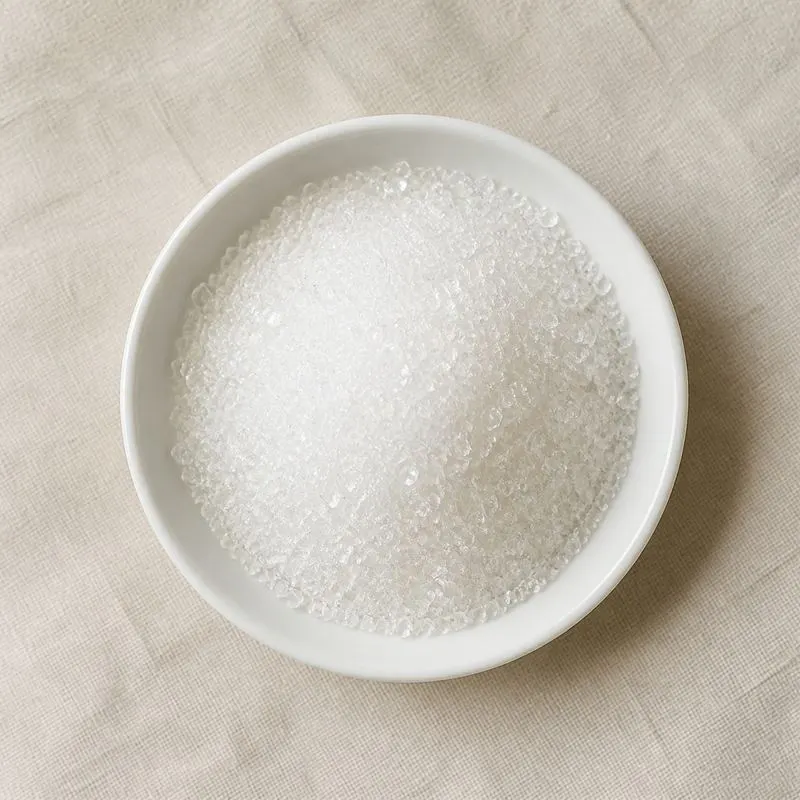
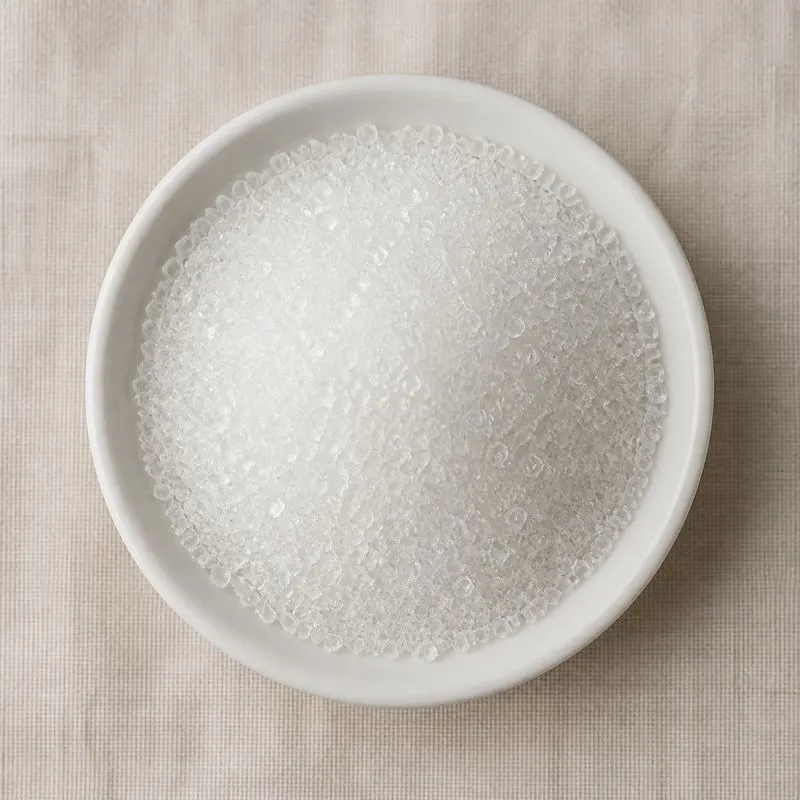
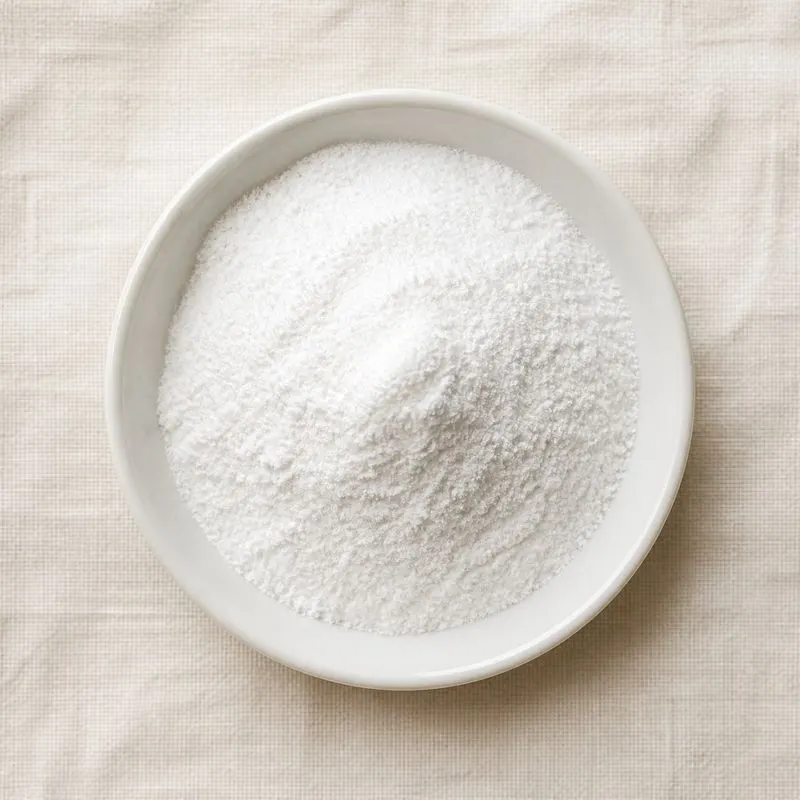
The commercial material is a white to off-white free flowing powder, essentially odourless, with a bland to faintly acid taste and none of the chalkiness that limits how much calcium carbonate can be added to a beverage. Elemental calcium content is roughly 18 to 23 percent depending on hydrate state, and that figure rather than the assay is what formulators dose against. Solubility in water is modest at neutral pH and improves sharply as pH falls, so the salt dissolves readily in acidified drinks and disperses rather than dissolves in neutral systems.
Aqueous dispersions read close to neutral, generally pH 6 to 8. The powder is non-hygroscopic, stable at ambient temperature and humidity, and survives tabletting, spray drying and beverage pasteurisation without loss of assay or development of colour.
We source bulk Calcium L-malate from top China manufacturers for our partners. The manufacturer is in Jiangsu. A smaller requirement can ship in a combined container with other ingredients.
Please send the grade you need, the volume and your destination port, and we will come back with a solution and a price.
or call +86-21-6858 0751
- Function
- Acidulant
Specifications
| Item | Specification |
|---|---|
| Appearance | White to off-white free flowing powder |
| Assay, dried basis | Not less than 98.0 percent |
| Elemental Calcium | 18.0 to 23.0 percent, declared per lot |
| Identification | Positive for calcium and for malate |
| Optical Purity, L isomer | Not less than 99.0 percent |
| Loss on Drying, 105 degrees Celsius | Not more than 8.0 percent |
| pH, 5 percent dispersion | 6.0 to 8.0 |
| Fumaric Acid | Not more than 1.0 percent |
| Maleic Acid | Not more than 0.05 percent |
| Lead | Not more than 2 mg per kg |
| Arsenic | Not more than 1 mg per kg |
| Total Plate Count | Not more than 1000 cfu per g |
| Yeast and Mould | Not more than 100 cfu per g |
| Salmonella | Absent in 25 g |
Common Markets Grades
Food and supplement grade calcium L-malate at 98 percent minimum assay on the dried basis is the standard article, with the elemental calcium content declared separately on each lot because hydrate state varies between producers. Both anhydrous and hydrated versions are traded, distinguished on loss on drying rather than on purity, and the anhydrous form is preferred where the higher calcium density lets a tablet or capsule carry a full dose in less volume.
Physical grades follow the dosage form. Fine milled powder is used in capsules, sachets and dry beverage blends. Granular and agglomerated material of roughly 30 to 80 mesh, produced by fluid bed granulation, is specified for direct compression tabletting where flow and low friability matter more than dissolution speed. A separate low lead grade is made for infant and paediatric nutrition, tested against the tighter trace element limits that category requires. Calcium malate is also traded in blends with calcium citrate or calcium lactate where a particular solubility and taste profile is wanted.
Applications
- Calcium fortified juices and acidified beverages, where solubility at low pH avoids the sediment and chalky note of carbonate
- Calcium supplement tablets and capsules, as a mineral source with better tolerance than the carbonate at equivalent elemental doses
- Bone health formulations combining calcium with magnesium and vitamin D3
- Effervescent tablets and drink sticks, as the calcium carrier in the acid and bicarbonate system
- Plant based milks and dairy alternatives, as a fortificant that stays suspended without heavy stabilisation
- Meal replacement and clinical nutrition powders, as a bland tasting calcium source
- Chewable tablets and gummies, where the mild flavour needs little masking
- Fresh cut and canned fruit and vegetables, as a firming agent that crosslinks pectin without the bitterness of calcium chloride
- Bakery, as a minor dough conditioner and calcium fortificant
China Manufacturers of Calcium L-malate
Top Calcium L-malate manufacturers in China.

Company names and logos are the property of the manufacturers themselves. They are listed here because our own directory records them as producing this ingredient. A listing is not an endorsement by them, and we do not represent them or speak on their behalf.
Regulatory Status
In the United States calcium malate is used as a calcium source in dietary supplements under the Dietary Supplement Health and Education Act framework and as a nutrient added to conventional foods. 21 CFR 184.1069 affirms malic acid itself as generally recognised as safe for use as a flavour enhancer, flavouring agent and pH control agent, and calcium salts are accepted sources for nutrient fortification, so suppliers handle the compound as a nutrient source on their own determination rather than under a dedicated additive regulation of its own.
In the European Union, Regulation (EC) No 1333/2008 authorises calcium malate as food additive E 352, with identity and purity criteria set in Regulation (EU) No 231/2012, where it functions as an acidity regulator. Directive 2002/46/EC separately lists it among the mineral substances permitted in the manufacture of food supplements, Regulation (EC) No 1925/2006 lists it among the calcium sources that may be added to foods, and the European Food Safety Authority has evaluated it as a source of calcium. JECFA has evaluated malic acid and its salts and concluded that no numerical limit is required.
Manufacturing Process
The route begins with L-malic acid. The optically pure L acid is produced either by enzymatic hydration of fumaric acid over immobilised fumarase, generally as whole cells or immobilised enzyme in a continuously operated packed bed reactor, or by fermentation of a glucose feedstock with selected fungal or engineered microbial strains. The enzymatic route dominates where high optical purity is required, since fumarase adds water across the double bond with essentially complete stereoselectivity. The crude acid stream is clarified, decolourised over activated carbon and polished on ion exchange resin to strip residual cations and colour precursors.
The purified L-malic acid is then neutralised with a calcium base, normally calcium hydroxide or calcium carbonate slurried into the acid solution under agitation, with carbonate feedstock requiring the vessel to be vented as carbon dioxide evolves. The reaction is held until the base is fully consumed, since unreacted lime raises pH and leaves grit in the finished powder. The liquor is filtered clear, concentrated under vacuum, and either crystallised and centrifuged or taken directly to a spray dryer. Dried material is milled to the target particle size and screened, and granular grades are made by agglomerating the powder in a fluid bed with a small quantity of aqueous binder before final drying and packing.