Hydroxypterostilbene
Hydroxypterostilbene is a methoxylated stilbene, structurally a pterostilbene molecule carrying an additional phenolic hydroxyl on the B ring, giving 3,5-dimethoxy-3',4'-dihydroxystilbene with the formula C16H16O4.
It belongs to the same family as resveratrol and pterostilbene, differing in the pattern of methylation and hydroxylation across the two aromatic rings. The two methoxy groups on the A ring raise lipophilicity and reduce the rate at which the molecule is conjugated and cleared, while the catechol arrangement on the B ring restores hydrogen-donating capacity that pterostilbene lacks. The compound occurs naturally in the heartwood of Pterocarpus marsupium and in a small number of related leguminous timbers, at concentrations too low for commercial isolation, so traded material is made by synthesis.
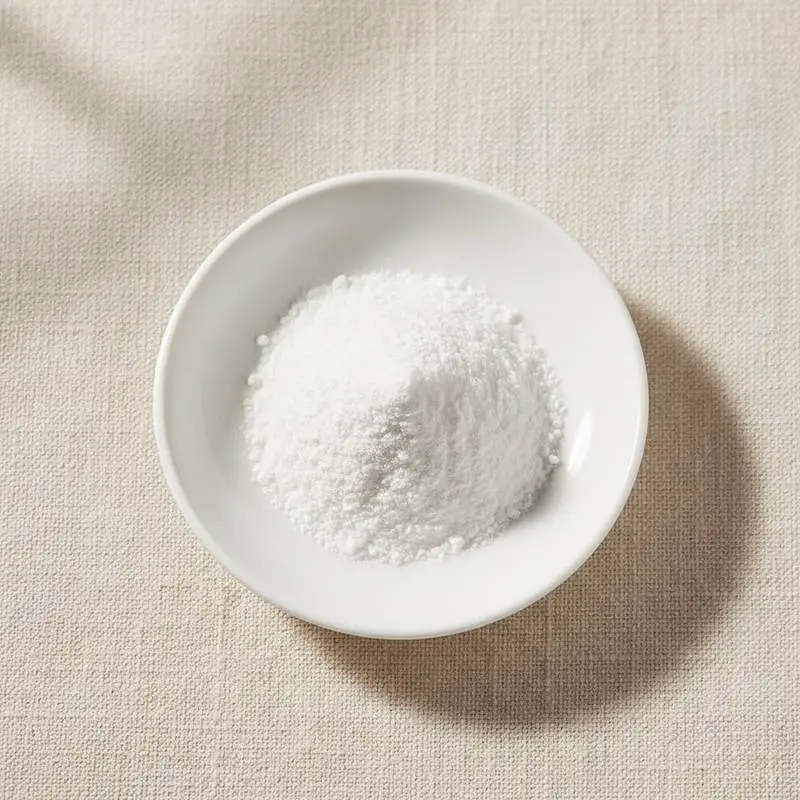
The finished ingredient is an off-white to pale yellow crystalline powder, practically insoluble in water and freely soluble in ethanol, acetone and propylene glycol. As with other catechol-bearing polyphenols it darkens on prolonged exposure to light, air and alkaline conditions, so it is packed under nitrogen in opaque containers and is generally formulated into oil-based softgels, dispersions or solid dispersions rather than into aqueous systems.
We source bulk Hydroxypterostilbene from top China manufacturers for our partners. The manufacturer is in Zhejiang. A smaller requirement can ship in a combined container with other ingredients.
Please send the grade you need, the volume and your destination port, and we will come back with a solution and a price.
or call +86-21-6858 0751
- Function
- Nutraceutical
Specifications
| Item | Specification |
|---|---|
| Appearance | Off-white to pale yellow crystalline powder |
| Odour | Odourless or faint characteristic odour |
| Assay by HPLC | Not less than 98.0 percent |
| Identification | Infrared, HPLC and mass spectrum conform to reference standard |
| Cis isomer | Not more than 0.5 percent |
| Total related substances | Not more than 1.5 percent |
| Loss on drying | Not more than 0.5 percent |
| Residue on ignition | Not more than 0.1 percent |
| Residual solvents | Ethanol not more than 5000 mg/kg; dichloromethane not more than 600 mg/kg |
| Particle size | Not less than 95 percent through 80 mesh |
| Heavy metals | Not more than 10 mg/kg |
| Lead | Not more than 1.0 mg/kg |
| Arsenic | Not more than 1.0 mg/kg |
| Total plate count | Not more than 1,000 cfu/g |
| E. coli | Negative in 1 g |
| Salmonella | Negative in 25 g |
Common Markets Grades
The material is traded in a narrow range of specifications. Standard supplement grade is 98 percent minimum by HPLC, with a 99 percent grade offered where a tighter related-substances profile is wanted, principally for clinical study material. Both are synthetic crystalline powders; there is no botanical extract grade in commercial trade, because the natural concentration in heartwood does not support extraction economics.
Beyond assay, the specification points that vary are particle size and delivery form. Unmilled crystalline material is coarse and slow to dissolve, so micronised grades at 200 mesh and jet-milled grades below 10 micrometres are offered for softgel and tablet work. Formulated versions exist as solid dispersions on a povidone or hydroxypropyl methylcellulose carrier, as cyclodextrin inclusion complexes, and as self-emulsifying oil dispersions, all sold at a stated stilbene content rather than as pure assay.
Applications
- Longevity and healthy ageing supplements, formulated alongside nicotinamide riboside or nicotinamide mononucleotide
- Antioxidant softgels, where the oil base carries the poorly water-soluble stilbene
- Metabolic support formulas aimed at glucose and lipid handling, following the traditional use of the source timber
- Cardiovascular supplement blends combined with resveratrol, pterostilbene and quercetin
- Sports nutrition recovery products positioned on oxidative stress
- Cognitive and neuroprotection stacks in capsule form
- Topical anti-ageing serums and creams, used as a lipophilic antioxidant active
- Skin brightening cosmetic formulations, where catechol stilbenes are studied for tyrosinase interaction
- Reference and research material for structure-activity work across the stilbene series
China Manufacturers of Hydroxypterostilbene
Top Hydroxypterostilbene manufacturers in China.

Company names and logos are the property of the manufacturers themselves. They are listed here because our own directory records them as producing this ingredient. A listing is not an endorsement by them, and we do not represent them or speak on their behalf.
Regulatory Status
In the United States hydroxypterostilbene is sold as a dietary ingredient. It is not a pre-1994 grandfathered ingredient and has no GRAS notification, so its lawful marketing rests on a new dietary ingredient notification to FDA or on the marketer's own determination; it carries no food additive regulation and may not be added to conventional food. Cosmetic use is permitted under the general safety and labelling framework rather than a positive list.
In the European Union the compound has no significant history of consumption before May 1997 and therefore requires authorisation as a novel food under Regulation (EU) 2015/2283 before it can be placed on the market as a food or supplement ingredient; the closely related pterostilbene is in the same position, whereas trans-resveratrol has been authorised. As a cosmetic ingredient it falls under Regulation (EC) No 1223/2009 with a CosIng entry rather than a restriction. Neither Codex Alimentarius nor JECFA has evaluated the substance, and there is no pharmacopoeial monograph, so buyers work to supplier HPLC methods and reference standards.
Manufacturing Process
Industrial synthesis follows the standard stilbene disconnection, joining a 3,5-dimethoxy-substituted aromatic fragment to a protected dihydroxy-substituted benzaldehyde across a newly formed carbon-carbon double bond. The common route uses a Horner-Wadsworth-Emmons olefination: 3,5-dimethoxybenzyl chloride or bromide is converted to the corresponding diethyl benzylphosphonate with triethyl phosphite, then deprotonated with a strong base and condensed with 3,4-bis-protected benzaldehyde, most often the dimethyl or dibenzyl ether. The reaction is run in tetrahydrofuran or dimethylformamide under nitrogen and gives predominantly the trans alkene, which is the required geometry. A Wittig or a palladium-catalysed Heck coupling between a dimethoxy-substituted styrene and a protected bromocatechol serves the same purpose in some plants.
The protected stilbene is then selectively demethylated or debenzylated on the B ring, using boron tribromide in dichloromethane for methyl ethers or catalytic hydrogenolysis for benzyl ethers, taking care to leave the two A ring methoxy groups intact. The quench is run cold and under inert gas because the freed catechol oxidises readily. Crude product is partitioned into ethyl acetate, washed to neutrality, decolourised over activated carbon and recrystallised from ethanol and water or from toluene. Cis isomer and over-demethylated by-products are removed at this stage. The purified solid is filtered, vacuum dried at low temperature, milled to the target particle size and packed under nitrogen.