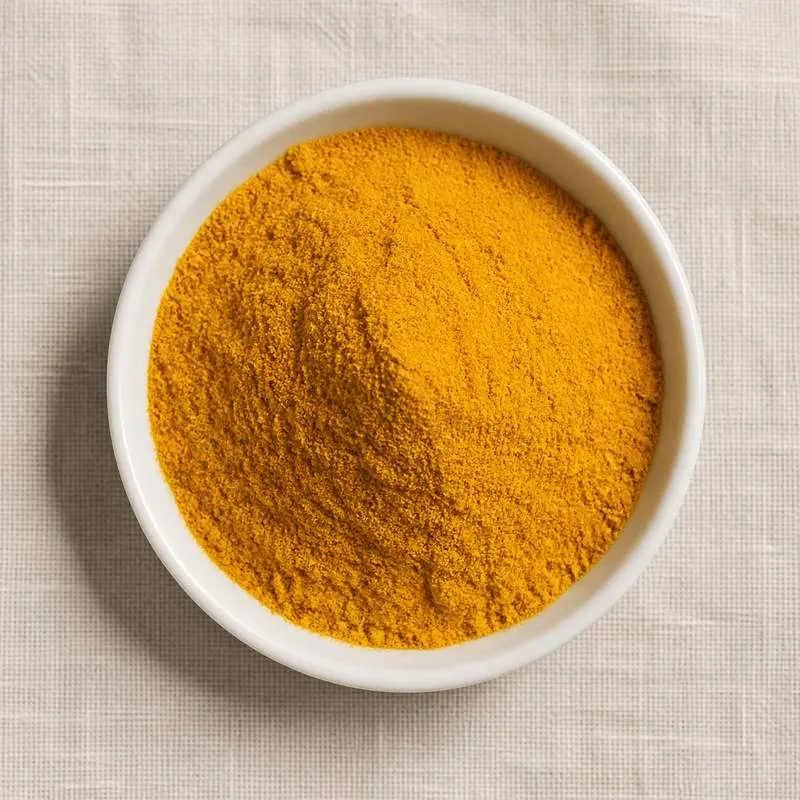
Licorice Extract Granule
Licorice extract granule is a dried extract of licorice root, from Glycyrrhiza glabra, Glycyrrhiza uralensis or Glycyrrhiza inflata, that has been converted from powder into a free-flowing granulated solid. Granulation is a physical form rather than a different chemistry: the same extract that is sold as a fine powder is agglomerated so that it flows, doses and dissolves without dusting or lumping.
The functional constituent is glycyrrhizin, the ammonium or calcium salt of glycyrrhizic acid, a triterpene saponin that is intensely sweet, of the order of fifty times the sweetness of sucrose, with a slow onset and a long lingering finish quite unlike sugar. Alongside it the extract carries flavonoids including liquiritin, isoliquiritin and glabridin, polysaccharides and a small volatile fraction that contributes the characteristic anise-like note.
The granules are light to dark brown, coarse and free flowing, with a sweet, slightly bitter taste and a faint sweet-woody odour. Glycyrrhizin dissolves readily in warm water and in aqueous alcohol; solubility falls sharply at acid pH, where the free acid precipitates, so licorice extract clouds and drops out in low pH beverages unless it is used as the ammoniated salt. The granulated form is chosen precisely because the fine powder is hygroscopic, dusty and prone to caking, and the agglomerated particle disperses on contact with water instead of forming lumps.
We source bulk Licorice Extract Granule from top China manufacturers for our partners. The manufacturer is in Jiangsu. A smaller requirement can ship in a combined container with other ingredients.
Please send the grade you need, the volume and your destination port, and we will come back with a solution and a price.
or call +86-21-6858 0751
- Function
- Plant extract
Specifications
| Item | Specification |
|---|---|
| Botanical Source | Glycyrrhiza species, dried root and stolon |
| Appearance | Light to dark brown free-flowing granules |
| Glycyrrhizin by HPLC | ≥ 10.0% |
| Identification | Conforms by TLC and HPLC to reference extract |
| Granule Size | 20 to 60 mesh, fines below 60 mesh ≤ 5% |
| Dissolution in Water at 60°C | Complete within 3 minutes |
| Loss on Drying | ≤ 6.0% |
| Residual Solvent (Ethanol) | ≤ 5,000 mg/kg |
| Lead | ≤ 2.0 mg/kg |
| Arsenic | ≤ 1.0 mg/kg |
| Total Plate Count | ≤ 10,000 cfu/g |
| Yeast and Mould | ≤ 100 cfu/g |
| E. coli | Negative in 1 g |
| Salmonella | Negative in 25 g |
Common Markets Grades
Grades are quoted on glycyrrhizin content, commonly at 4, 8, 10, 12 or 20 percent for general extract granules, with purified grades running higher. Above these sit the isolated derivatives, monoammonium glycyrrhizinate and dipotassium glycyrrhizinate at 95 percent and above, which are separate products traded on assay rather than as extracts. Deglycyrrhizinated licorice, in which the glycyrrhizin has been removed and the flavonoid fraction retained, is a distinct grade used where the sweetness and the associated intake concerns are unwanted.
Physical specification covers granule size, expressed as a mesh range, bulk density, dissolution rate and dust content, and these are the properties buyers are actually paying for over the powder. Colour and residual moisture are specified because both affect handling. Extraction solvent, water or aqueous ethanol, is stated, as is whether any carrier such as maltodextrin has been used in the granulation, since a carrier dilutes the glycyrrhizin figure. Origin and species are specified in the higher grade trade because Glycyrrhiza inflata and Glycyrrhiza uralensis differ in flavonoid profile.
Applications
- Tobacco casing and flavour, historically the single largest industrial outlet for licorice extract
- Confectionery, particularly licorice sweets, pastilles and salted licorice in northern Europe
- Sweetening and flavour modification in savoury seasonings, soy sauce and prepared sauces
- Herbal tea blends and instant tea granules, where the granulated form dissolves without clumping
- Cough syrups, lozenges and throat preparations
- Digestive and gastric support supplements, usually formulated on the deglycyrrhizinated grade
- Brewing and beverage applications, where licorice adds body and a long sweet finish
- Bakery and chocolate products needing a sweet-woody background note
- Traditional Chinese herbal formulations, where licorice appears as a harmonising ingredient in a large share of classical prescriptions
China Manufacturers of Licorice Extract Granule
Top Licorice Extract Granule manufacturers in China.

Company names and logos are the property of the manufacturers themselves. They are listed here because our own directory records them as producing this ingredient. A listing is not an endorsement by them, and we do not represent them or speak on their behalf.
Regulatory Status
In the United States licorice and licorice derivatives, including licorice extract, ammoniated glycyrrhizin and monoammonium glycyrrhizinate, are affirmed as generally recognised as safe for use as flavouring agents in 21 CFR 184.1408, which sets out the permitted forms and the food categories in which they may be used. That regulation restricts licorice derivatives to flavour use rather than permitting them as general sweeteners, which is the practical constraint on how much can be added. Supplement presentations are dietary ingredients under the Dietary Supplement Health and Education Act, manufactured under 21 CFR Part 111.
In the European Union licorice is an established food and a recognised source of natural flavouring under Regulation (EC) No 1334/2008, and glycyrrhizinic acid and its ammonium salt appear in the flavouring framework rather than as an E-numbered additive. The food information Regulation requires specific labelling for licorice: confectionery and beverages containing glycyrrhizinic acid or its ammonium salt above defined thresholds must carry a statement that the product contains liquorice, and beverages above a higher threshold must additionally warn people with high blood pressure to avoid excessive consumption. Those statements are a labelling obligation on the finished product and are the reason buyers track the glycyrrhizin figure closely. The Joint FAO/WHO Expert Committee on Food Additives and the European Food Safety Authority have both reviewed glycyrrhizinic acid, and the European Pharmacopoeia carries monographs for liquorice root and for liquorice dry extract.
Manufacturing Process
Manufacture begins with dried licorice root and stolon, cleaned, inspected and chipped or milled to a coarse particle. Extraction is by countercurrent percolation with hot water, or with dilute aqueous ammonia where the objective is to convert glycyrrhizic acid to its more soluble ammonium salt and raise recovery. The liquor is filtered to remove root fibre and then clarified, in some plants by adding acid to precipitate the crude glycyrrhizin and redissolving it, which serves as a purification step and sets the assay.
The clarified liquor is concentrated in a falling film or forced circulation evaporator under vacuum to a thick syrup. This concentrate is then dried, either by spray drying to a fine powder or by vacuum belt drying to a friable cake that is milled. The granulation step follows: the dried powder is fed to a fluid bed granulator where it is fluidised in warm air and sprayed with water or with a dilute binder solution, causing particles to agglomerate into porous granules, which are then dried in the same vessel and discharged. Dry granulation by roller compaction followed by milling and screening is used as an alternative where a denser granule is wanted. The granules are screened to the specified mesh range, with fines returned to the granulator, then passed through a metal detector and packed with a moisture barrier.