UDP-Glucose
UDP-glucose, uridine 5'-diphosphoglucose, is a nucleotide sugar in which a glucose unit is linked through a pyrophosphate bridge to uridine. It is the universal glucosyl donor of carbohydrate metabolism and the substrate that glycosyltransferase enzymes use to attach glucose to an acceptor molecule.
In ingredient manufacturing it functions less as a consumer nutrient than as a biocatalytic building block. Enzymatic sweetener plants use it to convert stevioside and rebaudioside A into rebaudioside M and rebaudioside D, and glycoside producers use it to build sugar chains onto flavonoids, terpenoids and vitamin derivatives to raise their water solubility. It is also sold in small volumes to the research and cell-culture trade.
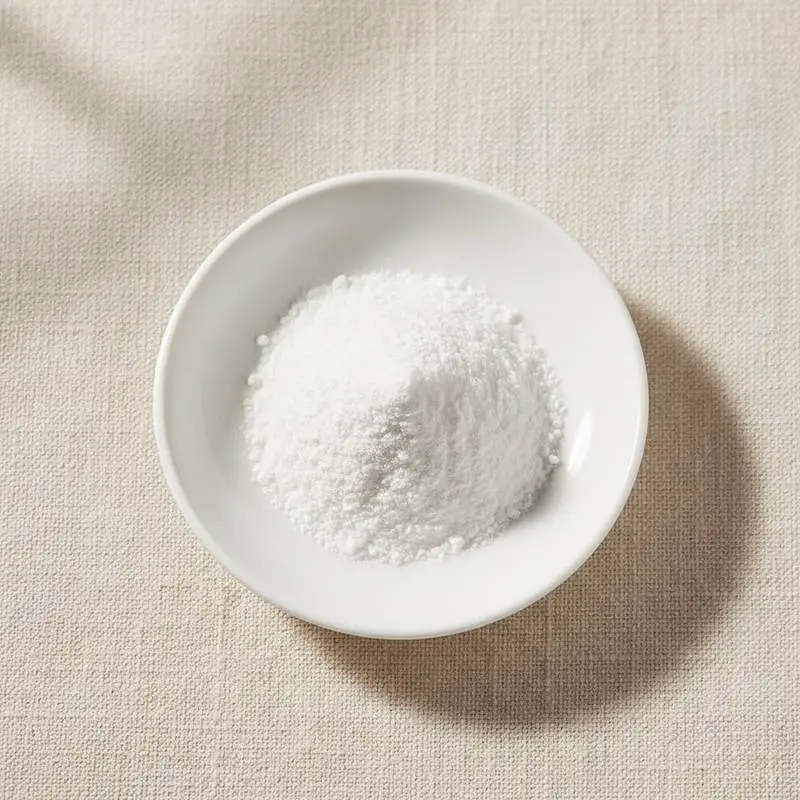
The commercial article is the disodium salt, a white to off-white hygroscopic powder that dissolves freely in water and gives a near-neutral solution. The pyrophosphate bond hydrolyses slowly in aqueous systems and faster under acid or heat, so the powder is held cold and dry and solutions are made up shortly before use.
We source bulk UDP-Glucose from top China manufacturers for our partners. The manufacturer is in Anhui. A smaller requirement can ship in a combined container with other ingredients.
Please send the grade you need, the volume and your destination port, and we will come back with a solution and a price.
or call +86-21-6858 0751
- Function
- Nutraceutical
Specifications
| Item | Specification |
|---|---|
| Appearance | White to off-white amorphous powder |
| Assay (HPLC, anhydrous basis) | 90.0 percent minimum as UDP-glucose disodium salt |
| Identification | HPLC retention and UV spectrum with maximum near 262 nm conform to reference |
| Free uridine nucleotides (UMP plus UDP plus UTP) | 3.0 percent maximum |
| Free glucose | 1.0 percent maximum |
| Inorganic phosphate | 1.0 percent maximum |
| Water (Karl Fischer) | 8.0 percent maximum |
| pH (1 percent aqueous solution) | 6.0 to 8.0 |
| Residual protein | 0.5 percent maximum |
| Heavy metals (as Pb) | 10 mg/kg maximum |
| Lead | 1.0 mg/kg maximum |
| Arsenic | 1.0 mg/kg maximum |
| Total plate count | 1000 cfu/g maximum |
| Escherichia coli | Absent in 10 g |
Common Markets Grades
Trade material is graded almost entirely by assay and by the counter-ion. Biocatalysis grade runs 90 to 95 percent on an anhydrous basis as the disodium salt and carries controls on residual uridine nucleotides, free glucose and inorganic phosphate, since these accumulate during enzymatic synthesis and interfere with downstream reactions. A higher analytical or reference grade of 98 percent minimum sells in kilogram quantities for enzyme assay work.
The free acid form is rarely traded because of its instability. Packaging is normally a foil laminate under nitrogen, and the material is quoted with a specified water content because it picks up moisture rapidly on exposure.
Applications
- Enzymatic glycosylation of steviol glycosides, where it donates the glucose units that convert rebaudioside A into rebaudioside D and rebaudioside M
- Production of glucosylated flavonoids such as alpha-glucosyl rutin and glucosyl hesperidin, where added sugar units raise aqueous solubility
- Synthesis of ascorbic acid 2-glucoside as a stabilised vitamin C derivative
- Enzymatic manufacture of glycosylated terpenoids and steroid saponins for nutraceutical use
- Regeneration systems in multi-enzyme cascades, where sucrose synthase recycles UDP back to UDP-glucose in situ
- Upstream feedstock for UDP-glucuronic acid and other nucleotide sugars made by enzymatic oxidation or epimerisation
- Cell-culture and glycobiology research as a defined glycosyl donor
- Preparation of oligosaccharide standards used in analytical laboratories
China Manufacturers of UDP-Glucose
Top UDP-Glucose manufacturers in China.
Company names and logos are the property of the manufacturers themselves. They are listed here because our own directory records them as producing this ingredient. A listing is not an endorsement by them, and we do not represent them or speak on their behalf.
Regulatory Status
UDP-glucose is traded as a biochemical intermediate and a processing aid rather than as a direct food additive. In the United States it has no standing as an approved food ingredient in its own right, and its regulatory relevance is indirect: it is consumed during the enzymatic manufacture of sweeteners and glycosides, and the resulting products are assessed on their own merits, for example the GRAS notifications covering enzymatically produced steviol glycosides. Residual nucleotide sugar is controlled as a manufacturing residue in those finished ingredients.
The same position applies in the European Union, where UDP-glucose carries no E number and is handled as a substance used in production, with the finished glycoside falling under the food additive or novel food frameworks as appropriate. JECFA specifications for enzymatically modified steviol glycosides similarly address the finished sweetener rather than the nucleotide sugar donor.
Manufacturing Process
Industrial UDP-glucose is made by enzymatic or whole-cell biocatalysis rather than by chemical coupling. The route starts from uridine 5'-monophosphate or from uridine, which is phosphorylated to UTP by a kinase system with an ATP regeneration loop, and from glucose 1-phosphate generated from starch or sucrose. UDP-glucose pyrophosphorylase then joins UTP and glucose 1-phosphate, releasing inorganic pyrophosphate. An inorganic pyrophosphatase is dosed alongside to hydrolyse that by-product and pull the equilibrium toward the product. A sucrose synthase route is also used, in which sucrose transfers its glucose unit directly to UDP.
The reaction broth is heated briefly or ultrafiltered to remove enzyme protein, then loaded onto an anion exchange resin that separates UDP-glucose from residual nucleotides and free sugars. The eluate is desalted by nanofiltration, adjusted to the sodium salt, concentrated under vacuum at low temperature and either lyophilised or spray dried at a low inlet temperature to protect the pyrophosphate linkage.